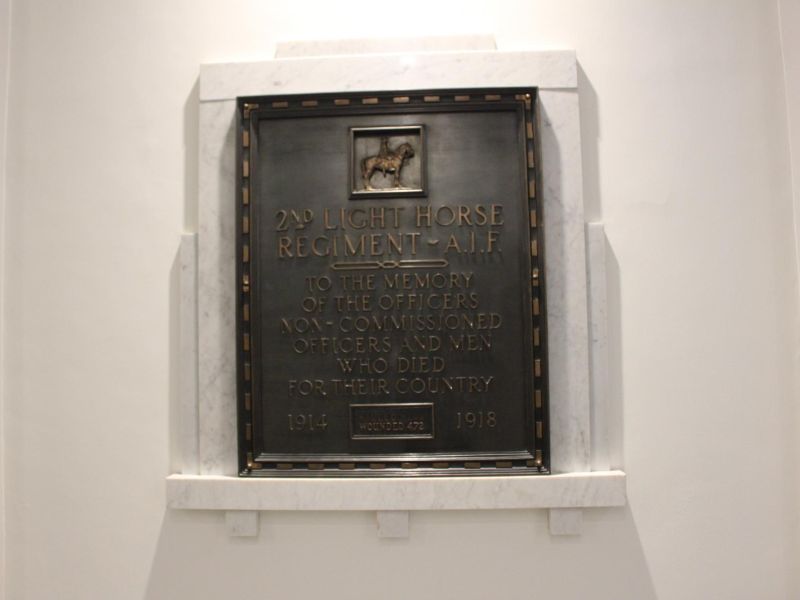
Lance Corporal Francis Paul Easton, 2nd Light Horse Regiment
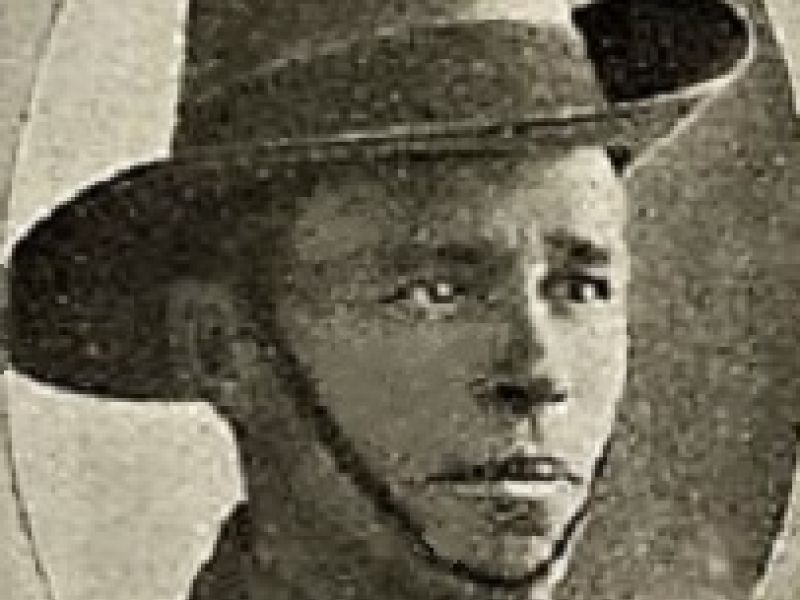
 Australian War Memorial
Francis Easton was born in Sydney in 1873, the fourth of eight children born to William and Eliza Easton, who had emigrated to Australia from England in the 1860s. The family moved from Sydney to Brisbane when Francis was around six, and he attended Kelvin Grove State School. Francis’s father William died in 1890, leaving Eliza to care for her eight children. After finishing school, Francis began working as a stockman in Queensland.
In 1900, Francis Easton joined the 4th (Queensland Imperial Bushman) Contingent, and on 18 May he left Australia, bound for South Africa to fight on behalf of the British in the Boer War. Francis served until February 1901, when he was returned to Australia as invalided. He returned to the Boer War in January 1902, enlisting with the 1st Battalion, Australian Commonwealth Horse. Following his Boer War service, Francis moved to Bundaberg, where he worked as a stockman and horse breaker.
Easton enlisted in the Australian Imperial Force on 24 August 1914. He was assigned to the 2nd Light Horse Regiment and left Australia on the 24th of September in the troopship Star of England, sailing from Brisbane to Albany and then on to Egypt with the first convoy.
The 2nd Light Horse landed in Egypt on the 9th of December. At the beginning of May 1915, the unit joined the rest of the Mediterranean Expeditionary Force on Gallipoli, serving dismounted while their horses remained in Egypt. The 2nd Light Horse took on a defensive role for most of the campaign, though it was involved in the attack on the Ottoman trenches opposite Quinn’s Post in early August. After suffering heavy casualties, the regiment was withdrawn from the front line in September 1915. Easton formed part of a detachment that was sent to Mudros on the island of Lemnos in November 1915, where he was joined by the rest of the regiment a month later.
The 2nd Light Horse Regiment returned to Egypt in early 1916, sent to Wardan on the banks of the Nile in mid-January. At Wardan, the regiment was tasked with protecting British interests from groups of pro-Ottoman Senussi. On 27 March, Easton was promoted to lance corporal. In early May, the regiment moved to join the forces defending the Suez Canal from Ottoman encroachment.
In August 1916, the 2nd Light Horse Regiment played a significant role in turning back the Ottoman advance on the Suez Canal during the battle of Romani. On the night of 3 August, the men moved into support positions, with Easton commanding a section. Early in the morning on the 4th, the section came under heavy fire from Ottoman troops, and was forced to retreat to their horses. During the retreat, Easton and a private from the section were captured by the Ottomans, and taken prisoner of war.
Easton was first interned at Afyon Kara Hissar camp, before being transferred to Ismidt camp in Constantinople. While at Ismidt, Easton fell ill with pneumonia, typhus and dysentery in November 1916. Francis Easton died of dysentery on 19 November 1916 in hospital.
He was 43 years old.
Francis was buried in the Catholic Cemetery in Ismidt, though his fellow prisoners of war were not allowed to attend his burial or hold a funeral for him. In 1924, as part of the consolidation of prisoner of war graves, Francis’s body was exhumed and reinterred at Haidar Pasha Cemetery in Constantinople (today’s Istanbul).
- AWM Roll of Honour https://www.awm.gov.au/collection/R1722830
- Virtual War Memorial Australia https://vwma.org.au/explore/people/67542