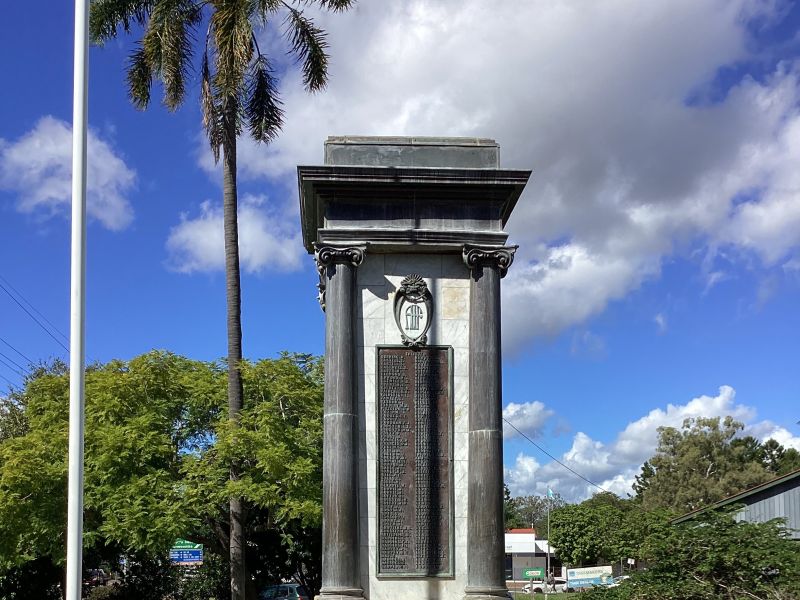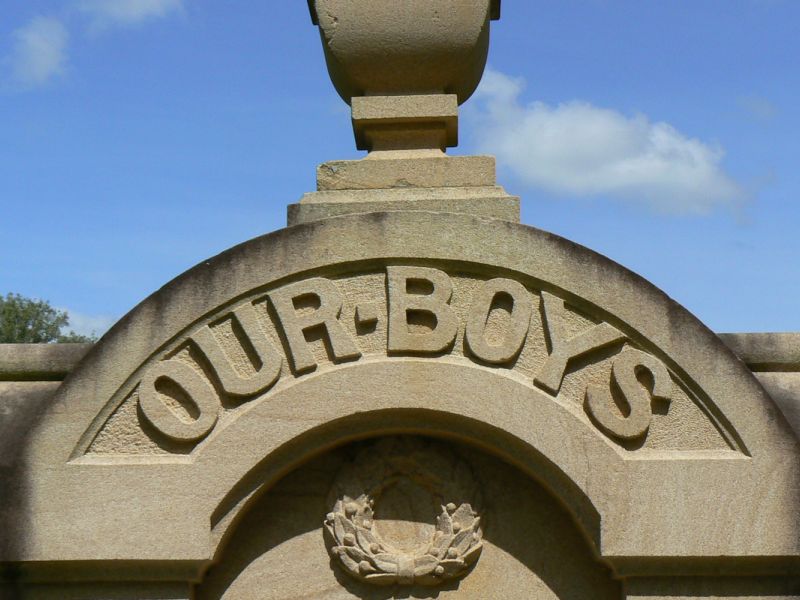
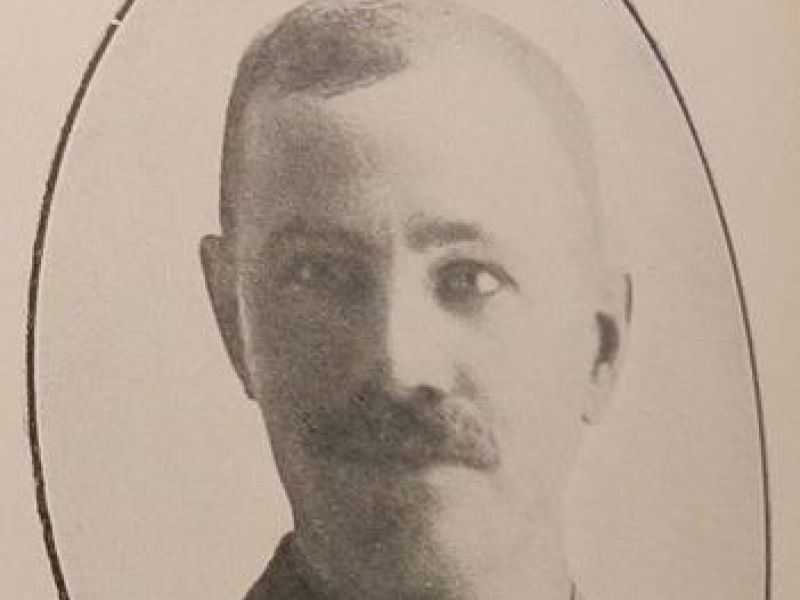
Lieutenant Walter Percival Holland, 25th Australian Infantry Battalion
 Australian War Memorial
Walter Holland was born on 27 December 1877 in Brisbane. He was one of ten children born to merchant businessman Julius Holland and his wife Brenda. Walter received his education at Brisbane Boys Grammar School where he was a keen sportsman. When the First World War broke out in 1914, he was working as a dairy farmer in the town of Esk, Queensland.
Walter Holland enlisted in the Australian Imperial Force on 2 March 1916. He was assigned to reinforcements of the 25th Battalion and began a short period of training. He embarked for active service in September, sailing from Brisbane on the troopship Clan MacGillivray.
Private Holland arrived in England in November 1916 and continued training. In December, he began his journey to the Western Front, and joined his unit there later that month. Holland saw out the rest of the year training in the trenches as a bitterly cold winter began to set in. On New Year’s Day, Holland was made acting sergeant. Weeks later, he was commissioned to second lieutenant, as his unit continued to man the front lines under increasingly difficult conditions.
In February 1917 German forces began their strategic withdrawal to the fortified Hindenburg Line. Allied forces eagerly pursued them, initially believing they had the enemy on the run. As the enemy pulled back, they drew the allies into a series of rear-guard actions and booby-trapped towns which produced heavy casualties on both sides. Eventually, this withdrawal halted near the French village of Bullecourt, as the allies attempted to break enemy lines. After two costly battles, allied casualties totalled more than 10,000 killed, missing and wounded.
Following the bloodshed at Bullecourt, Holland was promoted to lieutenant. Soon after, his unit was moved to the Belgium to take up positions around the Ypres Salient. Holland was granted a short period of leave to Paris before taking a temporary attachment with the Australian Army Service Corps.
He re-joined his unit just in time to take part in the battle of Menin Road in September, where Australian forces suffered a further 5,000 casualties. This proved to be the 25th Battalion’s last large-scale offensive for the year. By November, Australian forces were largely out of the main action, and Holland was granted leave to England. He returned to the front in December to spend his second winter in the trenches.
In early 1918, German forces launched their spring offensive, and began making a series of heavy attacks along the allied front. The 25th Battalion fought extensively during this period, including at Morlancourt in March as they continued to repulse the enemy. 9 June 1918, Holland and his comrades made an attack on enemy positions east of the village of Mericourt. At some point during this fighting, Lieutenant Holland was hit and killed by shell-fire.
His comrades buried him nearby, and today he lies at Ribemont Communal Cemetery in France, beneath the words chosen by his family: “All he had, he gave to save mankind; himself he scorned to save.”
Walter Holland was 40 years old.
- Australian War Memorial Roll of Honour https://www.awm.gov.au/collection/R1635687