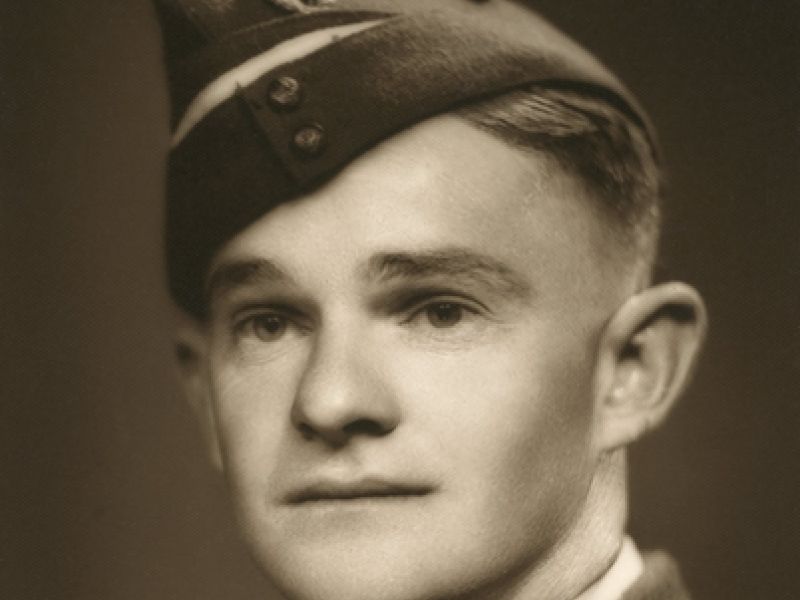
Flight Sergeant Arthur Harold Boettcher, No. 467 Squadron, Royal Australian Air Force
 Australian War Memorial
Arthur Boettcher was born on 29 August 1917 in Gatton, Queensland, to Albert and Bridget Boettcher. He had three older brothers – Ronald, Reginald, and Lester – and two sisters – Edna and Joyce. Their father was the head teacher at Cunnamulla State School.
Arthur attended Currumbin State School. After leaving, he served as an apprentice baker for four years and later as a shop assistant and a movie projectionist. He was fond of cricket, football, golf, bowls, and tennis.
On 12 September 1941 Boettcher enlisted in the Royal Australian Air Force, aged 24. He was trained as an air gunner, and in June 1942 he received his badge and was made sergeant.
Boettcher embarked for overseas service from Sydney on 14 August 1942, arriving in the UK in November. As part of the Empire Air Training Scheme he was one of almost 27,000 RAAF pilots, navigators, wireless operators, gunners, and engineers, who joined Australian and British squadrons in Britain throughout the course of the war.
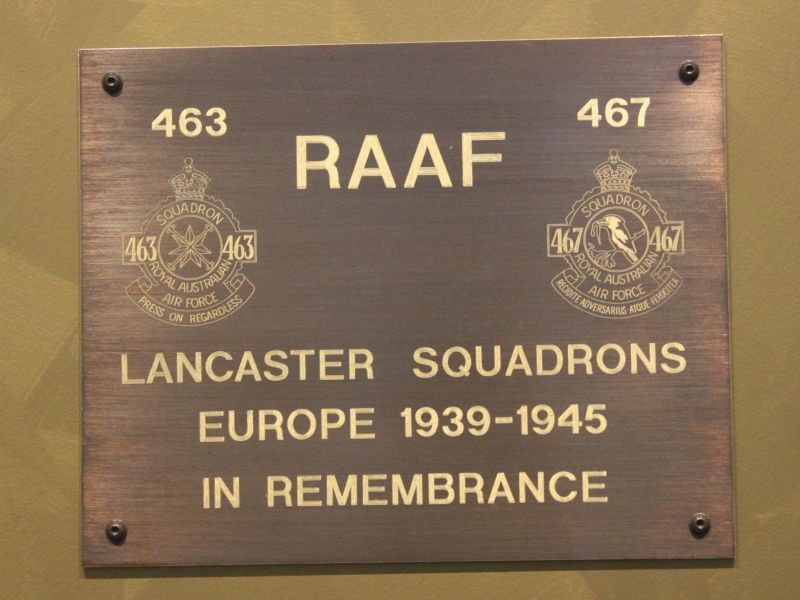
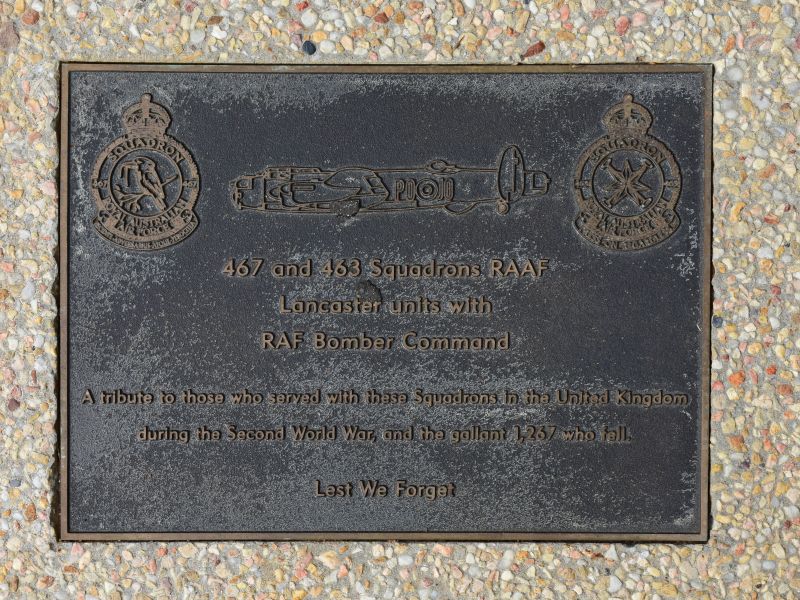
Further specialist training followed in England, and on 23 January 1943 Boettcher was promoted to flight sergeant. At the end of June he was posted to No. 467 Squadron, Royal Australian Air Force. As part of Bomber Command, the squadron flew the four-engined Avro Lancaster heavy bomber.
Over the following months Flight Sergeant Boettcher flew 22 sorties with the squadron. On the night of 1 January 1944 Bomber command launched a raid on Berlin. Boettcher was the rear gunner aboard Lancaster “PO-K”, which took off from the Royal Air Force Base Waddington shortly before 11.30 pm. The aircraft was attacked by enemy fighters before it reached the target, and lost a wing as a result. Now out of control, the aircraft spiralled into the ground and exploded in a field some 220 kilometres from Berlin. With all bombs still aboard the plane, the explosion shattered the roofs and windows of nearby houses.
Those killed in the crash with Flight Sergeant Boettcher were Australians Flight Lieutenant Leo Patkin and Flight Sergeants William Blackwell, James Mudie, and Henry Scott – along with British airmen Flying Officer Raymond Maidstone and Sergeants Ralph Chambers and George Litchfield.
Seven bodies were recovered from the wreckage and buried at the Altmerdingsen Cemetery. The body of Sergeant Chambers was never recovered, and he has no known grave. After the war the remains of Commonwealth servicemen buried in Europe were examined and identified where possible.
Flight Sergeant Arthur Boettcher was identified by his identity discs, and he was reinterred with his crewmates at Hanover War Cemetery, some 30 kilometres from the crash site. Arthur Boettcher rests there under the inscription:
“His country called – he answered.”
Arthur Boettcher was dearly missed by his family, who placed in memoriam notices in the newspaper every year for a decade after his death. His father wrote angrily to the RAAF, calling his son
“another poor pawn in the capitalistic game of war”.
His brother Ronald served with the 15th Battalion in the Second Australian Imperial Force, and returned home safely.
- AWM Roll of Honour https://www.awm.gov.au/collection/R1704430
- AWM photo collection item https://www.awm.gov.au/collection/C1244094