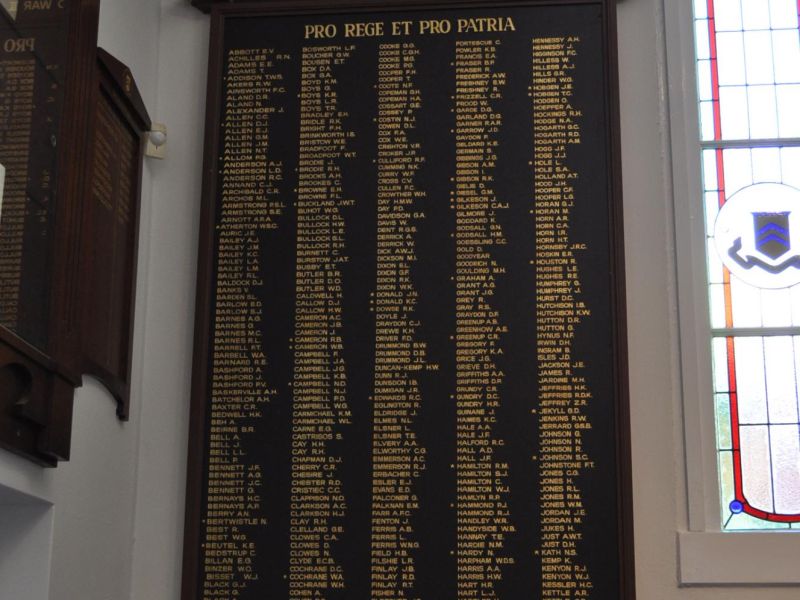
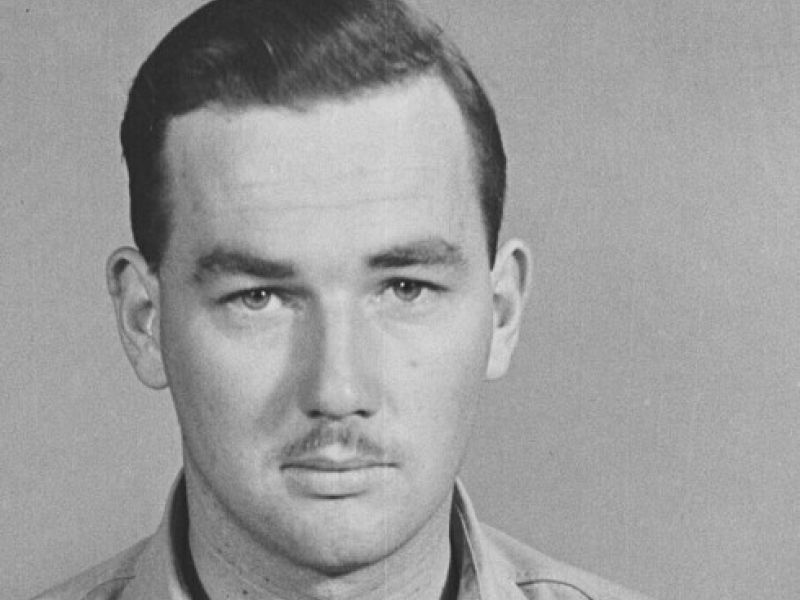
Flying Officer Donald Charles Gundry, No. 463 Squadron, Royal Australian Air Force
 Australian War Memorial
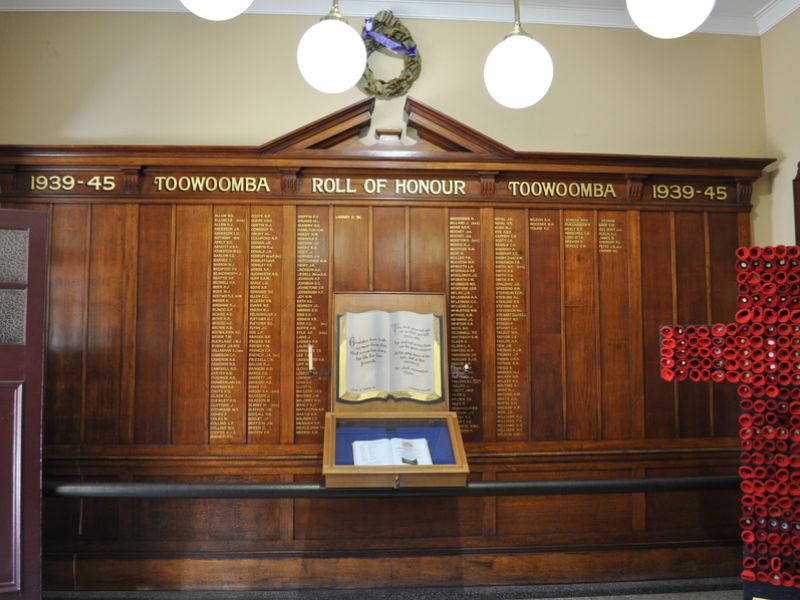
Donald Gundry was born on 26 December 1916 in Toowoomba, Queensland, to Harris and Ethel Gundry. Growing up he had two brothers, Leslie and Harry, but Leslie died in 1921, aged only 12. Their father was a contractor.
Donald was educated at Toowoomba Boys’ Grammar School and Queensland University. He was a keen cricket player in the A grade. After leaving school he worked as a costing clerk. On 23 March 1940 Gundry married Quetta Burge, and in December they had a daughter, Jenifer. The family settled in Adelaide.
On 18 July 1942, Gundry enlisted in the Royal Australian Air Force, aged 25. Despite not having his left ring finger, he trained as a pilot, and in early May 1943 he was made sergeant and received his wings.
Gundry embarked for overseas service from Sydney on 25 May 1943, arriving in the UK in July. As part of the Empire Air Training Scheme, he was one of almost 27,500 RAAF pilots, navigators, wireless operators, air gunners, and flight engineers who, throughout the course of the war, joined Royal Air Force squadrons or Australian squadrons based in Britain.
After further specialist training, in November Gundry was promoted to flight sergeant. The following February he was commissioned as a pilot officer, and on 12 July 1944 he was made flying officer and posted to No. 463 Squadron, RAAF. As part of Bomber Command, the squadron flew the four-engined Avro Lancaster heavy bomber.
On 25 July 1944 Bomber Command launched a daylight bombing raid on the airfield and signals manufacturing depot at St Cyr, near Paris. Flying Officer Donald Gundry was the pilot of Lancaster “JO-F”, which took off from the Royal Air Force base at Waddington just before 6 pm.
On the way to the target Gundry’s aircraft was hit by anti-aircraft fire, but managed to drop its bombs before the engine was hit and caught fire. The crew’s attempts to quench the flames in the starboard engine and inside the aircraft’s bomb bay were unsuccessful. Gundry ordered the crew to bale out.
Witnesses in the French village of Chaussy, more than 50 kilometres north-west of St Cyr, saw five crew members parachute out of the plane before it crashed just outside the village. Three of the men were taken prisoner by the Germans, while two were wounded and sent to hospital in Paris. Flying Officer Donald Charles Gundry and his wireless operator and fellow Australian, Flight Sergeant Vernon Scheldt, were not among them, and an investigation later determined that both had been killed in the crash.
Their remains were removed from the wreckage, and Gundry was buried together with Scheldt at the Omerville Cemetery. Donald Gundry rests there under the inscription: “Greater love hath no man than this. Ever remembered.” He was 27 years old.
Gundry’s brother, Harry, also enlisted in the Second World War, serving with the 25th Battalion. He survived the war and returned home safely.
- Australian War Memorial Roll of Honour https://www.awm.gov.au/collection/R1720310
- Wikki Commons https://commons.wikimedia.org/wiki/File:463_Squadron_RAAF_Wellington_aircrew_WW…
- Virtual War Memorial https://vwma.org.au/explore/people/511627