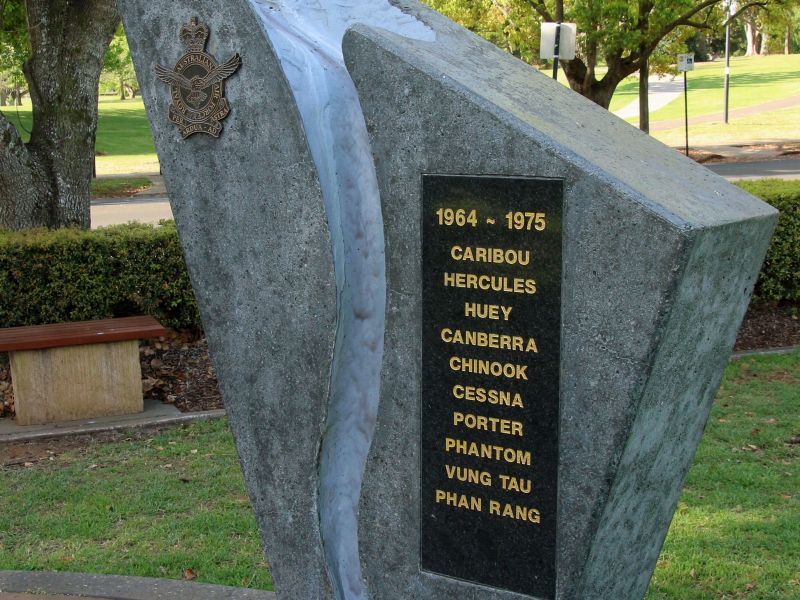
Private Barry James, 6th Battalion, The Royal Australian Regiment
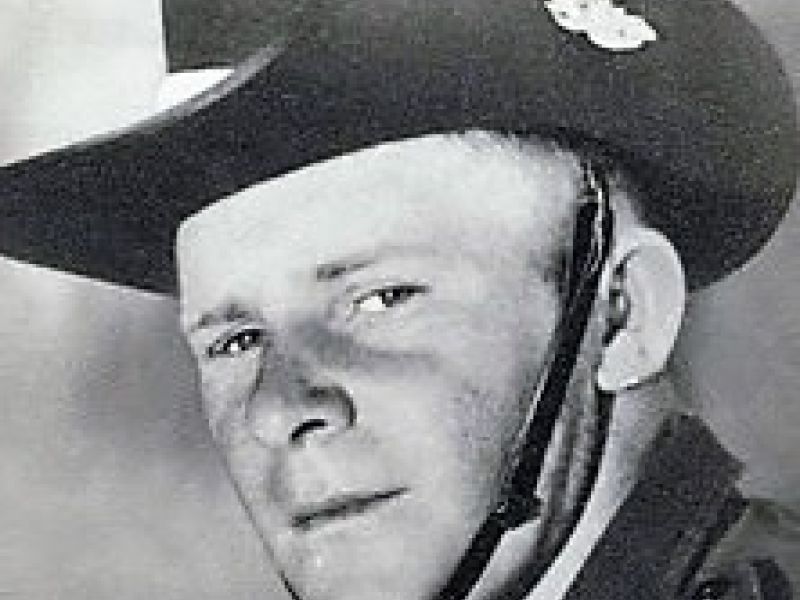
 Australian War Memorial
Barry James was born on 7 July 1948 in St George, Queensland, one of ten children born to Leslie and Kathleen James.
He grew up in Toowoomba where he attended Harlaxton State School. The family was dealt a blow when Leslie died in late November 1959, leaving Kathleen to raise the children.
After attaining his Year 8 merit certificate at the end of 1962, Barry left school to enter the work force. He initially went to work at Myall Park Station at Glamorgan, a large botanical garden.
He returned to Toowoomba a year later, likely due to the waning funds at the gardens and was next employed at the Toowoomba Abattoir where he remained for two years, before working at the Darling Downs Bacon Factory as a transport driver.
Outside of work, James was a keen sportsman, enjoying rugby league and swimming.
He began the process to join the Australian Regular Army in December 1967, his mother giving her consent as he was still under age. James enlisted in Brisbane on 30 January 1968.
He was sent to the 1st Recruit Training Battalion at Kapooka for basic training, and then the Infantry Centre at Ingleburn to train as a rifleman. At the end of June he was posted to the 6th Battalion, the Royal Australian Regiment, then based in Townsville. On arrival at the battalion, he joined 6 Platoon, B Company.
At this time the battalion had already completed one tour in Vietnam and had been warned to prepare for a second. As the men were kept busy on exercises and furthering their military skills, James qualified as a machine-gunner and took on that role in his section.
James and the majority of his battalion boarded HMAS Sydney for the voyage to South Vietnam on 8 May 1969. Arriving at Vung Tau, they were trucked to Nui Dat, home of the 1st Australian Task Force.
On 30 May the battalion began its first reconnaissance in force, known as Operation Laverack, in the north of Phuoc Tuy Province. The operation’s main objective was to locate and destroy enemy main force units. However, there had been no significant sightings of enemy forces for some months and the operation was expected to be relatively quiet.
As A Company secured Fire Support Base Virginia, other companies were flown in to their patrol areas. Contacts with enemy main force units began almost immediately and continued over the next five days.
The men of 6RAR initiated many of these contacts from ambush positions. On the afternoon of 5 June, 6 Platoon was in one such position, waiting for the enemy.
Just before 2 pm, enemy soldiers were sighted entering the ambush zone; 6 Platoon initiated the ambush against what turned out to be elements of 33 NVA Regiment. James opened fire with his M-60 machine-gun, but the enemy, far from being overwhelmed, began counter ambush drills, returning accurate fire, then withdrawing. During the return fire, James was shot in the head.
A medical evacuation by helicopter – a dustoff – was immediately called to evacuate James and another wounded man to hospital for urgent treatment. James’ head wound proved fatal and he died en route.
His remains were returned to Australia and laid to rest on 25 June in the Toowoomba Garden Cemetery. He was 20 years old.
When his mother passed away in 1990, she was laid to rest with her son.
The epitaph on their grave reads: “So dearly loved, so badly missed.”
- Australian War Memorial Roll of Honour https://www.awm.gov.au/collection/R1715899
- Virtual War Memorial Australia https://vwma.org.au/explore/people/654405