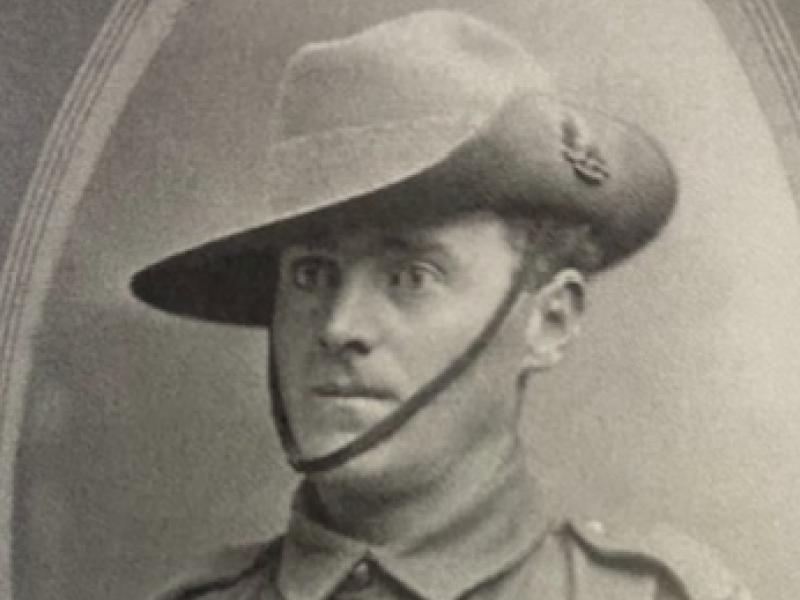
Private Francis Herbert Nield, 6th Australian Infantry Battalion
 Australian War Memorial
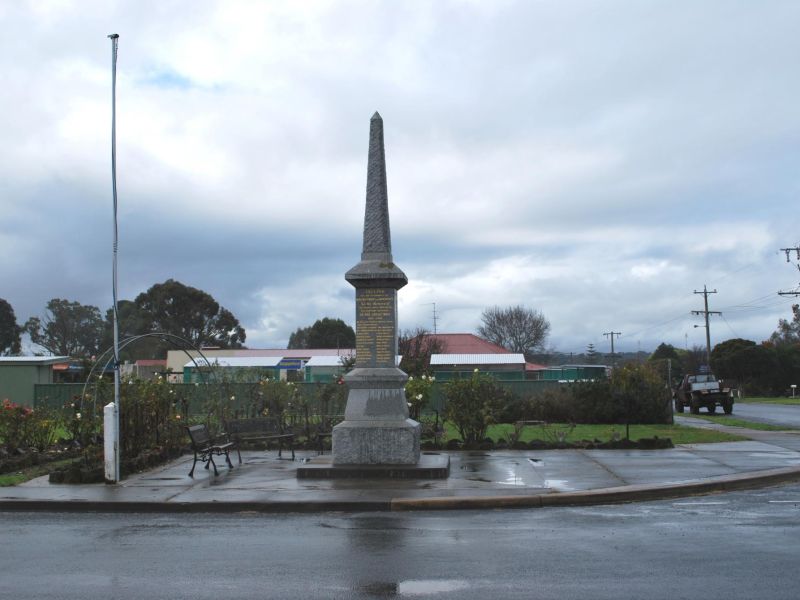
Francis Nield was born around October 1887 in the western Victorian town of Macarthur. Known as Frank, he was one of six children born to Henry and Maggie Neild.
The Nield family remained in Macarthur throughout Frank’s childhood and teenage years. He attended the Macarthur State School, before finding work as a labourer in and around the town. Frank was an active sportsman, and was the captain of the local Macarthur football team.
Frank Nield enlisted in the Australian Imperial Force on 9 August 1915. In October, he was transferred to reinforcements for the 6th Battalion. In early November, he was granted a period of pre-embarkation leave to visit family and friends back in Macarthur. A large farewell was held at the local mechanics’ hall, where Frank was gifted a pair of military brushes and a pocket book. Two-hundred people turned out for the farewell supper, and guest speakers praised Frank’s popularity within the community.
Private Frank Nield departed Melbourne in the troopship Ceramic on 23 November 1915, bound for Egypt.
In Egypt, Nield was taken on strength of the 6th Battalion. After a month in camp, he left Alexandria for France and the Western Front. His battalion was almost immediately thrust into the realities of trench warfare on the Somme, moving into front-line trenches for the first time in late April.
The battalion experienced its first battle on the Western Front in late July 1916, taking part in allied fighting around the village of Pozieres. During the battalion’s withdrawal on 25 July, Nield sustained a gunshot wound to the back. He was admitted to the 1st Australian General Hospital two days later, and spent a week undergoing treatment for his gunshot wound and shell shock.
Nield was discharged from hospital on 8 August, and after spending four days at a convalescent camp was transferred to the Base Depot at Havre to prepare to rejoin the fighting.
Nield returned to the 6th Battalion on 20 September 1916, just in time for the battalion’s move into the trenches outside Zillebeke in Belgium. A few hours after his arrival, the battalion attacked, facing strong German resistance and counter-attack.
At around noon, Nield was at the mouth of a tunnel when he was hit by German shrapnel in the groin. He had been back with his battalion for less than 24 hours.
Although Nield was rushed to the nearby No. 2 Australian Field Ambulance by stretcher bearers, medical attention came too late. Frank Nield died from a haemorrhage as a result of wounds sustained in action on 21 September 1916.
He was 29 years old.
When news of his death reached Australia, commemorative notices flooded into the local newspapers. His family inserted a short commemorative notice in the Argus, which read “dearly loved, deeply mourned”, while friends Addie and Lenore remembered him as “a true comrade and brave soldier”.
Frank’s remains were buried at Bedford House Cemetery in Ypres. After the war, an Imperial War Graves headstone was erected over his grave bearing the personal inscription selected by his family back in Australia: “Ever remembered by those you left at home”.
- Australian War Memorial Roll of Honour https://www.awm.gov.au/collection/R1657695
- Virtual War Memorial Australia https://vwma.org.au/explore/people/93606