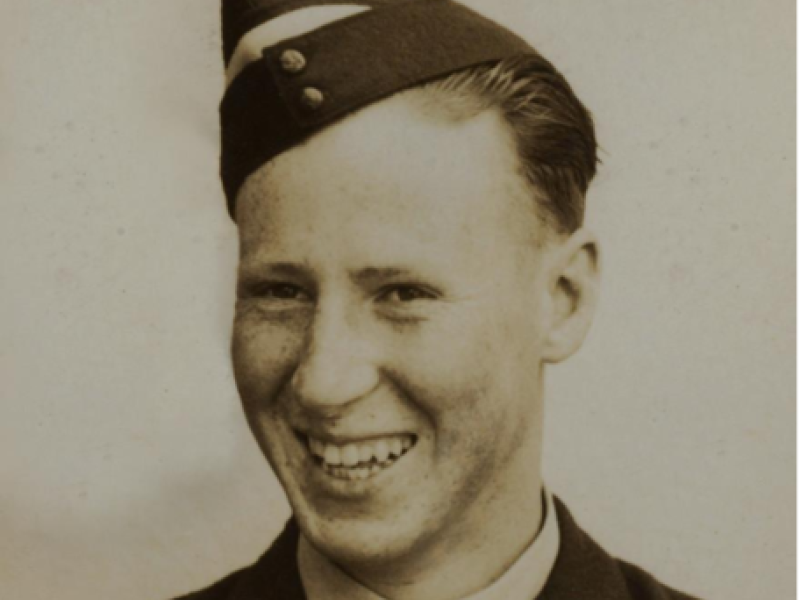
Pilot Officer Keith Omond Barnes, No. 49 Squadron, Royal Air Force
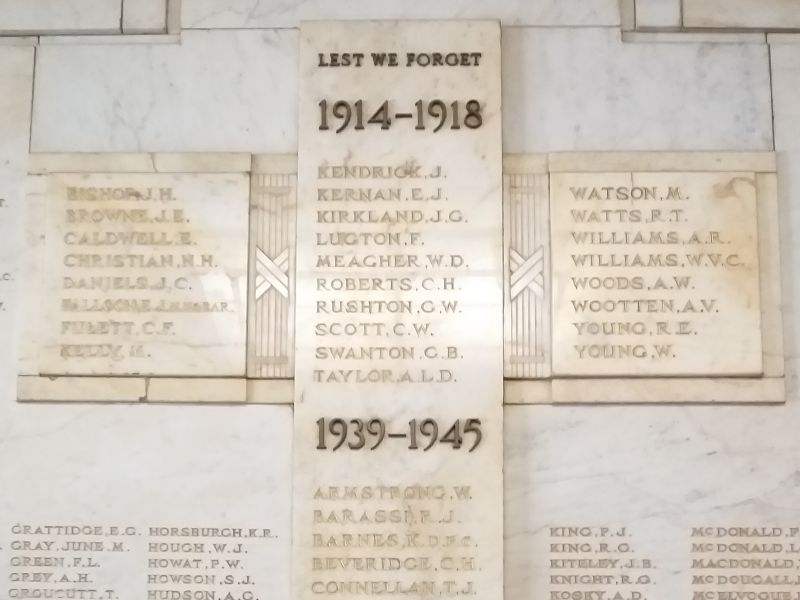
 Australian War Memorial
Keith Barnes was born on 6 March 1923 in Williamstown, Victoria. He was one of five children born to Edwin Robert Barnes, an engineer, and his wife Hilda. Keith received his education at Williamstown High School; later he went to work at the engineers’ office of Melbourne City Council, where he was employed as a junior clerk when the Second World War broke out in 1939.
Keith Barnes joined the Royal Australian Air Force at the age of 18 on 15 August 1941. His enlistment continued a proud record of service from the Barnes family, with his older brothers Ian and Max serving in the Australian Army, and Royal Australian Naval Volunteer Reserve.
Keith Barnes completed his initial training in Australia and qualified as a pilot, receiving his flying badge on 28 May 1942. In August, he embarked for active service from Sydney and in mid-November arrived in England, where, he learned to operate Oxford, Wellington and Lancaster bombers. In August 1943, Barnes joined his first operational unit, No. 49 Squadron of Britain’s Royal Air Force. Based at Fiskerton in Lincolnshire, the squadron was part of Bomber Command and was equipped with four-engined Lancasters, conducting night raids over targets in enemy territory.
In his first raid, he acted as second pilot in an attack over Berlin, and later in raids over targets including Nuremberg, Mannheim and Munich. By 1944, Barnes had completed 22 sorties and had accrued more than 160 operational flying hours.
On 27 January 1944, Pilot Officer Barnes set off on his 23rd mission as the captain and pilot of a seven-man Lancaster crew targeting Berlin. Barnes’s Lancaster was some thirty miles south of the target when their aircraft came under attack from night fighters. After the raid it was discovered that Barnes and his comrades had failed to return to base. The following day, his commanding officer wrote to Barnes’s mother.
“Your son was flying as pilot and captain of an aircraft which took off just before dark to attack a target at Berlin: since then we have heard nothing from him. I hope that later we shall have news that he is safe – though this will probably mean he is a prisoner of war. In the five months his crew had been here, it had developed into one of the best on the squadron and this was in no small way due to the excellent leadership of your son.”
Eight months later, in August 1944, Barnes’s name, and those of three of his comrades, appeared on a German death list, at which point he was confirmed to have died on 27 January 1944. The following year, Barnes was posthumously awarded the Distinguished Flying Cross for skill and fortitude in operations against the enemy.
Unable to accept that her son had been killed, Barnes mother wrote to the Air Ministry in 1945:
“We are still hoping he may be found in a hospital somewhere as so many have been found. He may have lost his memory or even been disfigured by burns. I have a strong feeling that he is not gone and being his mother I want to do everything possible to search for him. There have been so many found who have been missing longer than our son. If you could find our boy for us, we would be forever grateful. Thanking you from a very sad mother.”
In May 1946, it was discovered that Barnes’s aircraft had been shot down in the vicinity of Ahrensdorf, south west of Berlin. Four of the crew managed to parachute to safety, while Barnes and two others were killed when their Lancaster exploded into flames.
The bodies of Barnes and his two comrades were exhumed in 1946, and reburied at Berlin War Cemetery. Today, Barnes lies beneath a simple inscription chosen by his grieving family. It reads: “Duty nobly done.”
Pilot Officer Keith Barnes was 20 years old.
- AWM Roll of Honour https://www.awm.gov.au/collection/R1705981
- Virtual war memorial https://vwma.org.au/explore/people/619101