Andrew Boyd
 Stephen Learmonth
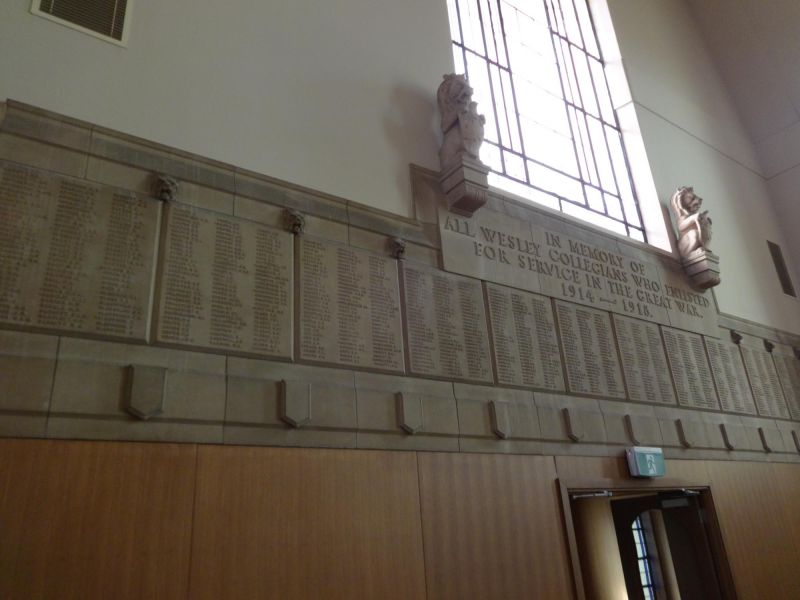
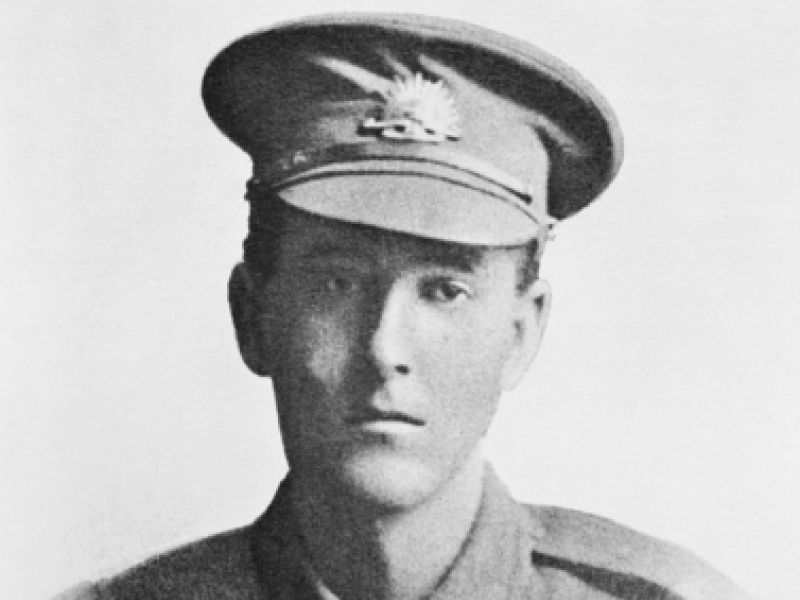
Andrew was born in Melbourne on the 21st of November, 1893, to James and Jeanie Boyd. He attended Bonegilla State School and, later, Wesley College in Melbourne. In December 1910, he joined the Bank of New South Wales at Albury, New South Wales. The following year, he worked at Wodonga and was later promoted to teller at the Culcairn Branch. In August of 1914, he became an assistant at Chiltern.
On the 4th of August 1915, Andrew enlisted at Chiltern, Victoria. He was allocated Regimental Number 3032 and placed in the 7th Reinforcements for the 24th Battalion. After weeks of training in Victoria, he embarked on HMAT A73 Commonwealth at Melbourne on the 26th of November, 1915. Andrew arrived in Egypt in January of the following year. On the 24th of February, he was transferred to the 8th Battalion.
One month later, the battalion boarded HMT Megantic at Alexandria and arrived at Marseilles, southern France, on the first day of April. The next record in his active service form is dated the 1st of November, 1916, indicating that he had been admitted to hospital wounded. On this date, the 8th Battalion was moving up the line, and no action was recorded in their war diary. It is possible that Andrew was wounded by shellfire. He was taken to the 14th Corps Midlands Division Stationary Hospital, where he was treated for wounds on his scalp. By the 5th of November, he had been transferred to the 46th Casualty Clearing Station and then to the 3rd Stationary Hospital at Rouen near Le Havre on the coast. His wounds were serious enough for him to be sent to England, where he was admitted to the Duchess of Cornwall's Red Cross Hospital and then, after one month, to No. 2 Australian Auxiliary Hospital in Southall, Middlesex. Andrew then spent from the 7th of December 1916 to the 23rd of March 1917 at No. 4 Command Depot at Wareham in Dorset. The role of these depots was to move soldiers from convalescence to 'effective'. Once soldiers were 'hardened', they were posted to the Australian Overseas Training Brigade and then returned to the front in France.
Andrew remained in England until the 15th of October, when he was sent back to France. During this time, he was promoted to Corporal for his valuable work in straightening out the camp's accounts books. He rejoined the 8th Battalion on the 18th of that month. In February of the following year, he spent ten days in hospital with dermatitis. Skin diseases were so prevalent among the soldiers in the field that the Australian Medical Corps created Divisional Scabies Stations to treat them. Andrew rejoined his battalion on the 27th of February. On that day, the battalion was making preparations to relieve the 1st Battalion at La Clytte. Upon completing the relief, they were warned to “stand to” in readiness for an attack by the enemy. Fortunately, the night passed quietly, other than some minor shelling.
In March and April, the battalion helped to stop the German spring offensive. On the 14th of April, it was stationed in trenches on the outskirts of Hazebrouck. At 0100 hours, an enemy party about 100 strong was observed approaching the 8th’s positions. It was permitted to approach within about 20 metres when heavy Lewis gun and rifle fire were brought to bear on it. It forced the enemy to withdraw, leaving their dead behind. Three hours later, enemy artillery became extremely active. During this engagement, Corporal Andrew Boyd was killed in action.
He was buried in the Nieppe-Bois (Rue-de-Bois) British Cemetery at Vieux-Berquin, 3 miles south-east of Hazebrouck, in Row B, Grave No. 21. He is also remembered at the Australian War Memorial Roll of Honour, the Villers-Bretonneux Memorial (Australian National Memorial), the Bank of New South Wales Roll of Honour Book, and the Bonegilla State School Roll of Honour. For his service, he was awarded the British War Medal and the Victory Medal
- Roll of Honour, Australian War Memorial https://www.awm.gov.au/collection/R1672212