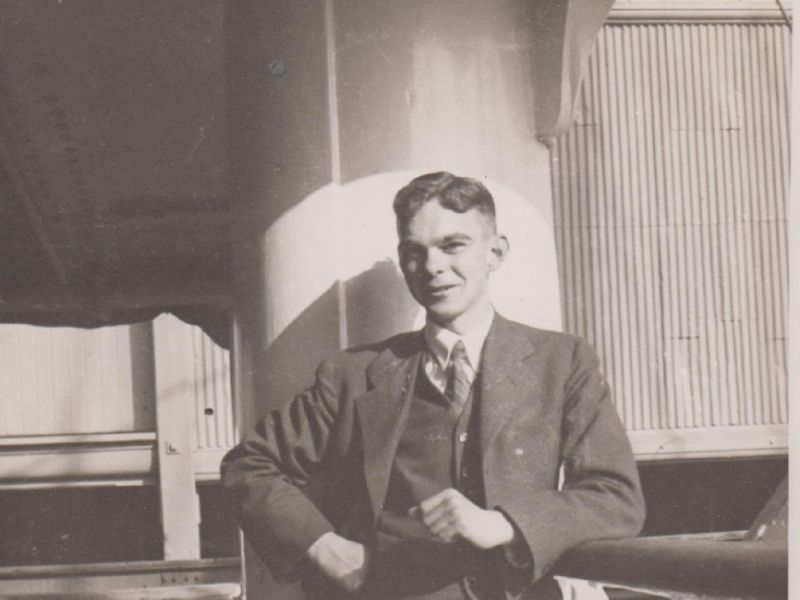
Private Eric Arnold Sandell, 2/9 Field Ambulance AAMC
 Australian War Memorial
Eric Sandell was born on 1 February 1918 in the Melbourne suburb of Camberwell. The son of John and Maud Sandell, he grew up in Melbourne with his brothers John, Arthur and Douglas, and his sister Olive.
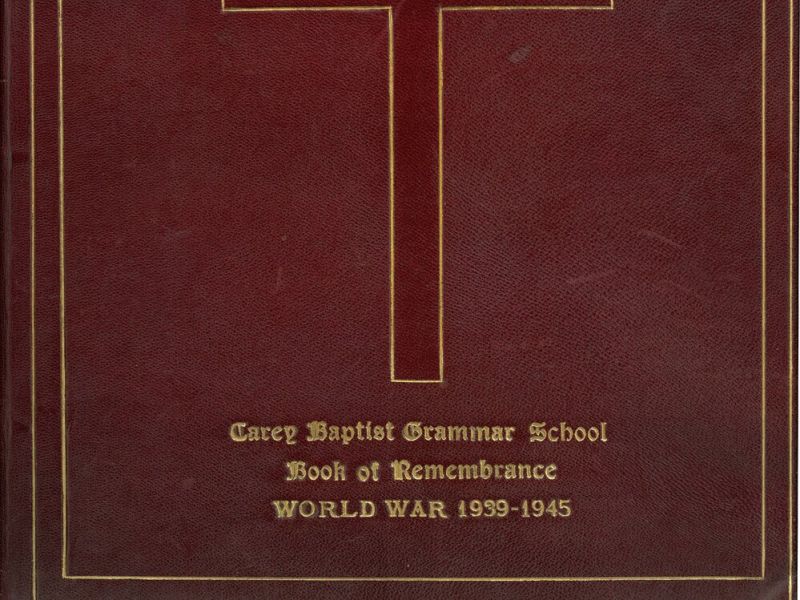
After attending Carey Grammar, he worked as a bank clerk.
In July 1940, Sandell enlisted in the Australian Army Medical Corps He was posted to the 2/9 Field Ambulance, and on 2 February 1941, the day after his 23rd birthday, Private Sandell left Sydney, bound for overseas service.
During the voyage, he was admitted to the ship’s hospital suffering from appendicitis, and after landing at Singapore, was transferred to hospital there for treatment. While recuperating, he worked as a nursing orderly, and after recovery worked treating the sick and wounded in Singapore.
The Japanese attack on Singapore began at 10.30 pm on 8 February, when two Japanese divisions crossed the Johore Strait. By 13 February the battle for Singapore Island was all but over and on 15 February, British forces surrendered.
At the infamous Changi Gaol, various medical units were amalgamated to form a combined hospital. Eric worked throughout as a nursing orderly, until mid-April of 1943, when he was allocated to F Force, one of the last labour forces to leave, which consisted of 3,662 Australians and 3,400 British.
F Force’s hardships began when they were sent to Thailand by train. Packed into suffocating metal railway trucks with little food or water, when they reached Ban Pong in Thailand, the prisoners were marched over 300 kilometres to half a dozen camps progressing toward the border with Burma.
To avoid the heat, which was at its most intense in April, the prisoners marched at night, for as much as 12 to 15 hours. When the monsoonal rains began in May, paths became impossibly slippery and treacherous. Many of the men collapsed and had to drop out.
The bulk of F Force arrived utterly exhausted in mid-May at remote and primitive camps, where acute supply problems aggravated widespread outbreaks of cholera, dysentery, malaria, beri beri, and diarrhoea.
Many of the men, particularly the British, were unwell even before they left. Isolated in up-country Thailand, remote from food and medical supplies, and drenched by monsoonal rains, a third of the Australians and almost two-thirds of the British prisoners died.
Sandell worked at Tanbaya hospital 50 kilometres south of Thanbyuzayat in Burma. Tanbaya had become a hospital for sick F Force men from Thailand in July 1943.
While he was still weakened from a severe case of dysentery, he contracted Weil’s disease. This caused high fever and jaundice, and was the ultimate cause of his death on 26 November 1943.
Today, his remains lie in the Thanbyuzayat War Cemetery, under the inscription chosen by his family:
“Greater love hath no man”.
Eric Sandell was 25 years old.
Photo credit: Carey Baptist Grammar School
- AWM Roll of Honour https://www.awm.gov.au/collection/R1697414
- Carey Baptist Grammar school https://archives.carey.com.au/nodes/view/185