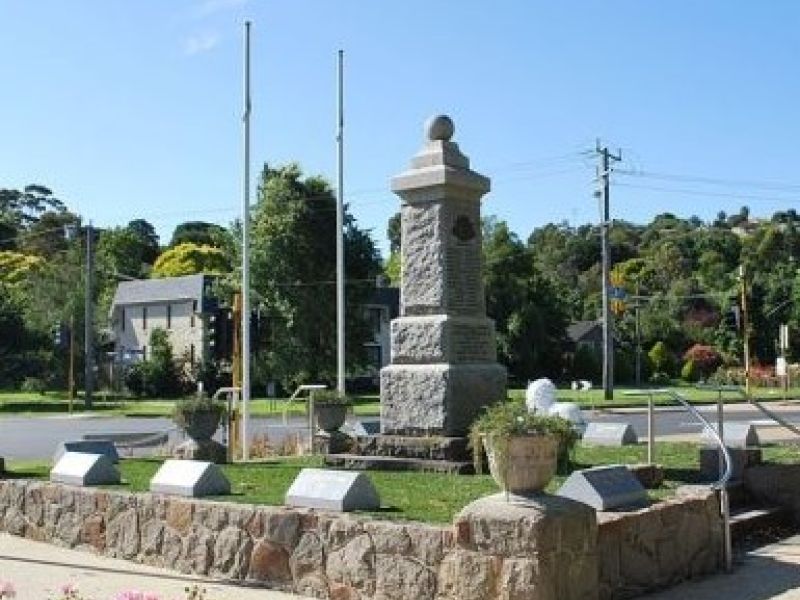
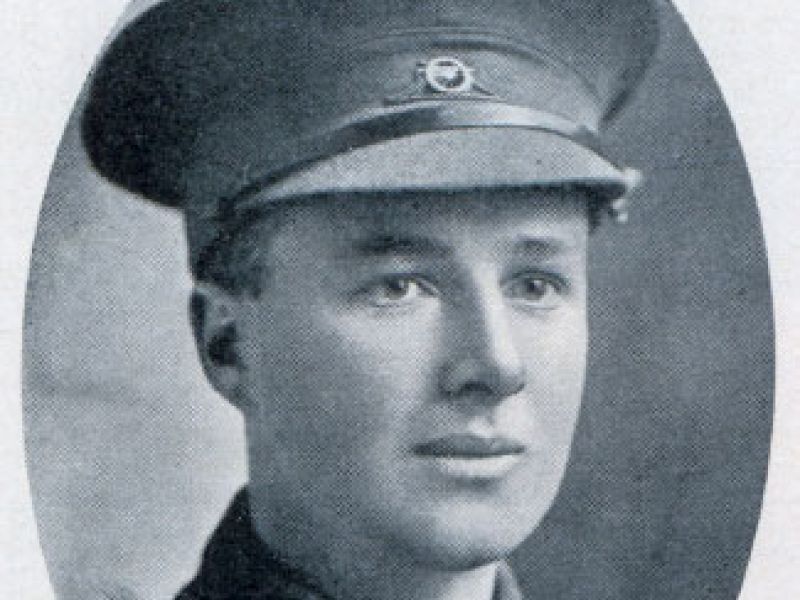
Gunner William Mervyn Lecky, 4th Australian Field Artillery Brigade, AIF
 Australian War Memorial
William Lecky was born on 7 April 1895 in Berwick, Victoria, the son of horse breeder James Lecky and his wife Maggie. William had an older brother and two sisters, and received his education at Melbourne’s Scotch College. He served in the senior cadets during his youth and was working as a grazier at the outbreak of war in 1914.
William Lecky enlisted in the Australian Imperial Force on 15 June 1915. He was assigned to the 4th Field Artillery Brigade as a gunner, and embarked from Melbourne on board the troopship Wiltshire in November that year.
Lecky reached Egypt in December 1915 and having missed the Gallipoli campaign spent several months training. In March 1916, Lecky arrived in France and joined his unit at Armentieres an area dubbed “the Nursery Sector” where newly arrived units were introduced to the fighting on the Western Front.
Just three months later, Lecky took part in his first major offensive at Pozieres, during the Battle of the Somme. The artillery fire concentrated on that section of the front razed entire villages to the ground and allied artillery brigades were in constant engagement with the enemy. After Pozieres, Lecky’s brigade was moved briefly to the Belgian front, around Ypres before returning to the Somme. Lecky was joined in November by his older brother James, who enlisted with the 8th Field Artillery Brigade.
In early 1917, Lecky’s Brigade fought during the German retreat to the Hindenburg Line. In June the brigade was moved back to Belgium working in support of allied attacks at Messines, Polygon Wood, and Passchendaele where they suffered high casualties. In November 1917, Lecky was sent to the Divisional Signal School where he underwent a three-week course, graduating as a qualified signaller.
In August 1918, Lecky was recommended for the Military Medal for his actions at Herleville, where he and his comrades worked under dangerous conditions to maintain lines of communication and enable them to send and receive information of tactical importance. The recommendation notes that, “During the day these men worked under great difficulty from the forward OP station to the relay post under heavy shell fire and only due to an utter disregard for personal safety succeeded in maintaining the line”.
Just five days later, on 1 September, Lecky was involved in the allied advance at Mont St Quentin. He and his comrades went out to repair cut communication lines when Lecky and several others were hit and killed by a shell. In a report of his death given to the Red Cross, a comrade noted that Lecky was well-liked and esteemed by the other members of the battery.
At home in Australia, Lecky’s parents received the news that their son had been killed in action during the advance on Mont St Quentin, just months from the war’s end. After armistice was declared in November, Mr and Mrs Lecky received the news that William’s brother James had succumbed to wounds received in action, and had died at the 10th General Hospital in Rouen, France.
William Lecky was buried at Peronne Communal Cemetery, beneath the inscription selected by his parents: “Greater love hath no man than this”.
He was 23 years old.
- AWM Roll of Honour https://www.awm.gov.au/collection/R1639488