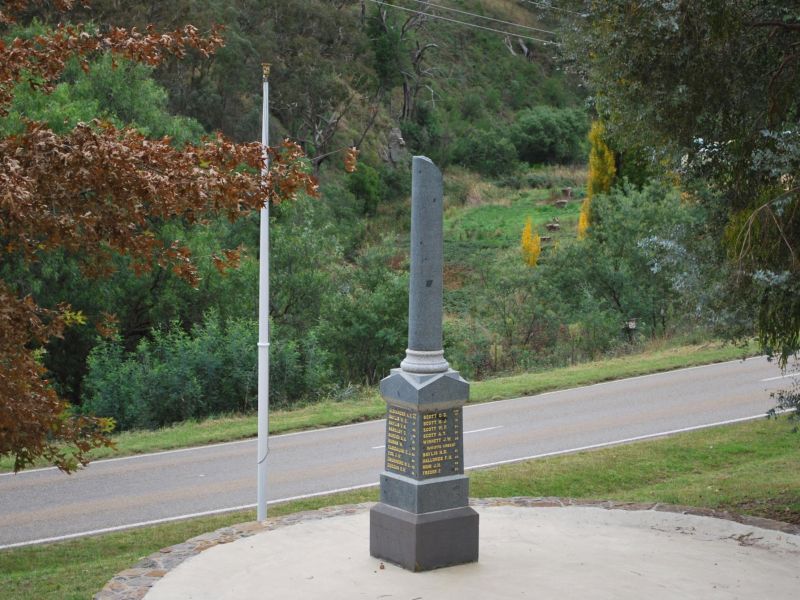
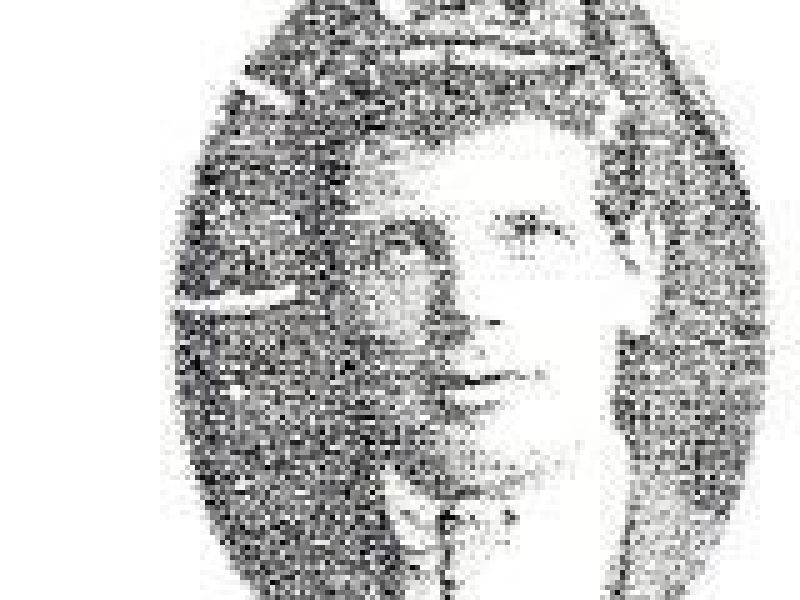
Sapper Charles William Heyne, 2nd Company, Australian Field Engineers
 Australian War Memorial
Charles Heyne was born on 18 February 1879 in Maffra, Victoria. Known as “Charlie” to friends and family, he was one of ten children born to Charles Heyne senior, a German immigrant, and his wife Susannah. Little is known about Charlie’s early life. As a young adult, he moved to Tasmania where he became a blacksmith’s apprentice. During this period, he joined the 3rd Contingent of the Tasmanian Imperial Bushmen, and sailed with them in April 1900 to take part in the war in South Africa. Charlie Heyne returned to Tasmania some 18 months later, after which he married Bertha Faulkner in the town of Devonport.
Over the years which followed, two sons were born to the couple: Carl in 1904 and Ronald in 1906. Shortly after, the family moved to Victoria, and settled in the town of Bruthen where a third son, Owen, was born in 1909. In 1911, Charlie’s wife Bertha died while on a trip to visit her family in Tasmania. Charlie and his three young sons remained in Victoria, and were living in Ensay when the First World War broke out in 1914.
Having previously served in South Africa, Charlie Heyne attempted to enlist in the Australian Imperial Force. He was twice rejected on medical grounds, before being accepted in July 1915. He was assigned to reinforcements of the 2nd Field Company Engineers with the rank of sapper. He left his three sons in the care of his sister, and proceeded to camp for training. Heyne travelled to Sydney for embarkation, where he met a woman named Charlotte Peacock. The two became engaged before Heyne sailed for the front in December 1915.
After several weeks at sea, and a short stay in Egypt, Sapper Heyne joined his unit near the village of Fleurbaix in early April 1916. Over the months which followed, Heyne and his comrades were involved in maintenance works along their section of the front. This included the construction of parapets, dugouts, duckboards, concrete machine-gun shelters and improving trench drainage.
In late July 1916, Heyne and his comrades were sent south to the village of Pozieres, which had been obliterated by shell-fire during heavy periods of fighting. They worked on the construction of communication trenches, saps, dugouts and machine-gun posts in support of infantry units, despite having to labour under intense barrages from enemy lines.
In early August, the 2nd Field Company was sent to the rear areas where it was employed constructing divisional baths and undertaking regular camp maintenance. Heyne and his comrades passed two weeks behind the lines, before returning to the front on 16 April. Two days, later, Heyne was selected to join a party of men sent into no man’s land to construct a strong point. While they were undertaking this work, Heyne was shot and killed by an enemy sniper.
Heyne’s commanding officer, Lieutenant Reid, wrote to Heyne’s three orphaned sons:
“Your father’s death is greatly regretted in the company, for he was fully appreciated as a brave soldier and a straight going man. I know how fond of you and your brothers your father was, and how he wished you to grow up into fine men. Although this cruel war has robbed you of him you must not lose sight of his teachings and actions. Unselfishly he left Australia and all it held for him to answer his country’s call. Now he has given the most a man can give – his life. I am sure that you lads will be anxious to prove worthy of such a father, of whom you may be justly proud.”
Charlie Heyne’s final resting place was not located after the war. His sons, Carl, Ronald and Owen, were sent to Tasmania to live with their grandparents. His second eldest, Ronald, went on to join the Australian Army during the Second World War and served in the Middle East and New Guinea until his discharge in 1946.
Today, Sapper Charlie Heyne is commemorated on the Australian National Memorial at Villers-Bretonneux in France.
He was 37 years old.
- Australian War Memorial Roll of Honour https://www.awm.gov.au/collection/R1635963
- Virtual War Memorial Australia https://vwma.org.au/explore/people/302354