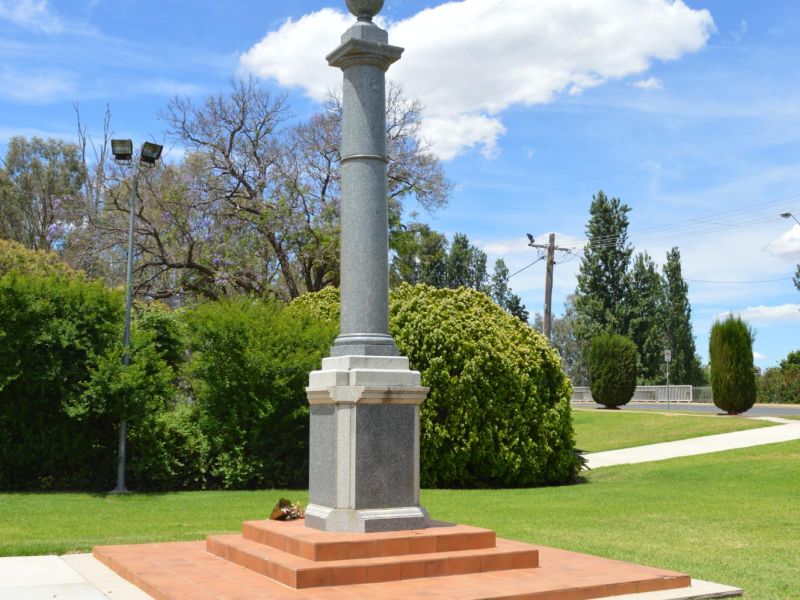
Private Darcy Stephenson Taylor, 2/19th Australian Infantry Battalion
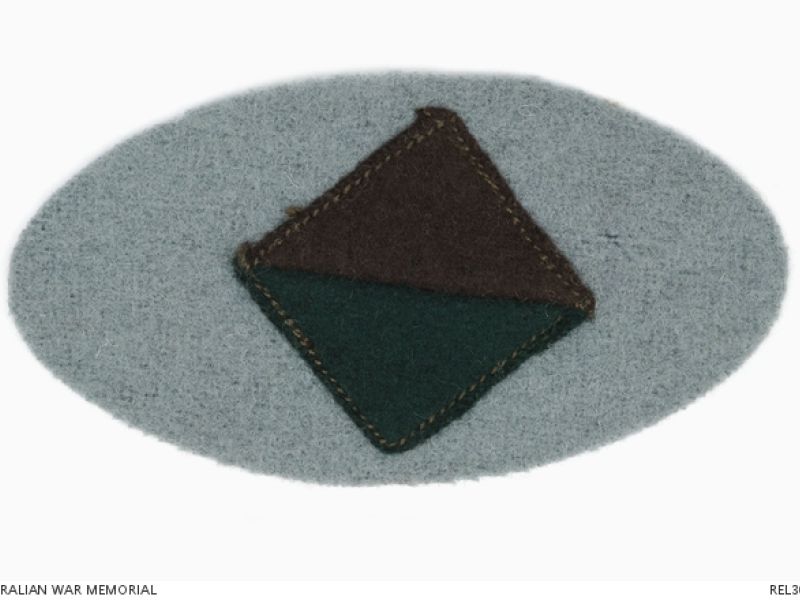
 Australian War Memorial
Darcy Taylor was born on 11 October 1919, the son of William and Isabelle Taylor of Glen Innes in New South Wales.
Darcy’s father William worked at the railway station at Nevertire, at the junction of the Mitchell and Oxley Highways. Darcy went on to work as a roustabout on sheep and cattle stations, moving to where the work was to be found, and using Nevertire as his base.
Darcy Taylor enlisted in the Second Australian Imperial Force on 24 April 1941 at Paddington in Sydney.
During his medical, the doctor noted that the 21-year-old was sporting a tattoo of a dancing lady on his right upper arm, and he had a scar on the back of his head.
After entering camp in Sydney, Private Taylor travelled to Dubbo, where he joined a training battalion. After taking pre-embarkation leave in July, towards the end of the month he embarked for Sydney, bound for overseas service.
After contracting mumps during the journey, Taylor was taken to hospital when he arrived in Singapore in August. After a period of rest and recuperation, he joined the 2/19th Battalion on 3 October 1941, as it began to move to Jemaluang on the east coast of modern-day Malaysia. Jemaluang was the site of a vital road junction. With Japan’s involvement in the war becoming increasingly likely, much of the battalion's time was devoted to preparing defensive positions.
Taylor had a period of special leave at the end of November, and returned to duty only to be hospitalised with malaria. As Taylor was transferred to a convalescent depot in mid-December, events began to overtake him.
His battalion had been stood to arms on the night of 6 December, but a month would pass before it was in action. Portions of the battalion were detached to help form a special force deployed to delay the Japanese approach to Endau, and in mid-January it was redeployed to the west coast. The 2/19th was rushed forward to reinforce the 2/29th Infantry Battalion at Bakri and held the crossroad long enough to enable the withdrawal of the remnants of the 2/29th and the 45th Indian Brigade. But they had already been outflanked by Japanese forces, and began a torturous withdrawal through a succession of Japanese roadblocks. With ammunition exhausted, casualties mounting, and no chance of relief, the force struck out through the jungle on the morning of 23 January and was forced to leave its wounded behind; they were subsequently massacred.
After reinforcement, reorganisation and training, the remainder of the battalion was on Singapore Island by the end of January. When the Japanese launched their invasion of on the night of 8 February, the Allied position was readily infiltrated and the battle degenerated into vicious engagements in the dark. Like most Australian units involved, the 2/19th fell into a desperate retreat that ended with surrender on the outskirts of Singapore city on the night of 15 February.
Those taken prisoner faced imprisonment in the sprawling Changi prisoner of war camp, before being allocated to external work parties, including those sent to work on the notorious Burma–Thailand railway. Smaller groups were bound for camps in Borneo, Japan, French Indochina, Java, Sumatra, and Malaya. When the 2/19th Battalion was formally disbanded later in 1945, it had suffered the highest casualties of any Australian Army unit during war.
While Private Taylor would be spared the horrors of life as a prisoner of war, he was among the many casualties. Initially reported as missing on 16 February, he was later declared to be presumed dead.
With no known grave, today he is commemorated on the Singapore Memorial in Kranji Cemetery, which bears the names of more than 24,000 casualties who died in Malaya and Indonesia, or in subsequent captivity, and have no known grave.
We remember Private Darcy Stephenson Taylor, who gave his life for us, for our freedoms, and in the hope of a better world.
- AWM Roll of Honour https://www.awm.gov.au/collection/R1698640