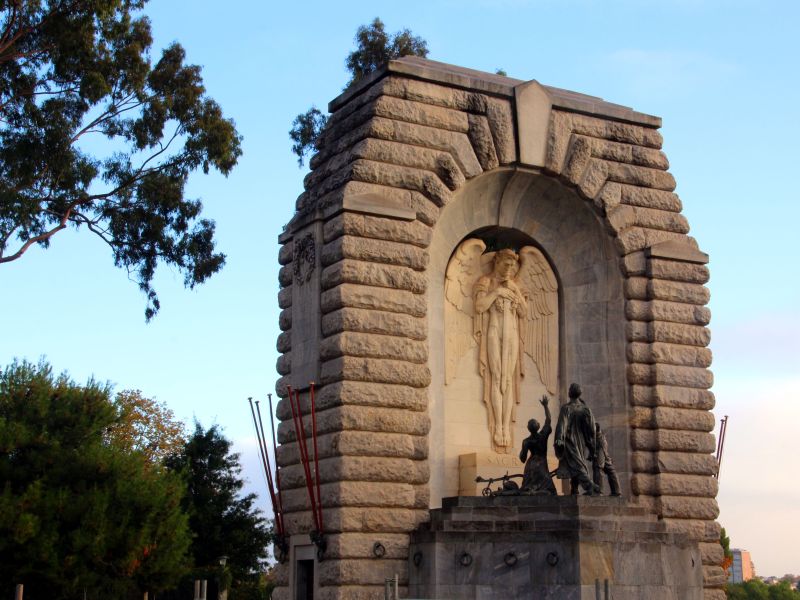
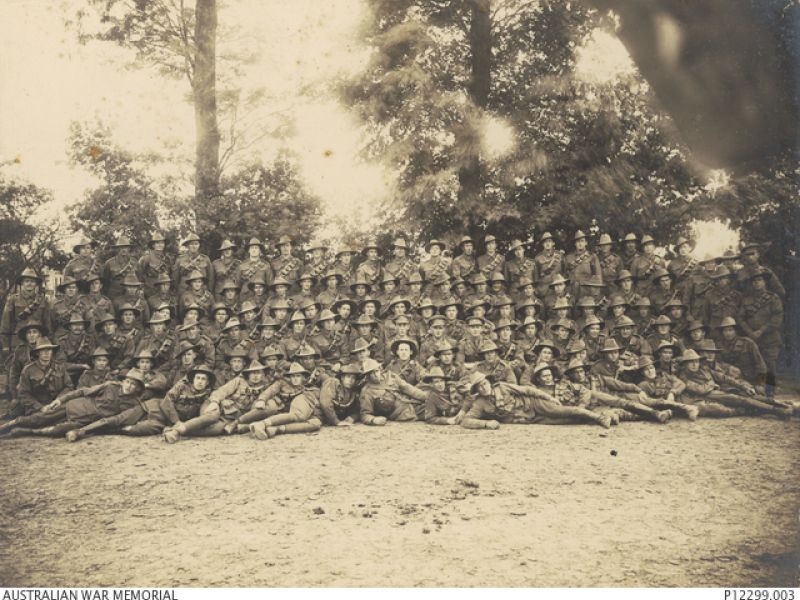
Bombardier Sydney Charles Harper, 6th Australian Field Artillery Brigade, AIF
 Australian War Memorial
Sydney Charles Harper was born in late 1880 in Bromley, in the English county of Kent, to Emily and Edward Harper. Sydney attended the local school, and trained as an electrician.
Harper served in the Royal Horse Artillery as a horse driver for five years full time, and a further eight years in reserve. With the artillery, he served in the South African (or Boer) War before being invalided home in 1901 with enteric fever.
In 1904, Harper married Annie Leach in Bromley. The English census of 1911 shows that the couple had a baby daughter, Phyllis, but little else is known about the family.
In about 1912, Harper emigrated to Adelaide, while his wife and family remained in England. His reasons for moving are not known, but his older brother Bertie was living in South Australia at the time.
After Britain declared war on Germany in August 1914, Harper volunteered for service with the infantry of the Australian Imperial Force. He was rejected for service, though the reasons are unclear. However, in September 1915, Harper volunteered again, and this time, with his experience in the British artillery, he was accepted for service in the 18th Battery of the 6th Australian Field Artillery Brigade.
After a period of initial training in Australia, Harper embarked at Melbourne on the transport ship Persic in November 1915. The 18th Battery arrived in Egypt in December, and trained at the army camps there until March 1916.
From Egypt, the battery sailed to France and first entered the lines in the Somme sector in April 1916. The men spent the year firing in support of British and Australian infantry attacks on German positions near Pozieres and other locations on the Somme.
Harper excelled at his work and was promoted to the rank of bombardier in August 1917. He was granted ten days’ leave shortly afterwards, which he spent in the United Kingdom. When he returned to the battery in early September, it was stationed near the border between France and Belgium. British commanders had shifted their focus north, to the Belgian town of Ypres. During September and October, the battery fired in support of the British attacks at Menin Road and Polygon Wood.
Artillery batteries were a target for enemy artillery barrages, known as counter-battery fire. The 18th Battery was shelled at the end of October, and Harper was struck by shell fragments and wounded in his right shoulder. He was evacuated to a hospital in England for recovery.
Harper returned to his battery in February 1918. During that year, the battery supported British and Australian infantry attacks, including their major offensives that began in August. In early October, Harper was wounded again, this time in his left leg. He was evacuated to a hospital in the French port town of Le Havre.
Harper was last seen alive on 11 November 1918, the day of the Armistice. French police retrieved his body from the water of the port. A military court of enquiry found that he had accidentally drowned, but how exactly it had occurred was never fully understood.
Sydney Harper was 37 years old. He was buried in Sainte Marie Cemetery in Le Havre, alongside more than 1,600 Commonwealth servicemen of the First World War.
Sydney’s brother Lance Corporal Bertie William Harper also served on the Western Front in the 10th Battalion. He was badly wounded in the neck in 1918, and returned to Australia as a result of his wounds.
- AWM Roll of Honour https://www.awm.gov.au/collection/R1637366
- AWM photo collection item https://www.awm.gov.au/collection/C2109321