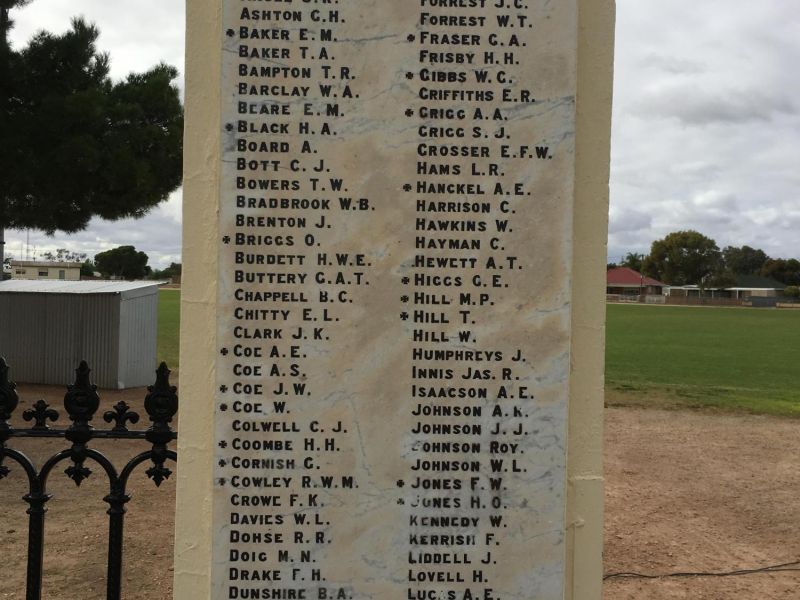
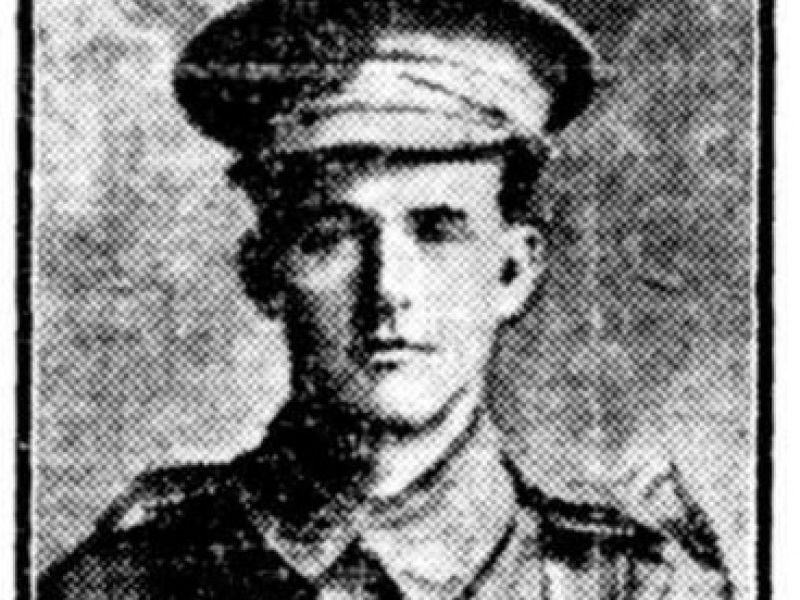
Private Herbert Glanville Cornish, 48th Australian Infantry Battalion
 Australian War Memorial
Herbert Cornish was born on 18 June 1894 in Clare, South Australia. Affectionately known as “Glan”, he was one of ten children born to Albert Cornish, a gardener, and his wife Ada. Glan was educated locally, and was working as a farmer at the outbreak of the First World War in 1914.
Glan Cornish enlisted in the Australian Imperial Force on 14 April 1916. He was assigned to the 3rd Reinforcements of the 48th Battalion with the rank of private, and started a short period of training. In May, he married his sweetheart, Ivy Helena Prime, in the town of Bowmans, before returning to Adelaide to embark. He left Australia on board the troopship Seang Bee in July 1916, never to see his homeland again.
Private Cornish arrived in Plymouth, England, on 9 September. There, he continued training before embarking for the Western Front in December. He joined his unit in the front lines in early 1917, where it suffered through a bitterly cold winter in the trenches.
Soon after, the enemy began their strategic withdrawal to the fortified Hindenburg Line. Allied units eagerly followed the enemy’s retreat, believing the war was perhaps finally drawing to a close. It was not long, however, until their withdrawal halted at the enemy’s new front line, near the French village of Bullecourt. Here, the allies planned to mount an attack to break through German lines and capture the village.
Cornish’s 48th Battalion attacked on the morning of 11 April 1917, under cover from tanks, rather than artillery. As they jumped over the parapet, the tanks quickly proved ineffective and the attacking infantry were left exposed to murderous enemy fire. One of Cornish’s comrades described the attack, writing in a letter home:
“I tell you it was hell let loose on that day. Our guns opened fire at 4am and the air seemed to be on fire with shells screeching over us. Of course Fritz took a tumble that we were going to attack and opened fire in return and it was awful … when we hopped out the machine-guns and rifles tore into us. Men were dropping all round and when the officers saw the state of things, they ordered us to drop down and what was left of us dropped into shell holes and kept low. My mate had a bullet right through his ribs and another poor fellow who made an attempt to go back to the trenches was shot dead.”
Soon forced to retreat, allied units suffered more than 3,000 casualties in one day. The battalion’s commanding officer noted in the unit’s war diary, “Had the tanks shown more pluck and initiative, I believe things would have been quite different. No words of mine can express the pride and admiration I feel for these brave men.” Among the thousands of dead was Private Glan Cornish, who had been killed by shell-fire during his unit’s advance on Bullecourt.
Cornish’s final resting place was never found, and his wife chose to pay tribute to him in the Express and Telegraph newspaper. She added a short memorial notice in 1918 which read:
“God holds the key of all unknown. Sometime we’ll understand.”
- AWM Roll of Honour https://www.awm.gov.au/collection/R1729014
- Virtual war memorial https://vwma.org.au/explore/people/370502