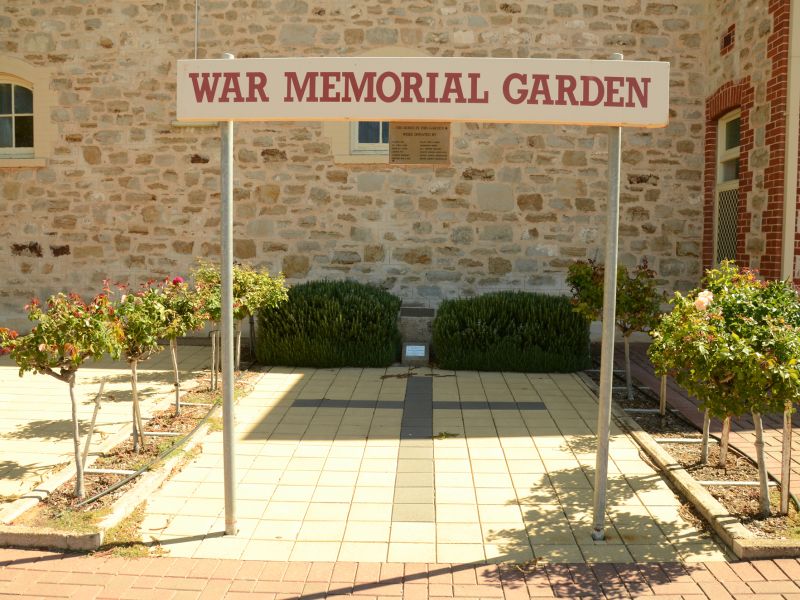
Private Charles John Dullea, 43rd Battalion
 Australian War Memorial
Charles Dullea, known as “Charlie”, was born on 6 April 1882 in Eudunda, South Australia. He was the second eldest son of Daniel and Mary Dullea, who shortly after Charlie’s birth took their family to the South Australian town of Saddleworth. He grew up in a large family. His father worked on the railways, and died when Charlie was a small boy. His mother was a keen gardener and faithful member of the Catholic church. Charlie was educated at the Saddleworth Public School, and grew into what was described as an “exceptionally fine physique.” After completing his education, he took up farming at Bute, near Snowtown in South Australia.
Charlie Dullea attempted to enlist in the Australian Imperial Force a number of times after the outbreak of war in August 1914, but was not accepted for active service until March 1916. By that time three of his brothers, Michael, Thomas and Ted, were in Egypt training in the desert. Charlie began training in Australia before leaving for active service in June 1916 on board the troopship Barambah.
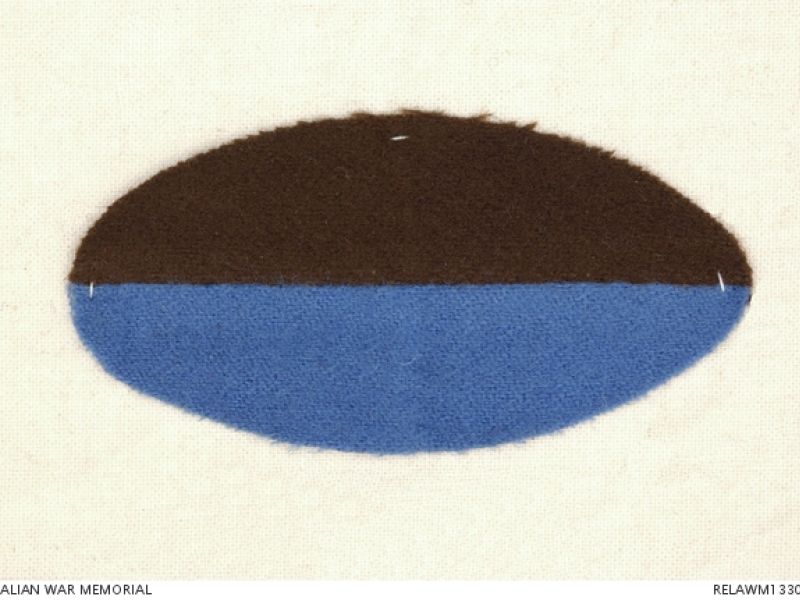
Unlike his brothers, Private Charlie Dullea was first sent to England, and completed his training on the Salisbury Plain. Although he had left Australia with reinforcements to the 10th Battalion, he was soon transferred to the 43rd Battalion, another South Australian formation. After completing his training he was sent to join his battalion on the battlefields of the Western Front in France in November 1916.
Private Dullea arrived in France just as one of the coldest winters on record was setting in. Within a few weeks he fell ill with the mumps, and was taken to hospital in Etaples to recover. He returned to his battalion, and remained with it through the winter and into the spring of 1917.
The 43rd Battalion’s first major action came at the Battle of Messines in June 1917, although it largely remained in reserve. The battalion stayed near Messines in the weeks that followed, guarding the newly captured ground.
On 30 July the 43rd Battalion began once again to prepare for another operation, which would also take place along the ridge behind Messines. At 3.40 am on 31 July the 43rd Battalion launched an attack on operations near the River Douve, capturing all of its objectives.
During the operation, 35 men of the 43rd Battalion were killed, and another 180 were wounded or missing. Private Charlie Dullea was one of the wounded, carried from the battlefield with a gunshot wound to the head. He was taken to the 9th Field Ambulance, and from there to the 2nd Australian Casualty Clearing Station. By the time he arrived he was too unwell to move further, and he died of his wounds on 1 August 1917.
Private Charles Dullea was buried in the nearby Trois Arbres Cemetery at Steenwerck, where his remains lie today under the epitaph “beloved son of Mary and the late Daniel Dullea of Salddeworth.” He is not the only Dullea with that epitaph on the Western Front. His older brother Michael was killed at Pozieres in 1916, and his youngest brother Ted was killed at Noreuil in April 1917. Only Thomas returned to Saddleworth.
- Roll of Honour, Australian War Memorial https://www.awm.gov.au/collection/R1724502