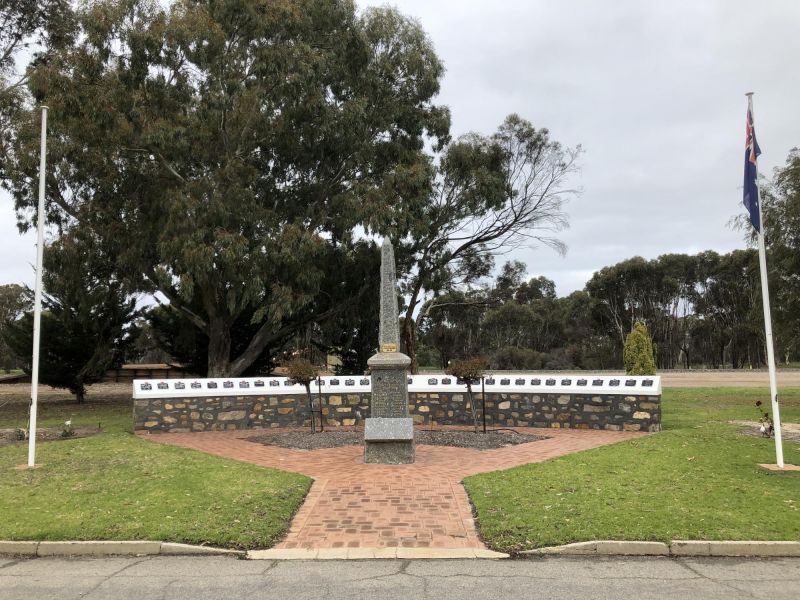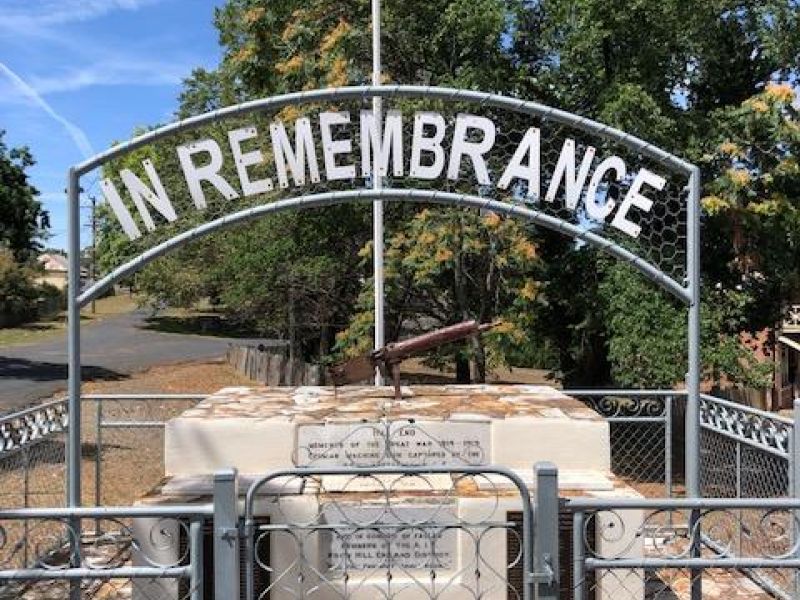
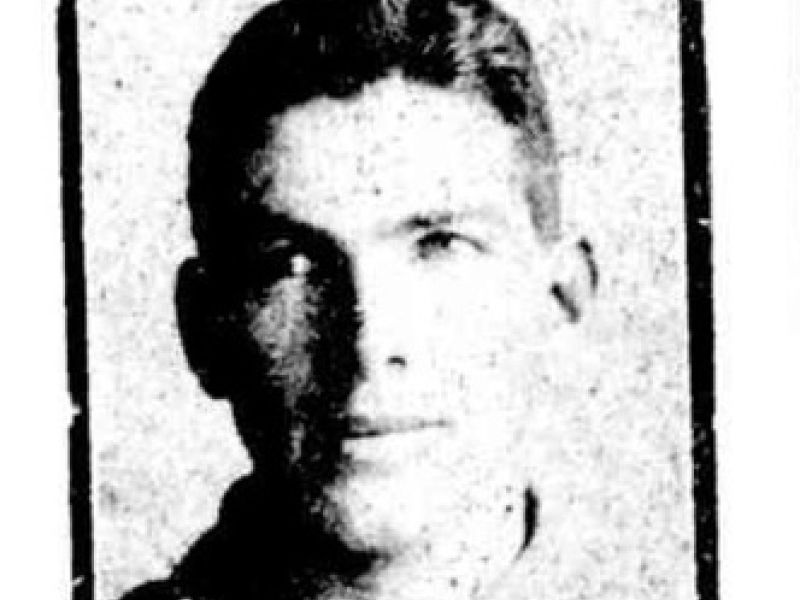
Lance Corporal John Ashton, 16th Battalion, AIF
 Australian War Memorial
Jack Ashton was born in 1891 in Hill End, New South Wales, to Thomas and Isabella Ashton, the second of their five children. He grew up in Hill End and attended Hill End Public School.
By the time he was an adult the family had moved to a farm near Cranbrook, Western Australia, which they named Ashtondale. John Ashton was working on the farm with his father.
When the First World War began Ashton enlisted for service in the Australian Imperial Force on 29 September 1914. He joined the newly-raised 16th Battalion.
The 16th Battalion was sent to Broadmeadows Camp in Victoria, where the other three battalions of the 4th Brigade were brought together for training. With the onset of winter, training conditions were tough, especially for the Western Australians who were used to the warmer weather. Ashton became a signaller and was attached to battalion headquarters. He embarked with his battalion from Melbourne on 22 December aboard Ceramic, bound for Egypt.
The 16th Battalion was soon taking part in the Gallipoli campaign. Ashton described the landing in a letter to his brother while recovering in hospital after being wounded:
“Of course you have heard all about the landing. I can tell you it was grand the way our lads got to work, never waiting for anything, but rushing the Turkish trenches and machine guns. Our lads went down in dozens, but that did not deter the others. I fortunately dodged everything for seven days. I had many narrow escapes, but perhaps the closest was caused by 6-inch shells from our ships.”
After five days, the 16th Battalion was relieved from the front line and was sent behind the lines for a rest. But the Turks had made a trench overlooking the Australian transport and lines of communication, so the battalion was ordered to eliminate the Ottoman position.
As the men neared the top of the gully many were forced to climb on their hands and knees. Ashton described what happened next:
“The last lift up to the top of the hill was a wall-like bluff, about 9 feet high, and we had to help one another to get up … We were under fire from both sides and the front as well. In about five minutes that gully was in a bad way for killed and wounded Australians.”
Ashton was part of the advance that moved towards the Ottoman trench:
“We made a sort of line, but the fire was like Hell, and our fellows were just wavering when someone yelled ‘charge!’ and we went through those Turks like lightning. I had just managed to get within a foot or two of the trenches when I stopped one through the shoulder, and dropped into a hollow.”
The 16th Battalion had entered the battle with 17 officers and 620 men. When they were withdrawn from the front line the following day, only 9 officers and 290 men answered the roll.
Ashton was sent to England for some months to recover from his wound, but he thoroughly enjoyed his convalescence.
“There are about 30 fellows here, and almost as many young ladies who have volunteered from the surrounding districts to look after us. We are in what is known as a Manor, and the ‘big guns’ from around bring their motor cars and take us out for spins. It is real bonza."
Ashton sailed from England for return to Gallipoli. He arrived on Mudros on 13 September and re-joined the 16th Battalion which, along with the rest of the 4th Brigade, had left Gallipoli for a rest. He returned to duty with the battalion’s signals section.
In October Ashton was admitted to the 3rd Australian General Hospital with colitis. He returned to his battalion on 22 September. On 29 September he was back, suffering from haemorrhoids and soon he was reclassified after developing enteric fever. On 8 November Ashton was transferred to the 3rd Australian General Hospital.
His condition was listed as dangerously ill on 1 December, and he died seven days later. He was laid to rest in the Portianos Military Cemetery on Lemnos. The epitaph on his headstone reads: “Not Forgotten”.
He was 24 years old.
- Australian War Memorial Roll of Honour https://www.awm.gov.au/collection/R1725343