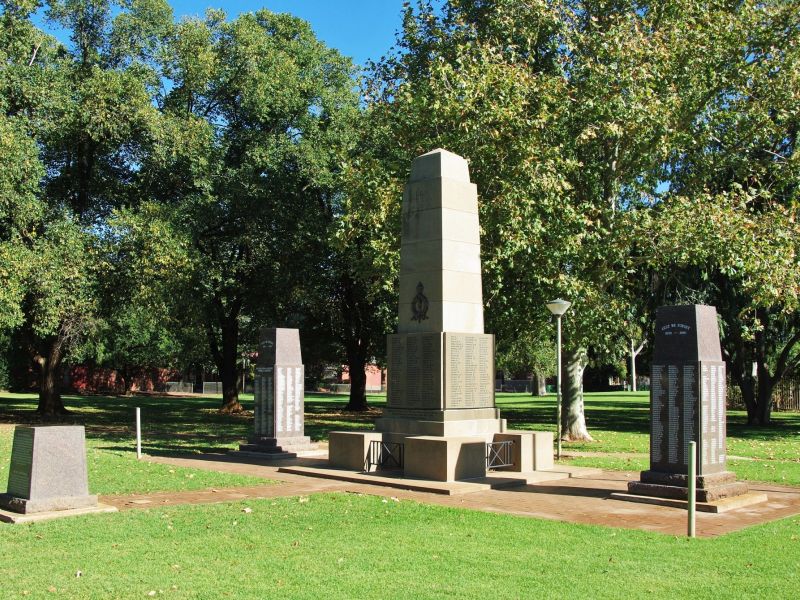
Private William Raymond Harvey, 55th Australian Infantry Battalion
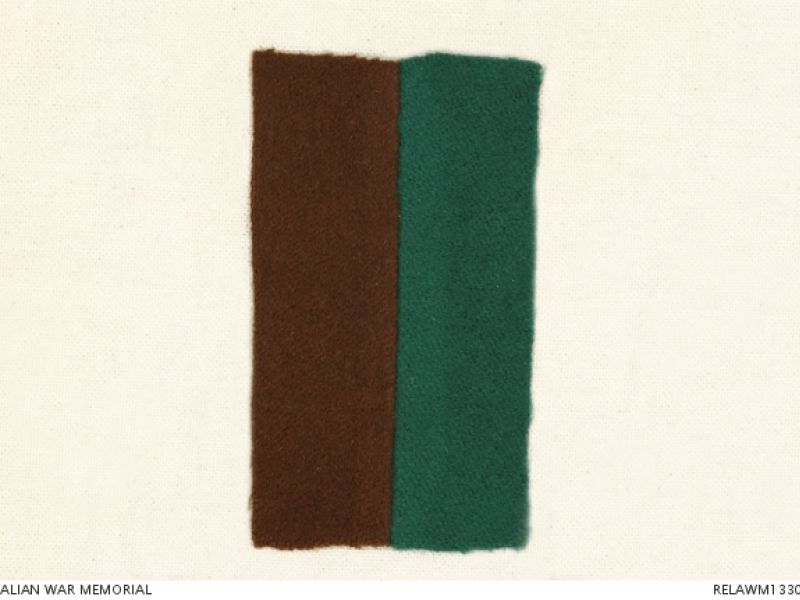
 Australian War Memorial
William Harvey was born on 19 May 1891 in Old Junee, New South Wales. Known as “Ray”, he was one of 16 children born to Robert Harvey, a farmer, and his wife Amy. Ray grew up on the family farm at Combaning, near Temora, and was educated at the local public school. As a young adult, Ray worked alongside his father and siblings on the farm. When the First World War broke out in 1914, he was working as a labourer.
Ray enlisted in the Australian Imperial Force on 8 August 1915. He was assigned to the 6th Reinforcements of the 17th Battalion with the rank of private and commenced a short period of training in Australia. He embarked for active service on 2 November that year, sailing from Sydney on the troopship Euripides.
After several weeks at sea, Private Harvey arrived in Egypt. He was soon transferred to the newly formed 55th Battalion during a period of expansion in the AIF. He remained in Egypt until June 1916, when his unit embarked for the Western Front. They disembarked at Marseilles and were immediately sent north to the Franco-Belgian border, which had once been the site of bitter fighting and was now known as the “nursery sector” where new troops could be introduced to life in the trenches.
Harvey’s unit was called into action near the village of Fromelles to prevent German reserves from moving south to take part in the battle of the Somme. The attack was hastily devised, and poorly executed; it resulted in utter carnage. By the time the battle was called off, the 5th Division alone had suffered over 5,500 casualties. Among the wounded was Private Ray Harvey, who was shot through the leg during their advance.
Unable to walk, he was evacuated to England for treatment. He wrote to his parents:
“I was not severely wounded, just a scratch compared with what some of my comrades have suffered. We have had some fairly rough times, where it rains so frequently. One often expects the enemy to make an attack, when it often turns out that the boot is on the other foot, by having to do the attacking ourselves. I do not think the war will last much longer. A matter of about six or nine months.”
Harvey did not return to the front until December 1916, just as a bitterly cold winter began to set in. In early 1917, he again found himself in hospital after being scalded in an accident behind the lines. While being treated for burns to both of his feet, Harvey began to suffer from appendicitis, and was returned to England for treatment.
In June 1917, Private Harvey re-joined his unit in Belgium as bitter fighting took place around the Ypres Salient. Over the months which followed, the 55th Battalion alternated between short stints in the front lines and training exercises in the rear areas. In September, Private Harvey fought at Polygon Wood, where Australian units suffered a further 5,770 casualties. The rest of the year was spent defending allied gains around the Messines-Wytschaete sector during a cold and muddy winter.
In early 1918, German forces launched a major offensive along the allied front. The 5th Australian Division was moved to defend the sector around Corbie in northern France, and were involved in heavy fighting around the town of Villers Bretonneux.
At the Battle of Hamel on 4 July, the 55th Battalion mounted a diversionary raid along the River Somme. The first line of trenches was taken with little difficulty, but they met resistance at the second and were forced to withdraw. The battalion sustained 70 casualties. Among the dead was Private Ray Harvey. One of his comrades told the Red Cross:
“Harvey was wounded, and instead of going back to the dressing station, he remained to give a hand to the others and then got a second bullet that finished him. He was a very fine chap and was held in the highest esteem by all the boys.”
Today, Harvey lies at Franvillers Communal Cemetery Extension in France.
Private Ray Harvey was 22 years old.
- Roll of Honour, Australian War Memorial https://www.awm.gov.au/collection/R1636962