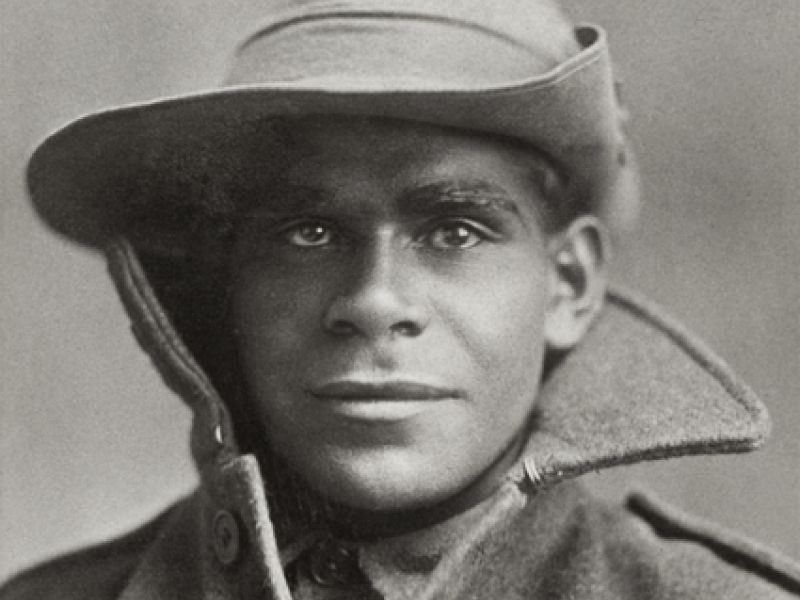
Private Miller Mack, 50th Infantry Battalion
 Australian War Memorial
Miller Mack was born on 1 March 1894 at the Point McLeay Mission Station on Ngarrindjeri country in South Australia (today known as Raukkan). He was the fifth-born child of John Telwara Mack and Margaret Katipelvild Pinkie Karpany. The family lived and worked at the Point McLeay Mission, which was run by the Aborigines’ Friends’ Association from 1859 until it was transferred to state government control in 1916. Miller attended the mission school with the children from other Ngarrindjeri families living at the station, and the Indigenous children living in the dormitories on the mission. After he finished school, Mack worked as a labourer on the mission’s farm and played for the local Manuka Football Team.
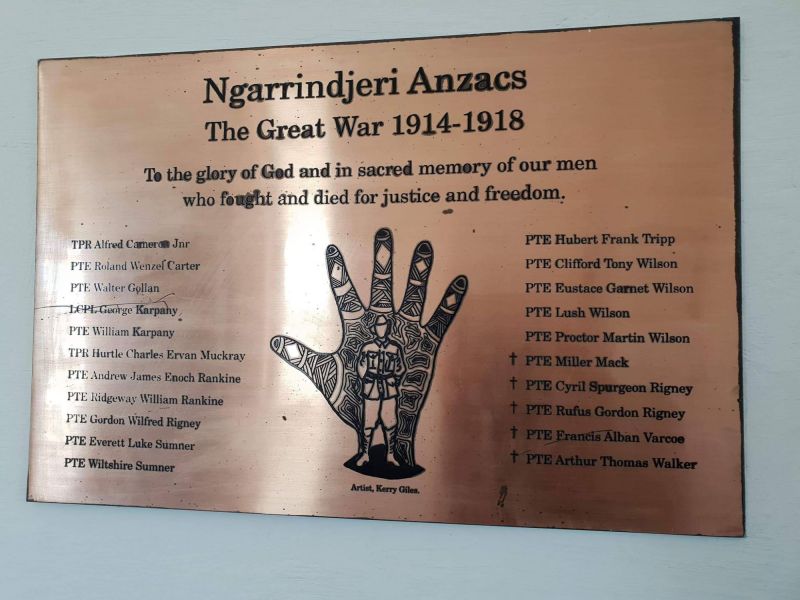
Miller Mack enlisted in the Australian Imperial Force on 23 August 1916, with fellow Ngarrinderji men Francis Alban Varcoe and Clifford Tony Wilson. He was assigned to the 7th reinforcements of the 50th Infantry Battalion in the rank of private, and began training at the Mitcham Camp outside Adelaide. Private Mack returned home to the Point McLeay Mission on embarkation leave before departing for England aboard the troopship Afric on the 6th of November 1916.
Mack fell ill on the voyage to England, with a fever and cough, but spent the rest of the voyage in good health. Private Mack arrived at Plymouth on 9 January 1917, and joined the 13th Engineering Battalion for further training. Mack was admitted to camp hospital three times with influenza between January and April 1917.
Miller Mack departed England for France in May 1917, joining the 50th Infantry Battalion on 13 May in Buire. A few days later, the battalion was transported by train to Flanders in Belgium. In early June 1917, it took part in the battle of Messines, supporting the second phase of the attack before moving through to the front line. After the battle, the 50th Battalion remained in Belgium.
On 7 July 1917, Private Mack was admitted to the 13th Australian Field Ambulance, suffering from fever, pain in his right side, and a worsening cough. After ten days he was transferred to Tooting Hill Church Lane hospital in London, with bronchitis and severe pneumonia, where he remained throughout July and August. During this time, he lost 20 kilograms. In September 1917, after three months in hospital, Miller Mack was diagnosed with tuberculosis of the lung.
Miller Mack was discharged from hospital and returned to Australia aboard the SS Borda. He was one of 2,000 Australian soldiers sent home with tuberculosis during the war. He reached Adelaide on 21 November 1917, and was admitted to the Bedford Park Tuberculosis Hospital, and then to the Nunyara Sanatorium. While at Nunyara, on 20 April 1918, Mack was charged with drunkenness, interfering with a non-commissioned officer in execution of his duties, and obscene language. He was fined one pound 15 shillings and 10 pence.
Private Mack was officially discharged from the Australian Imperial Force on 25 May 1918 as permanently unfit due to tuberculosis of the lungs. He returned to Point McLeay Mission Station in November and attempted to return to work, but he could not, due to his illness. He went to Adelaide in February 1919 and sought employment with the Meningie Local Repatriation Commission. The Commission assessed him as being unfit to work, and granted him sustenance payments for three months.
Shortly after his return to Adelaide, Miller Mack was readmitted to the Bedford Park Tuberculosis Hospital. He died of influenza and tuberculosis on 3 September 1919. He was buried in a small pauper’s grave in the West Terrace cemetery in Adelaide, with no marker of his military service and without the knowledge of his family.
He was 25 years old.
In 1920, his uncle Matthew Kropenyerie wrote to the Register newspaper, requesting public donations towards a memorial for Mack’s grave in recognition of his military service. The Bedford Park Sanatorium donated two pounds and nine shillings towards the memorial, noting that:
While he was in this institution, by his kindly and manly nature, he endeared himself to us all, and when he “went went” we felt that we had lost a dinkum pal. Those of us who knew him in camp and abroad can testify to his sterling qualities as a soldier and a man.
The grave marker was ultimately provided by the Office of Australian War Graves. However, Mack’s grave remained outside the military section of the cemetery –about 10 metres from the other men from his battalion.
In 2017, Miller Mack’s remains were removed from the West Terrace cemetery and brought home to Raukkan. He was re-buried with full military honours on Country in March 2017.
- Australian War Memorial Roll of Honour https://www.awm.gov.au/collection/R1650073