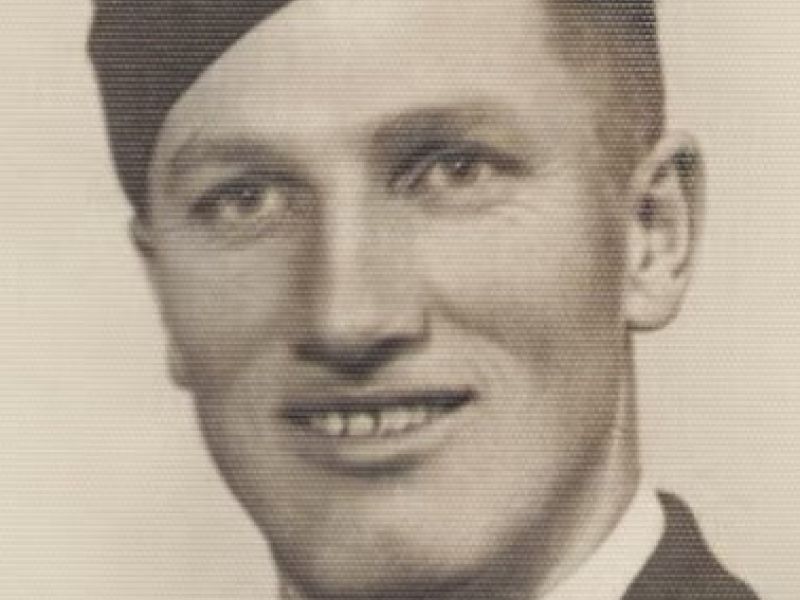
Flight Sergeant Albert Beckett, No. 100 Squadron, RAAF
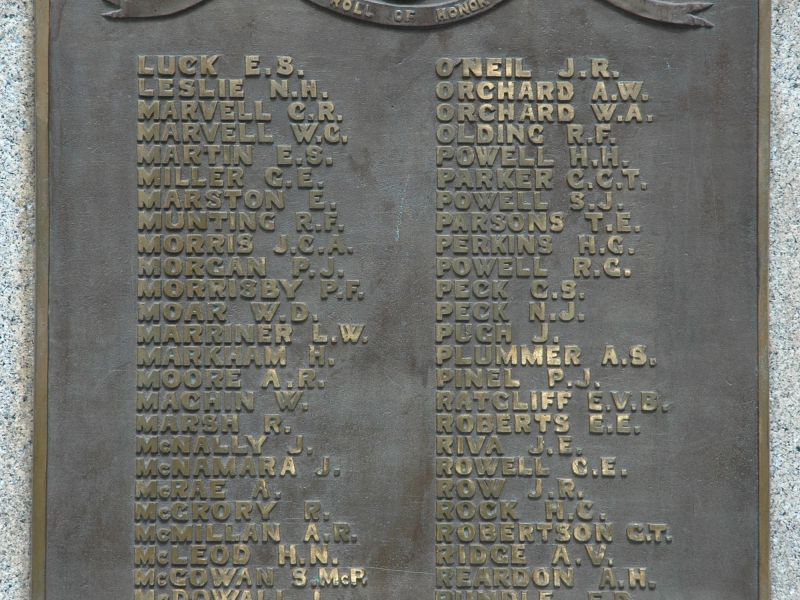
 Australian War Memorial
Albert Beckett was born on 3 April 1921 in Launceston, Tasmania, the son of Albert Charles and Mary Ellen Beckett.
He attended Wellington Square State School and then Launceston State High School, and went on to work as an apprentice carpenter for W.W. Purse and Sons. He was also involved in scouting and was a Sunday school teacher at the Memorial Baptist Church.
On 6 November 1941, Albert Beckett enlisted in the Royal Australian Air Force. After initial training, he began training as a wireless operator and air gunner, attending wireless air gunner school at Parkes in New South Wales, and bombing and gunnery school at Port Pirie in South Australia.
In September, Beckett transferred to No. 1 Operational Training Unit at Bairnsdale in Victoria, where he trained as a crewmember for multi-engine aircraft operations.
He attended Wellington Square State School and then Launceston State High School, and went on to work as an apprentice carpenter for W.W. Purse and Sons. He was also involved in scouting and was a Sunday school teacher at the Memorial Baptist Church.
January 1943 started well for Beckett, as he became engaged to Beryl Jean. In mid-June 1943 he finished operational training and transferred to No. 100 Squadron, RAAF. Flying from bases in eastern New Guinea, this squadron flew reconnaissance patrols and anti-shipping and bombing missions against the Japanese in Solomon Islands and the New Guinea mainland.
In September 1943, No. 100 Squadron flew in support of amphibious landings around Lae in New Guinea. Particularly important was neutralising the airstrip at Gasmata, a village on the southern coast of New Britain.
RAAF Boston bombers attacked the strip, but returning to Gasmata at dawn the following morning, they found that the enemy had carried out repair work overnight – so the Australians dropped bombs on the runway where the repairs had been made. It was vital that the airfield be kept out of action, as transport aircraft were due to drop the American and Australian parachute landing force at Nadzab, and aircraft were to set down part of the 7th Division as soon as a landing field could be made ready.
The Beauforts of No. 100 Squadron were ordered to follow the Bostons and press home their attacks on Gasmata. A group of ten, protected by eight Kittyhawks of No. 76 Squadron, arrived just after 7 am on the 5th of September. The Beauforts approached in a shallow dive at a dangerously low level - but the Australians had often bombed this airfield and had not previously met strong opposition. But their earlier attack had put the enemy defences on the alert, and they now opened up with a sudden and unexpectedly heavy barrage.
Two Beauforts were hit by enemy ack-ack fire, and then flames and a black column of smoke were observed south of Gasmata Strip, signalling that a third Beaufort had been struck.
The aircraft in which Flight Sergeant Albert Beckett was serving as wireless operator and air gunner never returned.
All aboard were later presumed dead:
- Flight Sergeant Clement Wiggins
- Warrant Officer Russell Grigg
- Flight Sergeant Gordon Hamilton
- And Flight Sergeant Albert Beckett, who was 22 years old
With no known grave, today they are commemorated at the Rabaul Memorial.
After the war, a search of the Gasmata aerodrome was made. While two of the three missing Beaufort aircraft from this strike were accounted for it appeared that Beckett’s aircraft had crashed in flames south of the Gasmata strip. Wreckage but no remains were found in in a large crater full of dirty water and surrounded by a dense mangrove swamp. The lack of bones or other remains was explained by the large number of crocodiles in the area.
- Australian War Memorial Roll of Honour https://www.awm.gov.au/collection/R1706510