Private Alexander Reading, 12th Australian Infantry Battalion
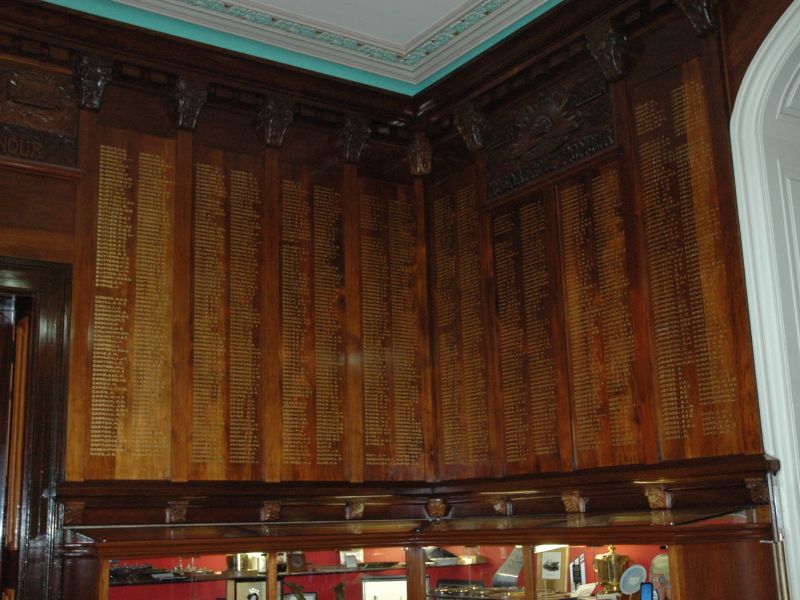
 Australian War Memorial
Alexander Reading was born on 4 September 1885 in Hobart, Tasmania. Known as “Joker”, he was the second of nine children born to Edward and Mary Reading.
The Reading family remained in Hobart throughout Alexander’s childhood. He attended Macquarie State School, before enrolling in Hobart Technical School for further training. He then completed a bricklaying apprenticeship with the Stabb Brothers Company in Hobart, before going to work for them.
Alexander enlisted in the Australian Imperial Force on 10 July 1916, signing his attestation papers at Claremont in Tasmania. He was allotted to the 23rd reinforcements of the 12th Battalion with the rank of private. After five months of initial training in Tasmania and Victoria, Private Alexander Reading departed Melbourne in the troopship Persic on 22 December 1916.
Alexander arrived in Devonport, England, in early March 1917, and marched into the 3rd Training Battalion at Durrington. Following another three months of training, he was sent to France in mid-June, ready for service on the Western Front.
Alexander joined the 12th Battalion in the field at Ribemont on 7 July 1917, just ahead of their move from the Somme Valley into the north of France for training.
In September, the battalion moved into Belgium to take part in the offensive that became known as the Third Battle of Ypres. The men moved into the front line outside Polygon Wood on the night of 19 September, with instructions to attack and capture enemy defended areas nearby. At some stage during the night of 19 September and morning of 20 September, Alexander was wounded in action.
He was evacuated to the 6th Australian Field Ambulance, suffering from multiple shrapnel wounds to his buttocks, thighs, and lumbar region of the back. In a serious condition, he was transferred to the 35th General Hospital at Calais on 22 September for further treatment.
When Alexander’s condition failed to improve, he was evacuated to England for treatment. He was admitted to the County of Middlesex War Hospital in Napsbury, St Albans on 8 October. By this stage, he was considered “dangerously ill”, suffering from sepsis along with his shrapnel wounds. He underwent multiple operations in an attempt to relieve his condition, but he made no improvement.
On 13 October, medical staff at the hospital decided to operate again, hoping to treat some of the blood vessels that had been damaged. While receiving surgery, Alexander suffered a haemorrhage, and died on the operating table as a result of his wounds.
He was 32 years old.
In the years after Alexander’s death, his family continued to insert commemorative notices in his memory into the local newspapers. One, inserted by “his father, mother, sisters, and brothers”, simply read:
“Not dead to those who loved him,
Not lost, but gone before.”
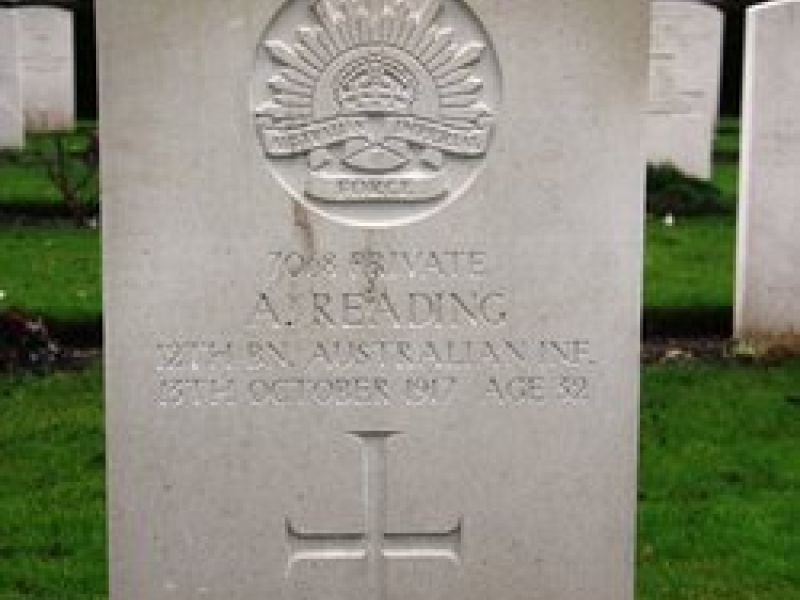
Alexander Reading was given a military funeral on 18 October 1917, including gun carriages and a wreath sent by patients of the hospital where he had received treatment. He was buried at Hatfield Road Cemetery in St Albans. After the war, an Imperial War Graves headstone was erected over his grave, bearing the personal inscription selected by his grieving family in Hobart: “Have Honoured Tasmania’s Isle.”
- Roll of Honour, Australian War Memorial https://www.awm.gov.au/collection/R1652741