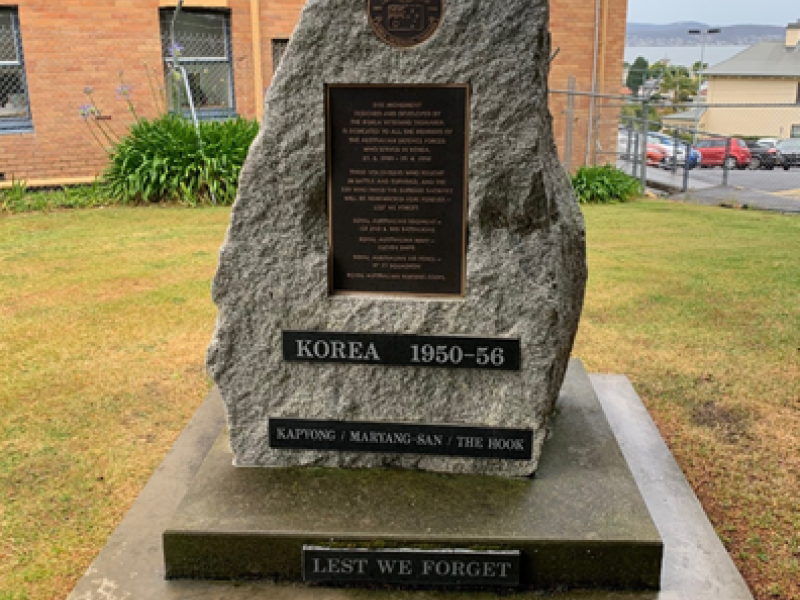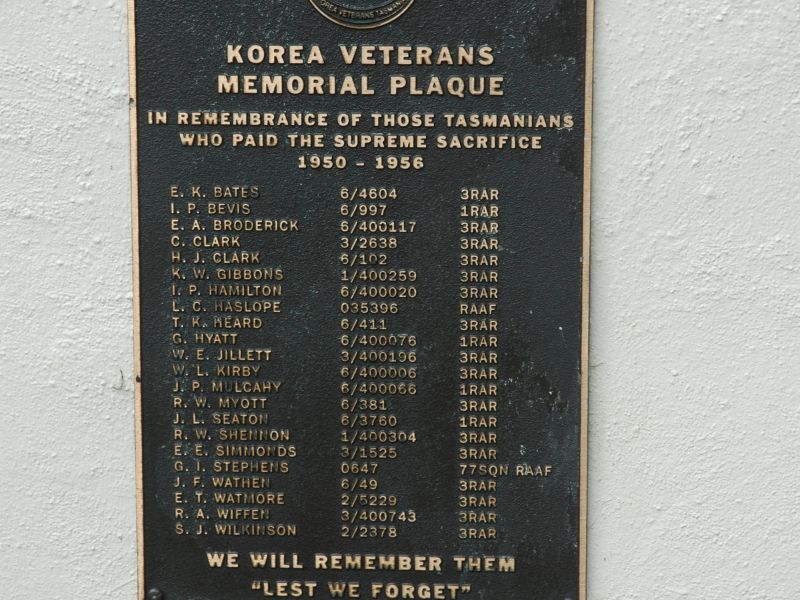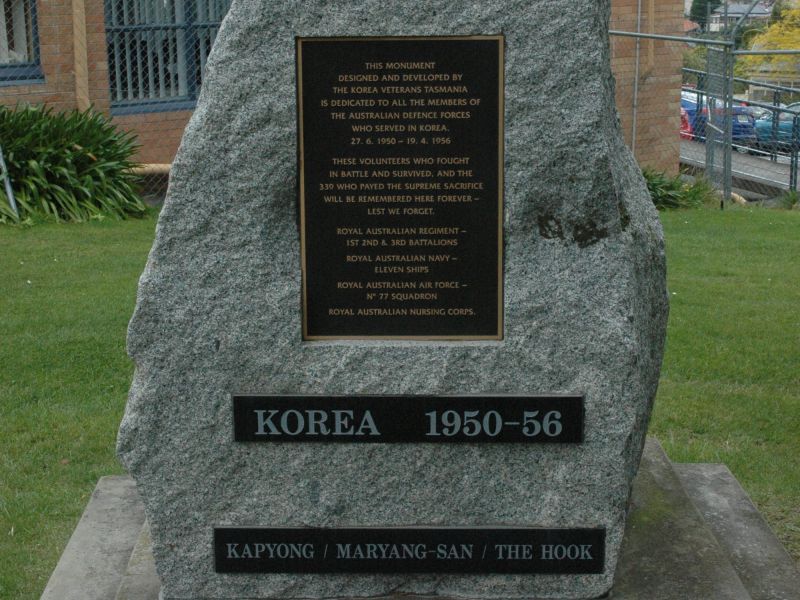
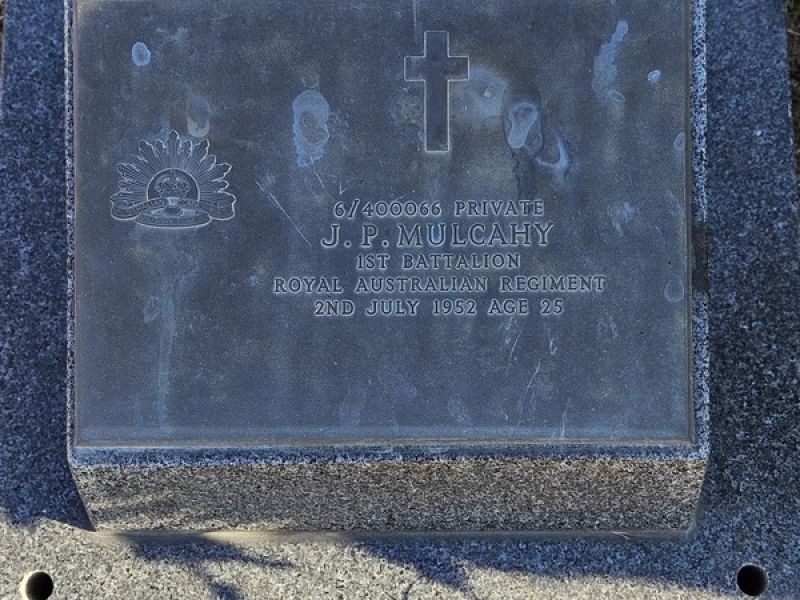
Private John Patrick Mulcahy, 1st Battalion, The Royal Australian Regiment
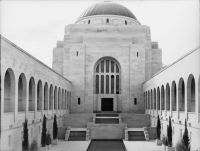 Australian War Memorial
John Mulcahy was born on the 12th of March 1927 in Edinburgh, Scotland, to Michael and Margaret Mulcahy.
Little of his early life in Scotland is known, but on 6 April 1950, aged 23, Mulcahy, who listed his occupation as an engine worker, emigrated to Australia. Jock, as he was known, sailed from Glasgow aboard the P&O liner Empire Brent.
After disembarking in Adelaide, Mulcahy made his way to Tasmania, where he went to work as a waiter at the Wrest Point Hotel at Sandy Bay.
He enlisted for service in the Australian Army’s special force for Korea, known as K-Force, on 30 July 1951 in Hobart. The commitment called for two years’ service, including one on active service in Korea. He was sent to the 2nd Battalion, Royal Australian Regiment at Puckapunyal in Victoria, where he trained as an infantryman.
Mulcahy flew out of Sydney on 16 February via Darwin to Japan. On arrival, he was sent to the reinforcement holding unit at Kure. Initially destined for the 3rd Battalion, Royal Australian Regiment, he was instead sent to the 1st Battalion, Royal Australian Regiment.
He joined 1RAR in Korea on 8 June and was posted to A Company. The battalion had arrived in Korea in March 1952 and entered the front line for the first time in June; night-time patrolling into no man’s land began soon after.
At the end of June the battalion began preparations for its first operation. Known as Operation Blaze, it was to be a daylight raid on nearby Chinese positions to acquire a prisoner from their positions on a nearby hill known as Hill 227. The operation’s name reflected the fact that it would be the first time Australian troops would use flame throwers in action in Korea.
The raid, given to A Company and led by Major David Thomson, began just after 9 am on 2 July. The assaulting troops advanced without a shot being fired and they reached the Chinese positions before 9.30.
As soon as the attackers reached the hill’s crest, they came under heavy fire from several bunkers occupied by Chinese troops. The raiders then began receiving mortar fire, and Mulcahy was severely wounded by shrapnel, suffering the traumatic amputation of both legs. He was carried back to the Australian lines where he was loaded onto a waiting jeep. Only seconds after he had been loaded, a mortar round hit the vehicle, killing Mulcahy instantly and blowing out the vehicle’s tyres. Miraculously, the stretcher bearers remained un-wounded.
The raid ended in failure with no prisoner captured and no assessment of enemy casualties possible. A Company suffered three men dead, including Mulcahy, and 25 men wounded. Another eight men from separate companies were also wounded.
Mulcahy’s body was taken to the United Nations Cemetery at Pusan and laid to rest with full military honours. He was 25 years old.
His name is listed on the Roll of Honour at the Australian War Memorial, among the 340 soldiers, sailors and airmen who died as a result of their service during the Korean War.
He is also commemorated in the Scottish National War Memorial in Edinburgh.
- Roll of Honour, Australian War Memorial https://www.awm.gov.au/collection/R1716039