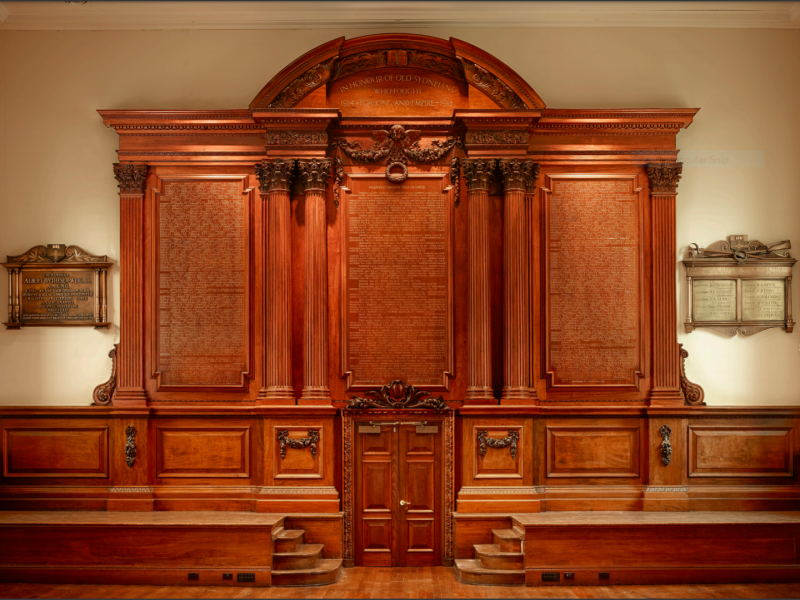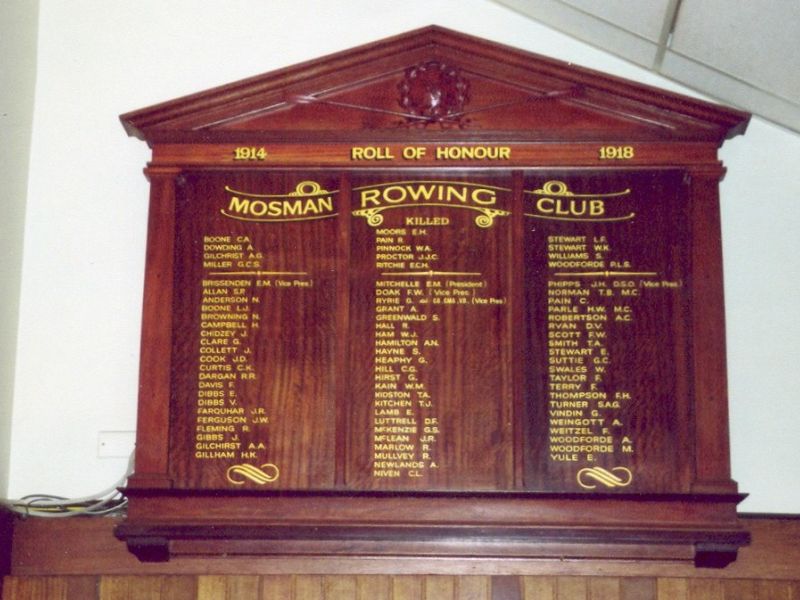
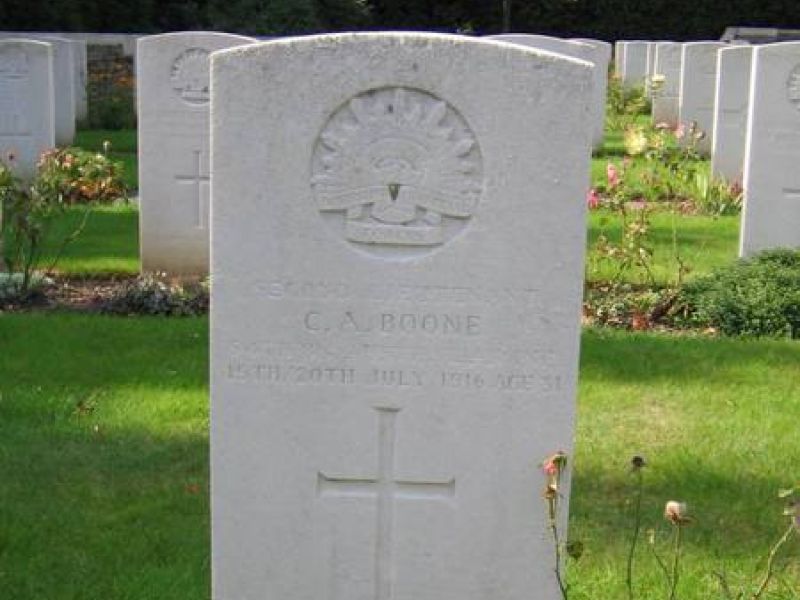
Second Lieutenant Claude Arthur Boone, 54th Australian Infantry Battalion
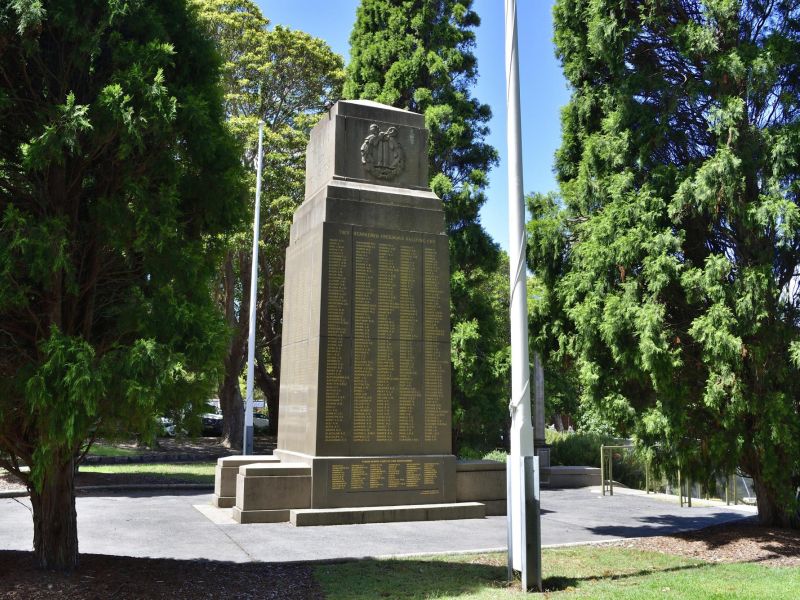
 Australian War Memorial
Claude Boone was born on 6 July 1885 in Leichhardt, New South Wales. He was one of six children born to John Westcotte Boone, a solicitor’s clerk, and his wife Margaret. Claude received his education at Sydney Grammar School where he was a keen student and sportsman. After his schooling, he continued rowing and was a member of the Neutral Bay Rifle Club. When the First World War broke out in 1914, Claude was working as a clerk.
Claude Boone enlisted in the Australian Imperial Force on 4 August 1915. He was commissioned to the rank of second lieutenant, before being appointed to the 16th Reinforcements of the 2nd Battalion. On 9 April 1916 he embarked for active service, sailing from Sydney on the troopship Nestor.
In May 1916, Boone arrived in Egypt along with new recruits and veterans from the recently abandoned Gallipoli campaign. He was soon transferred to the newly formed 54th Battalion during a period of expansion in the AIF. On 19 June he embarked for the Western Front with his new unit.
They were immediately sent north to the French and Belgian Border, which had once been the site of bitter fighting. Now comparatively quiet, this area of the front became known as the “nursery sector” where new troops were introduced to life in the trenches.
After a few days in the front lines, Boone’s unit was called into action near the village of Fromelles. It was here that he would take part in his first, and last major action of the war.
The battle was intended as a feint to prevent German reserves from moving south to take part in the battle of the Somme. Ordered to attack strongly fortified enemy positions near the Aubers Ridge, the allied advance was preceded by a seven-hour bombardment. When the battle began in broad daylight, advancing units quickly realised that not only had the artillery been almost useless – it had also served to warn the enemy of the attack. As they jumped the parapet, allied troops were quickly cut down in waves by murderous machine-gun and artillery fire from German troops who had taken cover during the earlier bombardment.
Though some men made it to their objective, they were quickly forced to withdraw and were again caught under heavy fire during their retreat. By the time the battle was called off, the 5th Division alone had suffered over 5,500 casualties. The attack has been remembered as the worst 24-hours in Australia’s entire history. Among these casualties was Second Lieutenant Claude Boone, who was killed by a shell during the attack on Fromelles.
His comrade, Lieutenant Healy recalled Boone’s final moments, writing to the Red Cross:
“He was blown to pieces just behind the parapet by a high explosive shell … nearly all our officers were knocked out and I saw him actually killed. Bits of him were found and I believe [that] what was supposed to have been him was buried at Sailly Sur Le Lys.”
Another of Boone’s men commented, “He was absolutely one of the best, could not beat him.”
Today, Boone lies at Anzac Cemetery in Sailly Sur Le Lys, beneath the words chosen by his parents. They read:
“Death is not death to him, but glorious gain.”
Second Lieutenant Claude Boone was 31 years old.
- Roll of Honour, Australian War Memorial https://www.awm.gov.au/collection/R1661657