Flying Officer Arthur Frederick Betteridge, No. 454 Squadron, RAAF
 Australian War Memorial
Arthur Betteridge was born on 25 July 1915 in Smithton, Tasmania. Known as Fred, he was the third of five children born to watchmaker Arthur Betteridge and his wife Clara. Two older Betteridge girls died in childhood, leaving Fred the eldest of three siblings.
The family remained in Smithton throughout Fred’s childhood, where he attended the local public school. Fred’s mother died when he was 15, and a year later his father remarried. He and his new wife Vera would go on to have two children.
After completing his schooling, Fred moved to Melbourne in the late 1930s. Here, he found work as a cost clerk for Australian Paper Manufacturers and joined the 2nd Field Brigade of the Royal Australian Artillery at St Kilda.
In August 1940, Fred married Jean Foster. The couple moved into “Woodlands” at Royal Parade in Parkville, along with Jean’s four-year-old daughter Ellen.
Fred had enrolled in the Royal Australian Air Force Reserve in July 1940, but enlisted for service in the regular Royal Australian Air Force on 8 November 1940 at No. 1 Recruiting Centre in Melbourne. He was mustered as air crew, and travelled to Somers on the Mornington Peninsula for initial training.
Fred spent the first four months of his enlistment training as a pilot, and was promoted to leading aircraftman in January 1941. In early March 1941, Fred’s flying training was discontinued, and he was remustered as an air observer. He resumed training in Australia, completing his observer course on 18 September 1941.
Fred was promoted to pilot officer on 26 September 1941, and began preparing to depart Australia for the United Kingdom. He embarked from Sydney on 15 October 1941, and arrived in England in late December.
Fred spent the first half of 1942 in the United Kingdom, during which time he was promoted to Flying Officer. He joined the RAF Headquarters in the Middle East in mid-June 1942, before being posted to No. 454 Squadron, RAAF in October.
No. 454 Squadron was based in Iran when Fred joined, operating Bristol Blenheims as part of a force intended to counter a German thrust from the Caucasus region. After ending 1942 without having flown any operational missions, the squadron returned to Palestine and then Amariya in Egypt in early 1943. There it joined 201 Group of the Royal Air Force’s Middle East Command.
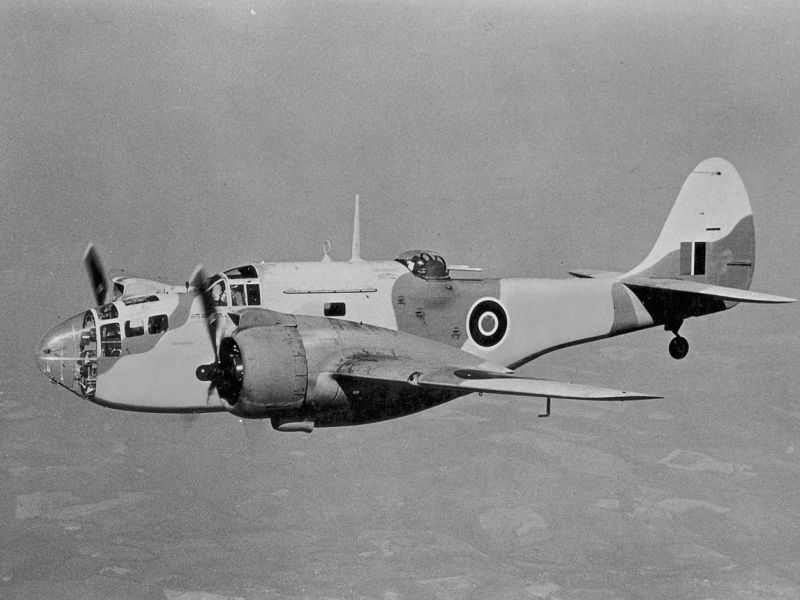
Equipped with Martin Baltimores, No. 454 Squadron commenced operations as a maritime patrol squadron over the Mediterranean. The squadron was responsible for targeting enemy submarines and merchant shipping – as well as long-range reconnaissance and occasional strikes against land targets in Crete, southern Greece, and the Greek islands.
In July 1943, No. 454 Squadron was added to a formation of aircraft as part of Operation Thesis. The plan was to carry out a massive combined air strike against ports and military establishments on the island of Crete. The purpose was relieve pressure on the Allied invasion of Sicily, and to avenge the execution of 100 Cretans who had been shot after assisting an Allied Commando raid on the island. The Baltimores from No. 454 Squadron were instructed to attack factories, barracks, and road traffic on the eastern end of Crete.
Eight four-man crews from No. 454 Squadron were selected for the mission in what would be their first real bombing action. Flying Officer Fred Betteridge was the navigator in Baltimore FA409, whose crew was made up of two Australians and two New Zealanders. The aircraft left base on 23 July 1943. Fred’s aircraft set off as part of the second wave, armed with six 250-pound bombs. The aircraft flew low over Crete, at a height of 200 feet, to avoid alerting the island’s defences. Less than half-way to their targets, the eight aircraft came under heavy ground fire.
Crete’s landscape gave the enemy an advantage, as the terrain masked many potential targets and offered good cover and positioning for anti-aircraft guns. This was disastrous for the exposed Baltimores. Five of the aircraft were lost over Crete, with one crash landing on return and only two safely landing back at base outside Tobruk in Libya. Of the 32 men who set out for the mission, only 11 returned unscathed. One was wounded in the crash landing of his aircraft, while men were captured by the Germans, and 14 killed. The operation was the worst tragedy in all of the squadron’s wartime service.
Flying Officer Fred Betteridge’s aircraft was one of the five shot down over Crete. While his three crewmates survived the crash and were taken prisoner of war, Fred was killed during the flying battle on 23 July 1943.
He was 27 years old.
Fred’s remains were ultimately buried at Suda Bay War Cemetery on Crete. After the war, his Commonwealth War Graves headstone was inscribed with the words selected by his grieving wife Jean: “His duty nobly done. Loving memories always.”
- Roll of Honour, Australian War Memorial https://www.awm.gov.au/collection/R1704211