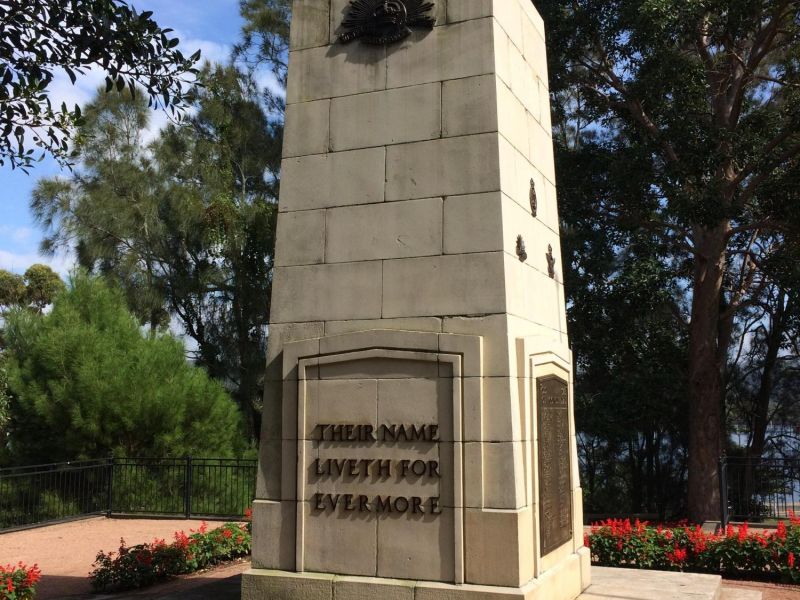
Flight Sergeant Evariste Pierre Dubois, No. 269 Squadron (RAF)
 Australian War Memorial
Evariste Dubois was born on 14 July 1918 at Matcham, just outside Gosford in New South Wales. He was the eldest of three children born to Louis Marc Dubois and his wife Hilda, though their middle child – a daughter named Mavis – died a year after her birth. Louis had been born in Port Louis, Mauritius, but relocated to Australia with his family in the early 1900s. He served with the 9th Australia Field Ambulance during the First World War, marrying Hilda shortly before his departure for the Western Front.
The family moved to the outskirts of Sydney when Evariste was young. He attended the Linfield Public School, Hornsby Junior Technical School and Central Technical School.
After finishing his schooling, Dubois moved back to Matcham, where the family ran a small orchard. He worked alongside his father as a farmer, whilst also spending some time as a storeman in Gosford. Dubois applied for appointment to the Royal Australian Air Force Reserves and the Active Citizen Air Force in 1936 and 1939, but was rejected. Instead, he served with the 18th Battalion, parading part-time with the Militia unit.
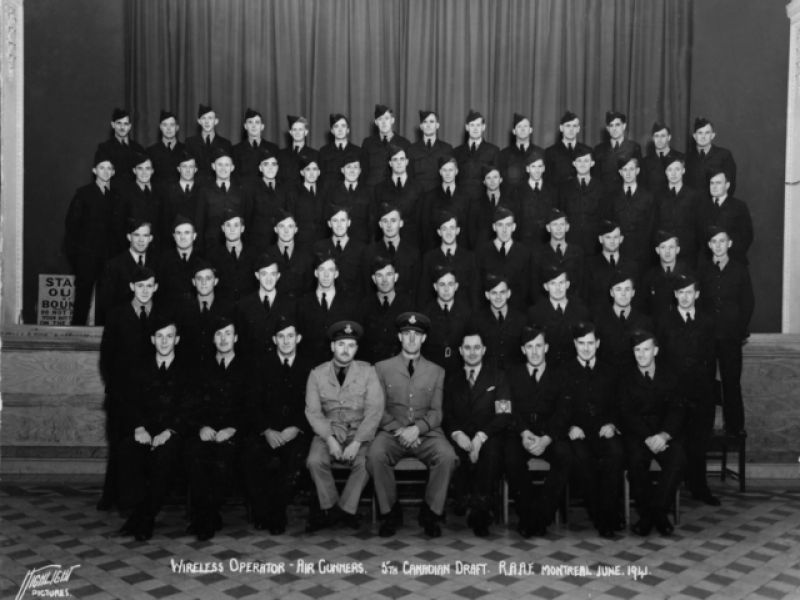
Dubois successfully enlisted in the Royal Australian Air Force on 11 November 1940. He was declared fit for full flying duties, and after a month of initial training, was granted a week of pre-embarkation leave. He left Sydney on 28 December 1940, bound for Canada and the No. 1 Wireless School in Montreal.
Arriving in Canada in late January 1941, Dubois spent the next ten months training in Montreal and Jarvis, Ontario. While he was in Canada, the Sun newspaper announced his engagement to Miss Jean Parker back in Sydney. Having completed his intermediate training, Dubois was remustered as a wireless operator air gunner on 13 October 1941.
Arriving in England in November 1941, and in May joined No. 269 Squadron, a maritime patrol unit of the Royal Air Force.
By the time Dubois joined No. 269 Squadron it was based at RAF Kaldadarnes in Iceland. The squadron launched attacks on German U-boats, and undertook frequent night patrols.
On 29 January 1943, Dubois was one of four airmen tasked with an anti-submarine night patrol in a Lockheed Hudson Mk III. He was one of two Australian wireless operator air gunners on board the aircraft, along with a 22 year old British pilot and a 22 year old Canadian navigator. The aircraft took off in a “perfectly normal manner” just after 6.30 am, but after a few moments witnesses heard the engines of the Hudson cut out. The aircraft plummeted into the frozen Ölfusá River, sliding along the surface ice before coming to rest on the side of the river bank.
Soldiers from the US Army’s 495th Coast Artillery Battalion rushed to the scene. Staff Sergeant Henry Zakowsky pulled Sergeant Charles Oliver Hunter from the wreckage. The Australian wireless operator air gunner had fractured his leg and sustained “severe facial wounds” in the crash. The bodies of the three other airmen were recovered from the burning aircraft before the depth charges on board exploded. Flight Sergeant Derrick Mallett, Pilot Officer George Wilbert, and Flight Sergeant Evariste Dubois had all been killed on impact.
An investigation revealed that the pilot had mishandled the fuel cocks, causing both engines to cut out at 150 feet.
Evariste Dubois was 24 years old.
His remains were buried in the Reykjavik (Fossvogur) Cemetery, where they lie today, underneath the inscription chosen by his grieving family: “For Supreme Sacrifice”.
For 11 years following his death, Evariste’s family in Gosford published commemorative notices in the local newspapers. Attributed to “mum, dad, Louis, and nana”, the notices read:
“He sleeps far away from his sunny native land. Too dearly loved ever to be forgotten”.
- AWM Roll of Honour https://www.awm.gov.au/collection/R1703022
- AWM photo collection item https://www.awm.gov.au/collection/C358162