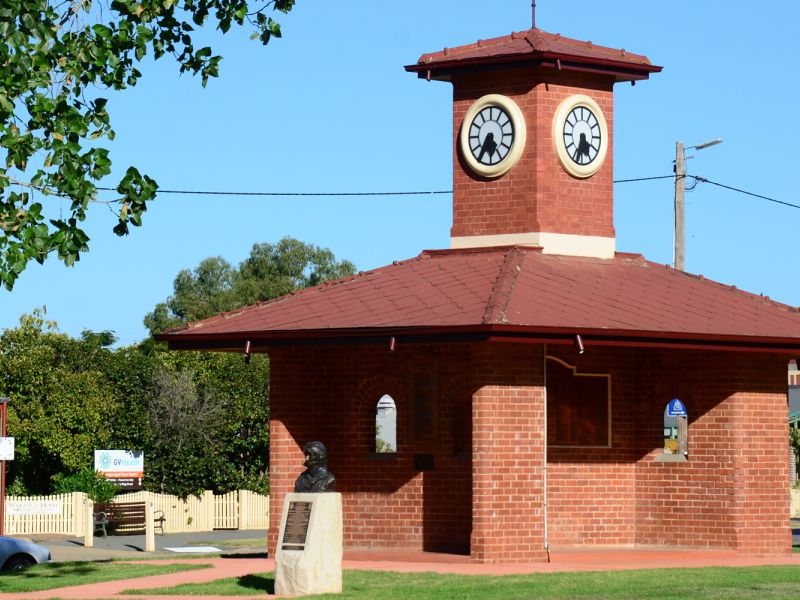
Private John Barrow, 5th Battalion, AIF
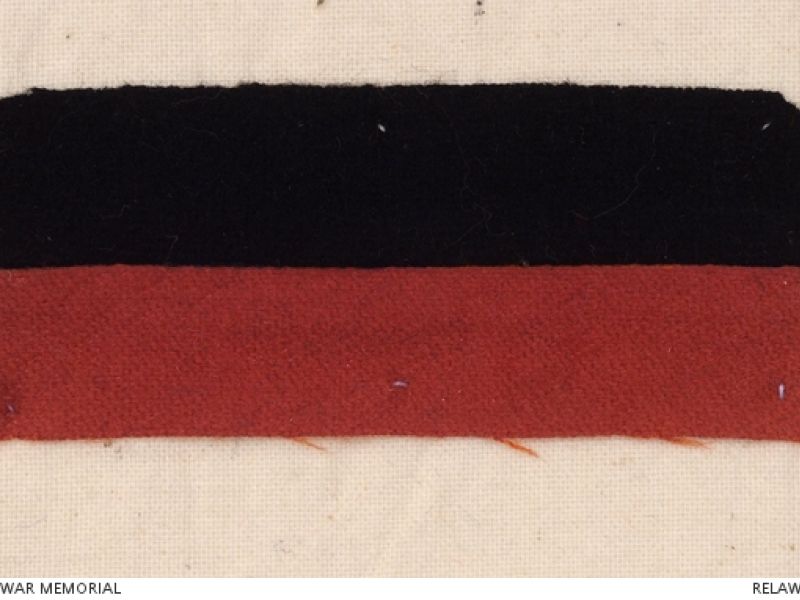
 Australian War Memorial
John Barrow was born on 16 May 1873 in Maryborough, Queensland. Known as “Jack”, he was the youngest son of English emigrants Charles and Mary Barrow.
The family moved to Melbourne when Jack was young. Along with his older siblings Thomas, Annie, and Charlie, he attended a local state school. He went on to train as a hairdresser, before moving to Rushworth in regional Victoria.
Jack married Elizabeth Penny Matheson in Rushworth on 19 November 1902. The couple had six children together, though their third daughter Annie died shortly after her birth in 1908.
Jack worked as the town’s barber and was a respected member of the Rushworth Fire Brigade.
Jack and his family left Rushworth in 1914, moving into a small worker’s cottage in the inner Melbourne suburb of Burnley. He continued to work as a barber, while his five children – Gladys, Eliza, Ivy, Annie, and Jack – attended the local school.
Jack Barrow enlisted in the Australian Imperial Force on 12 May 1916, his second attempt at volunteering for service. Initially assigned to the 22nd Depot Battalion at Royal Park, he was soon transferred to reinforcements of the 58th Infantry Battalion. While training at Broadmeadows, Barrow was briefly hospitalised suffering from abdominal pains, but returned to service on 11 October. He completed his initial training with reinforcements of the 5th Battalion, before departing Melbourne in the troopship Ulysses on 25 October 1916.
Barrow arrived in England on 28 December 1916. He spent most of 1917 training on Salisbury Plains.
On 9 October 1917, Private Jack Barrow proceeded to France and the Western Front and was taken on strength of the 5th Battalion at the Halifax Camp in Belgium. His battalion spent November training at Desvres in northern France, before returning to the trenches outside Ypres in December.
In early January 1918, Barrow was hospitalised. He returned to the 5th Battalion at the end of January, easing back into trench warfare with a month of training in camp near Locre in Belgium.
The battalion spent the next few months alternating between training in reserve camps behind the lines and helping to push back the German Spring Offensive.
By August, the battalion was stationed outside the French town of Amiens. Although it did not participate in the initial successful attack on 8 August, the battalion was involved in the attempts to consolidate these early gains in the days that followed.
On the morning of 10 August, the battalion was at Lewis Ridge outside the small French village of Lihons, preparing for a planned assault on nearby German lines. At around 8 am, shortly after the men had jumped off from their starting positions, Barrow was hit by a sniper’s bullet and killed instantly.
He was 45 years old.
His remains were buried where he fell, alongside others who had been killed by German sniper and machine-gun fire. His comrades erected a rough cross over his grave, to mark his final resting place.
In Australia, tributes flowed into local newspapers from family and friends mourning his death. The Age printed memorial notices from his siblings, friends, and “his sorrowing wife and little children”, who remembered him as an “ever loving husband” and “devoted daddy”. His wife Lizzie inserted a short poem in his honour:
He sleeps beside his comrades,
In a hallowed grave unknown;
His name is written in letters of love
By his dear ones left at home.
After the war, his remains were exhumed and reburied in Rosieres Communal Cemetery Extension in the Picardie region of France. His Imperial War Graves headstone bore the inscription selected by his grieving loved ones:
“Dearer to memory than words can say.
- AWM Roll of Honour https://www.awm.gov.au/collection/R1632427