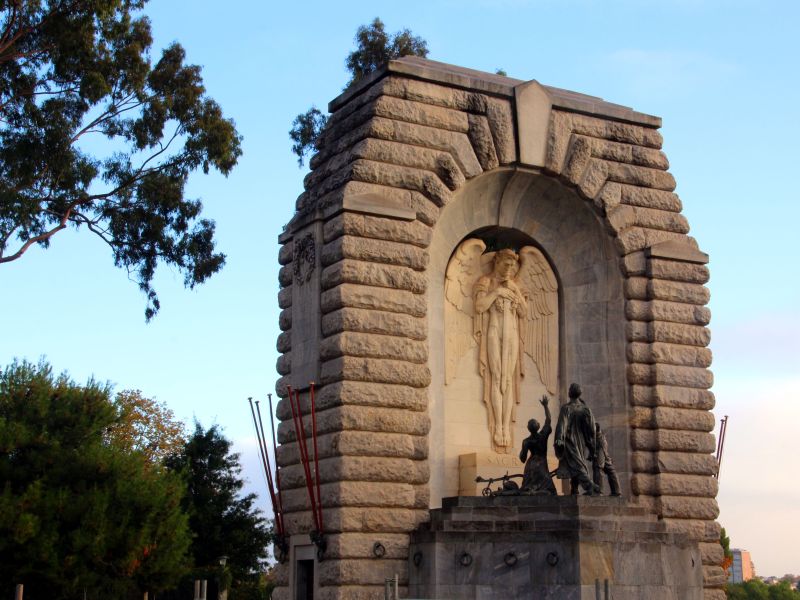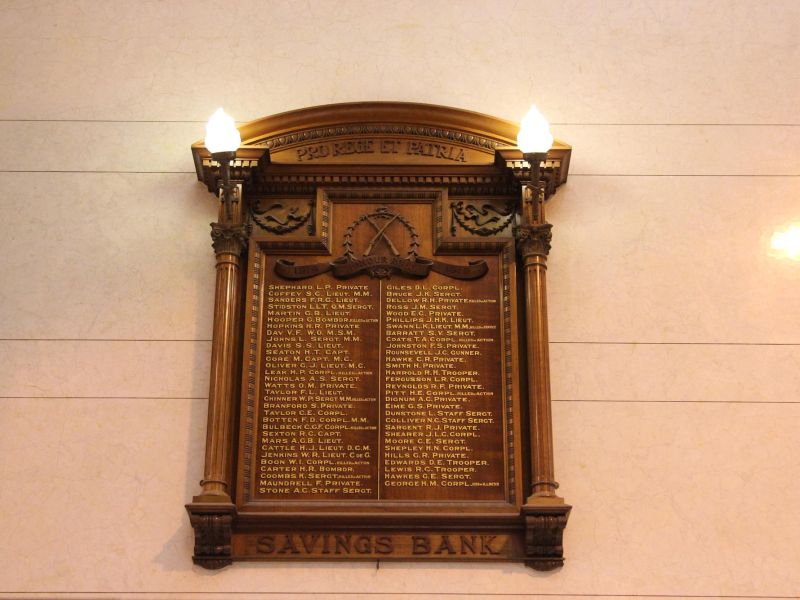
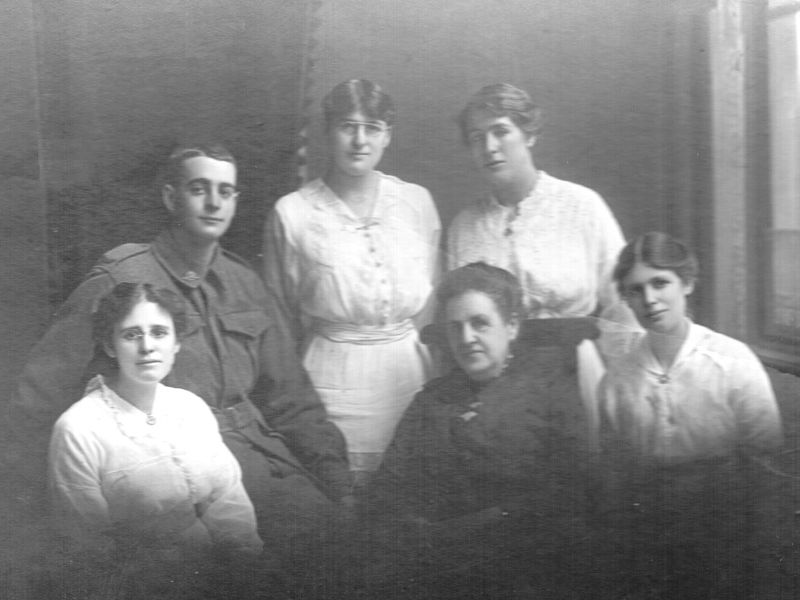
Private Kennion Coombs, 48th Australian Infantry Battalion, AIF
 Australian War Memorial
Kennion Coombs was born on the 19th of August 1896 in St Peters, South Australia. Known as “Ken”, he was one of six children, and the only son, born to Robert Coombs, a wool broker, and his wife Mary. Ken received his early education at East Adelaide Public School and St Peters College where he was involved the cadets program. He was a keen sportsman, and a member of the Mercantile Rowing Club. After leaving school, Ken obtained worked at the savings bank as a clerk while studying accountancy.
Ken Coombs enlisted in the Australian Imperial Force on 29 December 1915. He was assigned to the 4th Reinforcements of the 32nd Battalion with the rank of private. He embarked for active service on 9 March 1916, sailing from Adelaide on board the troopship Mongolia.
Private Coombs arrived in Egypt, where he was transferred to the ranks of the newly-formed 48th Battalion during a period of expansion in the AIF. In June 1916, his unit sailed to the French city of Marseilles. From there, the men were immediately sent north to the Franco-Belgian border, which had once been the site of heavy fighting. Coombs spent the first few weeks of active service training.
In August his unit was drawn into the fighting around the village of Pozieres. Here, the 48th Battalion was tasked with defending ground captured during earlier attacks by the 2nd Division. His unit entered the front lines on 5 August 1916. It came under horrendous shelling and machine-gun fire from enemy lines, enduring what is believed to be the heaviest barrage ever experienced by Australian troops. Coombs was hit by shrapnel, suffering devastating wounds to his head and thigh. He was evacuated to England for treatment, and remained in a Liverpool hospital until the end of the year.
Private Coombs briefly re-joined his unit in the front lines in December 1916, as a bitterly cold winter began to set in. He eventually became ill and returned to hospital, this time suffering from mumps. Coombs did not re-join his unit until February 1917, as German forces began their strategic withdrawal to the fortified Hindenburg Line. Allied units eagerly followed the enemy’s retreat, believing the war was perhaps finally drawing to a close. It was not long, however, until the enemy withdrawal halted at their new front line, near the French village of Bullecourt. Here, the allies planned to mount an attack to break through German lines and capture the village.
Coombs’s unit attacked on the morning of 11 April 1917, under cover from tanks, rather than artillery. As the men jumped over the parapet, the tanks quickly proved ineffective and the attacking infantry were left exposed to murderous enemy fire. One of Coombs’ comrades described the attack, writing in a letter home:
“I tell you it was hell let loose on that day. Our guns opened fire at 4 am and the air seemed to be on fire with shells screeching over us. Of course Fritz took a tumble that we were going to attack and opened fire in return and it was awful … when we hopped out, the machine guns and rifles tore into us. Men were dropping all round – and when the officers saw the state of things, they ordered us to drop down … and what was left of us dropped into shell holes and kept low. My mate had a bullet right through his ribs and another poor fellow who made an attempt to go back to the trenches was shot dead."
Soon forced to retreat, allied units suffered more than 3,000 casualties in one day. The battalion’s commanding officer noted in the unit’s war diary,
“Had the tanks shown more pluck and initiative, I believe things would have been quite different. No words of mine can express the pride and admiration I feel for these brave men.”
Among the dead was Private Ken Coombs, who was last seen lying wounded on the battlefield. He was never seen again.
With no known grave, his family paid tribute to him in the Adelaide Journal newspaper with a short memorial notice: “His duty nobly done.
Private Kennion Coombs was 20 years old.
- Australian War Memorial Roll of Honour https://www.awm.gov.au/collection/R1729059
- Virtual War Memorial https://vwma.org.au/explore/people/378029