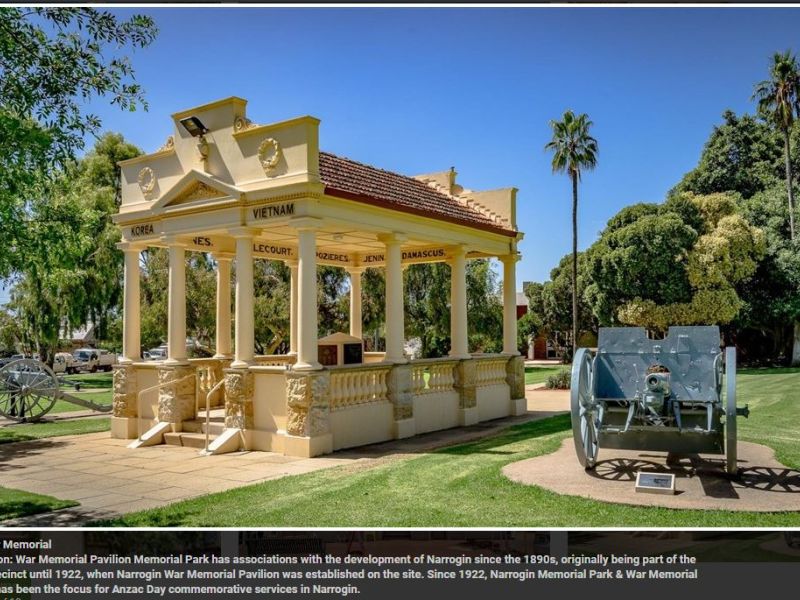
Private Joseph Stanley Pethybridge, 51st Australian Infantry Battalion
 Australian War Memorial
Joseph Pethybridge was born in 1888 in Parkes Plains, Victoria, one of seven children born to William Pethybridge, a farmer, and his wife Ellen. He attended a local state school, before relocating to Narrogin in Western Australia with his family sometime around 1910. Joe later moved to the town of Highbury, and was working as a farmer when the First World War broke out.
Joe Pethybridge enlisted in the Australian Imperial Force on 9 June 1916. He was assigned to the 6th Reinforcement of the 51st Infantry Battalion with the rank of private and commenced a short period of training in Australia. He embarked for active service in October that year, sailing from Fremantle on the troopship Suffolk.
Private Pethybridge arrived in England, disembarking at Plymouth on 2 December 1916. He trained there before making his way to the Western Front in the New Year. He joined the rest of the 51st Battalion at their camp in Bazentin in northern France for working parties and routine trench duty.
In early 1917, enemy forces began making a strategic withdrawal to the fortified Hindenburg Line. The 51st Battalion was involved in the pursuit of German forces, before being drawn into an attack on the village of Noreuil in early April. Pethybridge was wounded with a gunshot wound to his left thigh and spent most of the month in hospital, before re-joining his unit in time to be transferred to the Ypres sector in Belgium. In June, Pethybridge was wounded for a second time during his unit’s attack at Messines Ridge, suffering injuries to his upper arm, and was evacuated to England for treatment for several weeks. He was granted a short period of furlough in August and returned to the front in September of 1917, re-joining his unit just after the Battle of Polygon Wood, where Australian forces suffered almost 6,000 casualties.
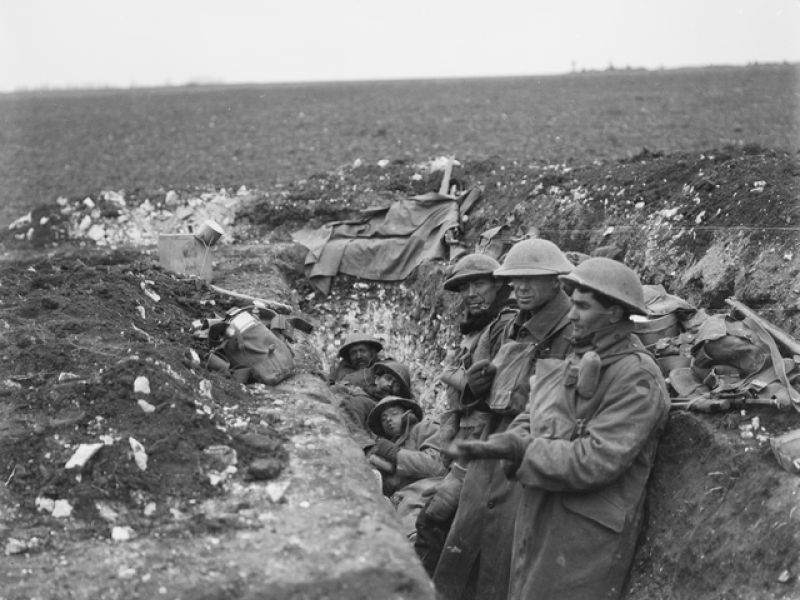
Pethybridge and his comrades spent the rest of the year enduring a cold winter at the front as they rotated in and out of the trenches. During this period, the Russian monarchy collapsed, and fighting on the Eastern Front came to a close. With Germany no longer fighting a war on two fronts, allied forces expected a major attack. This came in early 1918, with the German Spring Offensive and heavy attacks at strategic locations along the allied front. The 51st Battalion, alongside the rest of the 4th Division, was rushed to defend positions around Dernancourt, and were involved in repulsing several large-scale German attacks. The threat to the allied front reached a critical point on April 24th, when enemy forces captured the strategically significant town of Villers-Bretonneux.
Allied forces were desperate to recapture the town quickly, to prevent enemy forces from digging in and fortifying their position. But no British counter-attacks were successful in dislodging the enemy, who strengthened their defences. Pethybridge, with the rest of the 13th Brigade, was immediately marched to the outskirts of the town where they joined the 15th Brigade as plans for an attack were made.
They began their advance just after 10 pm, with the 15th Brigade advancing from the north, and the 13th Brigade from the south in a risky manoeuvre. Pethybridge and his comrades were able to link up with the 15th Brigade east of the village, though some members of the trapped German garrison escaped. Just after dawn the next day, the Australians began their clearance of Villers-Bretonneux, sweeping through with ferocity while British troops advanced from the north and west sides. Within just hours, Villers-Bretonneux had been retaken in an act which General Monash later deemed as “the finest thing yet done in the war.
The recapture of the town cost allied forces almost 1,500 casualties. Among the dead was Private Joe Pethybridge who was killed in action. Chaplain Blackwood wrote to Pethybridge’s family:
“Joe was killed by a shell just on being relieved and was taking shelter at the time in a shell hole … I know how hard it is for you to have lost one so dear to you, but I feel that he is not really lost. He has truly laid down his life for others.”
His final resting place was lost and today, he is commemorated on the Australian National Memorial at Villers-Bretonneux.
Private Joe Pethybridge was 29 years old.
- AWM Roll of Honour https://www.awm.gov.au/collection/R1654703
- AWM photo collection item https://www.awm.gov.au/collection/C393626