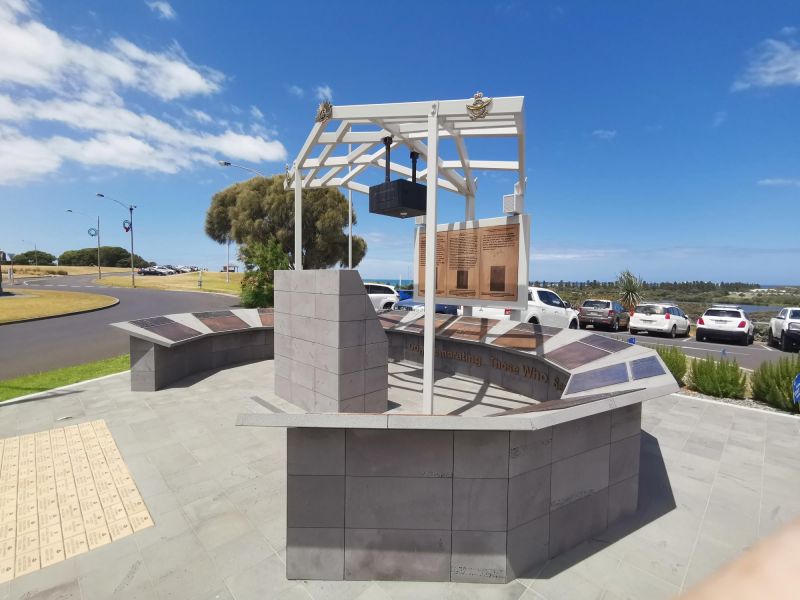
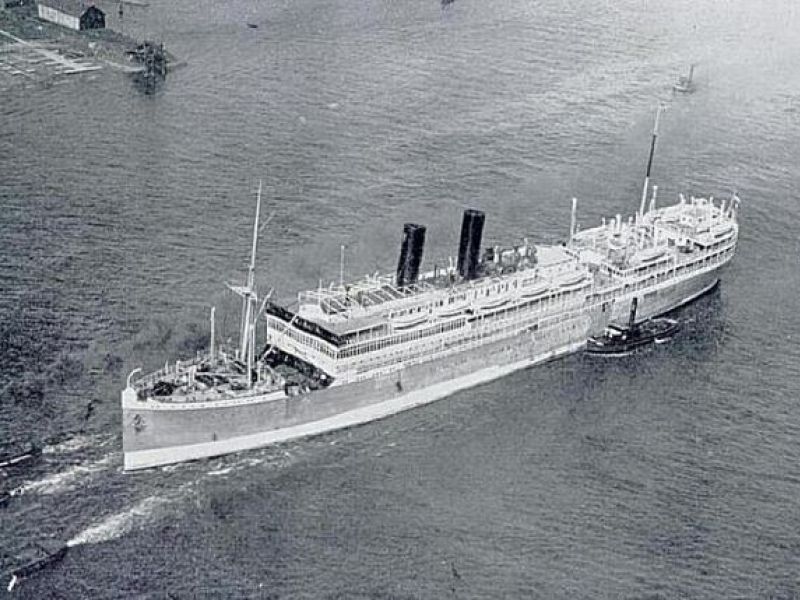
Lieutenant Walter John Scott, 6th Division Signals (HMT Slamat)
 Australian War Memorial
Walter Scott was born on 14 April 1904 in the coastal town of Warrnambool, Victoria. He was the eldest of three children born to James Francis Scott, a hairdresser, and his wife Anna. Walter attended a local school, and later studied at Warrnambool Technical College. Afterwards, he gained employment as a mechanic, while serving in the local militia alongside a number of close friends. In 1928, Walter married Doris Boulter. They went on to have two children together. When the Second World War broke out in 1939, Scott was working as an engineer and living with his family in the suburbs of Melbourne.
Walter Scott enlisted in the Second Australian Imperial Force on the 15th of May 1940, lowering his age to 34 and giving his occupation as a car salesman, likely in order to improve his chances of being accepted for service. After successfully enlisting, Scott was allocated to the 6th Division Australian Army Service Corps, and commissioned to the rank of lieutenant. Scott was sent to a signals school where he remained for two months, re-joining his unit at the beginning of August 1940, and embarking for active service by the end of the month. Lieutenant Scott arrived in Palestine at the end of September and began further training. He spent a short period with his unit in November, before returning to another training unit in mid-December 1940.
In early 1941, Scott was detached to join the 2/2nd Field Regiment. At the end of March, he was sent to the 1st Australian Corps School of Signals with other men from his unit. He and his comrades remained at the school as allied forces were moved to defend Greece from attacking Italian Forces. After the German army began invading, the Greek army was overrun, leaving British, Australian and New Zealand Forces to stem the enemy’s advance.
The strength of the invasion proved too great, and by 21 April it was decided that allied forces must be evacuated. In Egypt, allied ships were hastily prepared to leave for Greece as part of Operation Demon. Lieutenant Scott, who had been awaiting deployment in a staging camp, was detailed to take part in the evacuation, assigned to the Dutch troopship Slamat as a gunnery officer. Slamat departed Alexandria on 24 April 1941 and reached Nafplion in Greece two days later.
Troops were quickly ferried across to Slamat and other vessels, taking on board thousands of troops throughout the night. Just after 4 am the next morning, the convoy headed for Crete. Despite having been ordered to depart with the rest of the ships, Slamat remained behind with some 500 men on board. Without the cover of darkness, Slamat sailed around dawn, leaving so late that it was within easy range of enemy aircraft. As Slamat headed south in the Argolic Gulf, it was attacked by several German Junkers dive bombers which damaged the ship and set it alight. A witness to the attack wrote:
“The whole weight of the attack was directed against the Slamat and she was eventually hit just forward of the bridge where most of the anti-aircraft guns were operating … the fight had not gone on long and she quickly sank.”
Two nearby ships, Diamond and Wryneck closed in to provide aid, picking up several hundred survivors from Slamat before setting course for Souda Bay in Crete. Not long into the journey, however, Diamond and Wryneck were attacked by German dive bombers and destroyed. Within a matter of hours, three ships had been sunk and almost 1,000 lives had been lost. Among the dead was Lieutenant Walter Scott, likely killed in action while manning anti-aircraft positions on deck during the initial attack on Slamat.
Today, Lieutenant Walter Scott is commemorated on the Alamein Memorial in Egypt alongside nearly 12,000 others who have no known grave.
He was 37 years old.
- AWM Roll of Honour https://www.awm.gov.au/collection/R1698859
- HMT Slamat image https://www.birtwistlewiki.com.au/wiki/HMT_Slamat