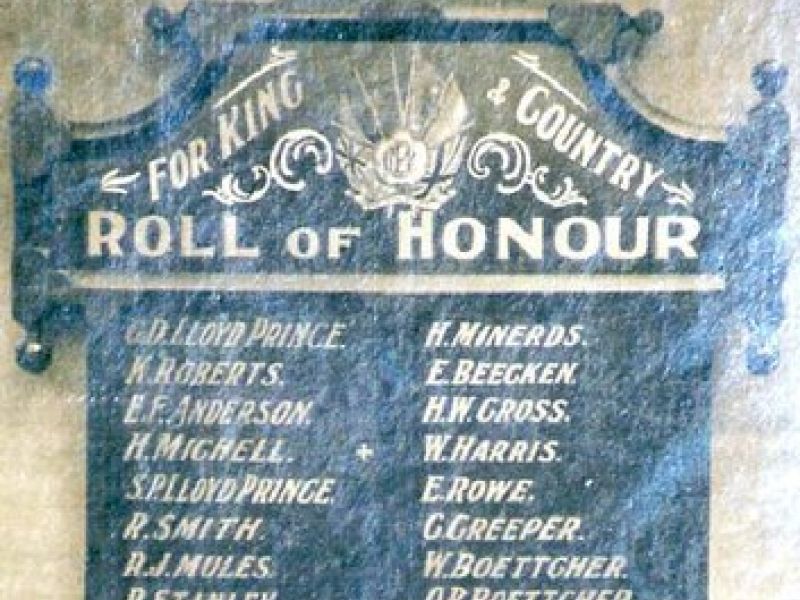
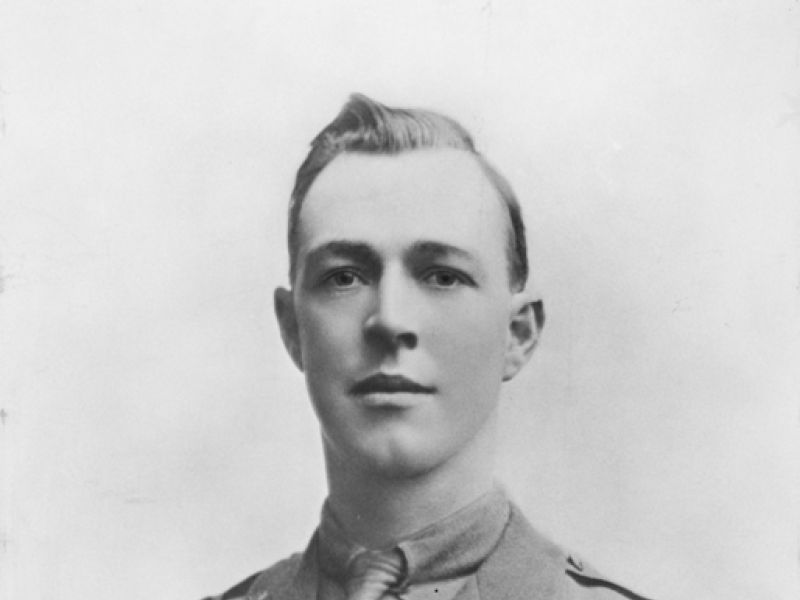
Lieutenant Henry Ernest Clifford Minerds, 50th Australian Infantry Battalion
 Australian War Memorial
Henry Minerds was born on 30 April 1891 in the Adelaide suburb of Thebarton. Known as “Harry”, he was one of seven children born to gardener’s labourer James Edwin Bell Minerds and his wife Annie Elizabeth. Harry received his education at Mitcham Model School in Adelaide, before being apprenticed to a cabinet maker in Hawthorne. When the First World War broke out in 1914, Harry was working as a chair and cabinet maker.
Harry Minerds enlisted in the Australian Imperial Force on 28 July 1915. He was assigned to reinforcements of the 10th Battalion. After a short period of training, he embarked for active service in October, sailing from Adelaide on board the troopship Benalla.
When Private Minerds arrived in Egypt he joined the rest of the AIF who had recently been evacuated from Gallipoli. He was transferred to the newly-formed 4th Division’s 50th Battalion in February 1916. In June, they sailed to the city of Marseilles and were immediately sent north to the Franco-Belgian border, entering the trenches in an area known as the Nursery Sector. Here the 50th Battalion had its first experiences of war on the Western Front, spending periods on duty in the trenches as well as training and labouring behind the lines.
Minerds’ unit was drawn into the fighting further south, at Mouquet Farm. With heavily entrenched German defensive and machine-gun positions, the farm was a deadly stronghold. The 50th Battalion mounted its first attacks in mid-August, suffering heavy casualties in the process. Minerds survived these initial clashes and was recognised for his contribution with a promotion to corporal, and then to sergeant before the month was over. His unit again fought at Mouquet Farm in early September before withdrawing to Belgium. The 50th Battalion returned to France in November, in time for the onset of a bitterly cold winter. During this period, Minerds was selected for officer training and sent to England, avoiding a freezing stint in the trenches.
He graduated from the course in early 1917. In March, he was commissioned to the rank of second lieutenant, before spending time in hospital with tonsillitis. Minerds re-joined his unit on the Belgian front on 11 July and received his commission as lieutenant later that same month. He spent the next weeks rotating in and out of the front lines as the allies defended the gains they had made.
In September, Minerds was drawn back into the fighting when the allies attacked enemy positions at Polygon Wood, near Ypres, suffering almost 6,000 casualties in the process. In October, Minerds and his men were involved in further attacks at Broodseinde Ridge which was similarly costly for Australian units.
Following these attacks, the 50th Battalion spent time behind the lines recuperating. Minerds and his men were moved back into the front lines on 17 October 1917. Having been on duty throughout the night before, Minerds returned to his dugout the following morning to rest. Shortly after, the enemy began bombarding their position and Minerd’s dugout was hit, burying him and his comrades. Those nearby rushed to pull them from the remains of the dugout, only to find that Lieutenant Minerds had suffered a fatal wound to the head.
His body was taken back to battalion headquarters and buried the following day. When news of his death reached Australia, his family placed a poem to him in the Adelaide Chronicle.
Take him, oh beautiful France,
Close to your generous chest,
Keep him, our dear, brave boy,
Honoured, beloved and to rest.
Under your glorious flag,
Under your red, white and blue
There with your own gallant lads,
Bury our dear Harry too.
Harry Minerds was 26 years old.
- Australian War Memorial Roll of Honour https://www.awm.gov.au/collection/R1646566