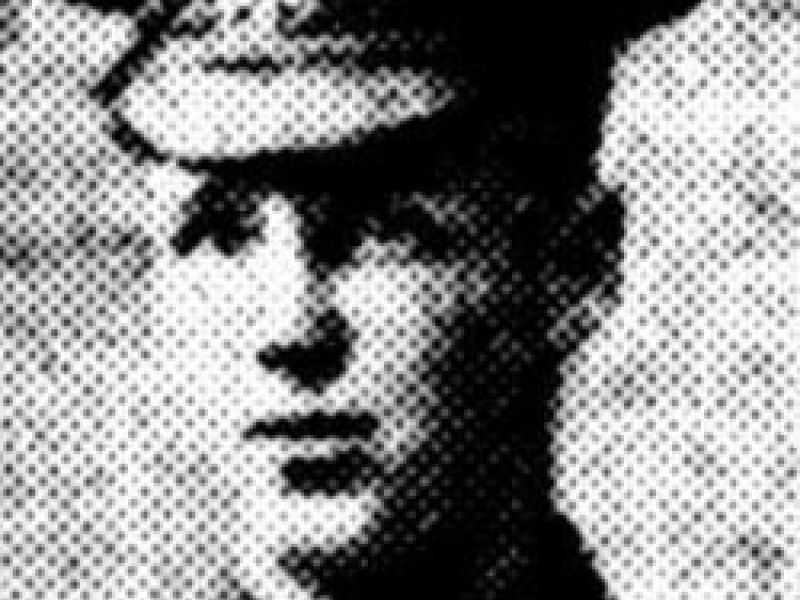
Private William Henry Irvine Gibson, 1st Battalion, AIF
 Australian War Memorial
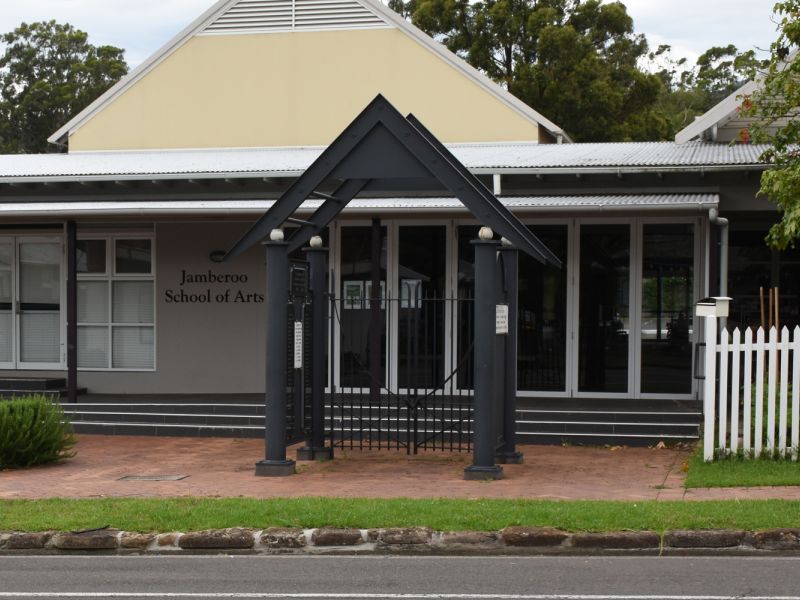
William Gibson was born on 15 August 1895 at Mount Murray, near Kangaloon in New South Wales. He was the second child and only son of William Anglo Gibson and Vergetta Elizabeth Gibson. William spent much of his childhood moving with his parents and five sisters around the south coast of New South Wales before settling in Jamberoo, near Kiama.
As a teenager, William served for two years in the senior cadets, reaching the rank of sergeant. He then joined the 37th Illawarra Regiment of the Militia as a company sergeant major. Like many young men in Kiama, William worked as a labourer at the local quarries after finishing his schooling. He was also an active member of the Jamberoo Loyal Orange Lodge and the Minnamurra branch of the Grand United Order of Oddfellows, two fraternal societies that were heavily involved in the New South Wales labour and union movements in the late nineteenth and early twentieth centuries. He was renowned throughout Kiama and Jamberoo as being “well liked by all who knew him” and “very enthusiastic over military matters”.
William enlisted in the Australian Imperial Force on 3 December 1915 in Kiama as part of the Waratah recruitment march. He arrived at Liverpool training camp on 20 December, and was assigned to the 16th reinforcements of the 1st Battalion with the rank of private. Before leaving Australia, William attended three farewells in Jamberoo and Kiama in early 1916. The first event was hosted by the local Loyal Orange Lodge in January, the second by the Kiama Recruiting Association in February, and the third by the Mayor of Jamberoo in March. A popular figure in town, he received a safety razor outfit, a sheepskin vest, a care package, an inscribed silver matchbox, a watch, and Oddfellows’ tokens as farewell gifts from friends and local organisations.
Along with the rest of the 16th Reinforcements of the 1st Battalion, Private Gibson embarked for the front aboard the SS Makarin on 1 April 1916. After several weeks at sea and a short stop in Egypt, William arrived at Marseilles, France, on 17 May 1916. He undertook further training at the 1st Division Base Depot in Etaples until 25 June, when he joined the 1st Anzac Entrenching Battalion. For two weeks, William worked with the Battalion to set up bivouac shelters in Belgium.
On 11 July 1916, William was one of 37 soldiers dispatched from the Entrenching Battalion as reinforcements for the 1st Infantry Battalion. He travelled by train to Vignacourt, in the Somme region of France, where he joined the rest of the battalion. His first – and only – major battle was to take place just a few days later near the French village of Pozieres.
The ridges behind the ruined village were held by the German enemy, and offered valuable defensive high ground. Following initial failed attempts from British units to capture the village or force the Germans back, a major offensive was launched on 23 July 1916. The 1st Battalion was involved in the opening assault on the German lines, suffering 276 casualties in the first 36 hours of combat.
At 12.30 am on 23 July, the 1st Battalion began its attack on the German trenches outside Pozieres. Despite heavy enemy artillery and gunfire, the initial German lines were captured by allied forces by the end of the day. At some stage during the first 24 hours of fighting, William was killed by enemy fire. An enquiry into his death by the Red Cross Wounded and Missing Enquiry Bureau returned conflicting reports regarding the cause of his death – with eyewitnesses attributing it either to a bullet through the heart or an enemy shell. All agreed that William Gibson had been killed on 23 July, and that his body was buried in the field on or around 26 July.
William’s body was never recovered from the field outside Pozieres. He is commemorated at the Australian National Memorial at Villers-Bretonneux in France.
He was 20 years old.
- Roll of Honour, Australian War Memorial https://www.awm.gov.au/collection/R1730297