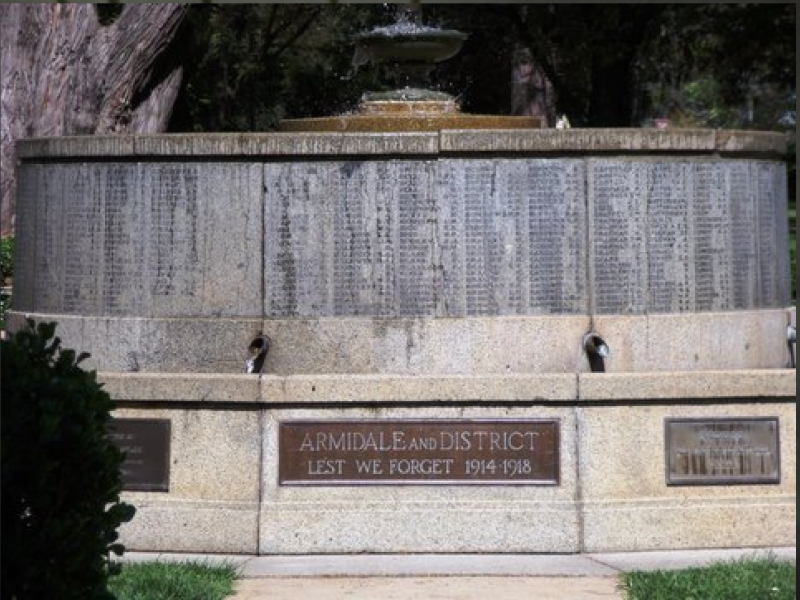
Corporal Victor Herbert Goswell, 20th Australian Infantry Battalion
 Australian War Memorial
Victor Goswell was born in 1895 in Tamworth New South Wales. He was one of eight children born to Thomas and Margaret Goswell.
During Victor’s childhood, the family moved north to the town of Armidale. He completed his schooling at the Armidale Public School, and was promoted to sergeant in the senior cadets in 1909, at the age of 14. After his schooling, Victor found work as a draper in Armidale.
Victor enlisted in the Australian Imperial Force on 29 May 1915. He was allotted to the 10th reinforcements of the 20th Australian Infantry Battalion with the rank of private. After six months of initial training in Australia, Victor was granted the rank of acting corporal, departing Sydney in the troopship Orsova on 11 March 1916.
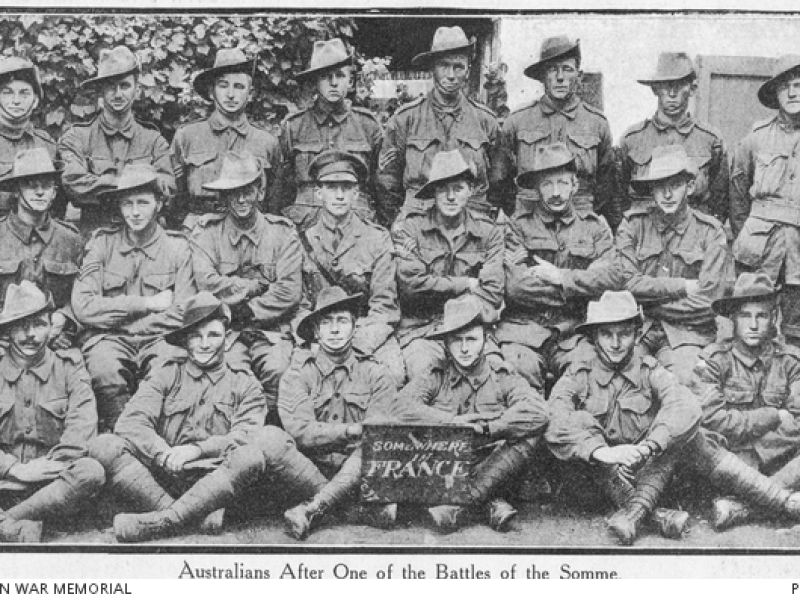
After a brief period of training in Egypt, Victor left Alexandria to join the British imperial forces fighting on the Western Front in early May 1916. He arrived in the southern French port of Marseilles on 18 May, and from there travelled north to the 2nd Australian Divisional Base Depot at Etaples.
Victor was taken on strength of the 20th Battalion from reinforcements on 6 July 1916, just in time for the battalion’s involvement in the bitter fighting at Pozieres between late July and the end of August 1916.
Pozieres proved a brutal introduction to trench warfare. Between 24 July and 6 August, the 20th Battalion sustained 510 casualties. In the reorganisation that followed, Victor was promoted to temporary corporal.
Following the fighting at Pozieres, the battalion moved into Belgium and northern France for a spell in a quieter sector of the front. While there, Victor wrote home frequently to his father, writing candidly about the horrors of warfare. In August, he wrote, “We have had twelve days of absolute hell, and are now out having a rest prior to another flutter … Three of my pals were killed in the advance, and our reinforcements also lost a good many.”
In September, he explained to his father: “We have just completed another seven days in the line, and it has been anything but pleasant – it rained for the greater portion of the time.” Later in the same letter, which did not reach Armidale until mid-November, Victor reflected that “It will be grand when this awful struggle is over. No one, only those who have seen it, can actually form even a slight idea of the awfulness of it all, and apart from the waste of life, the cost in all respects is terrific.”
The 20th Battalion returned to the Somme in October. By this time of year, the Somme battlefields had been deluged with rain, leaving cloying mud and miserable conditions in its wake.
After a spell in the front line outside Montauban in early November, the 20th Battalion provided reinforcements for the attack near Flers from 14–16 November. In his Official History, Bean described the time the AIF spent in the Flers sector as the most trying period ever experienced by the AIF, largely due to the mud and brutal conditions.
On the afternoon of 15 November, Victor was one of the men from the battalion manning the front line trenches outside Flers. During the afternoon, he was killed in action, either shot through the head by a sniper or killed by a German bomb.
He was 21 years old.
Victor’s body was buried close to where he fell on the night of 15 November. After the war, his body was exhumed and reinterred in Warelencourt British Cemetery.
- Roll of Honour, Australian War Memorial https://www.awm.gov.au/collection/R1633555