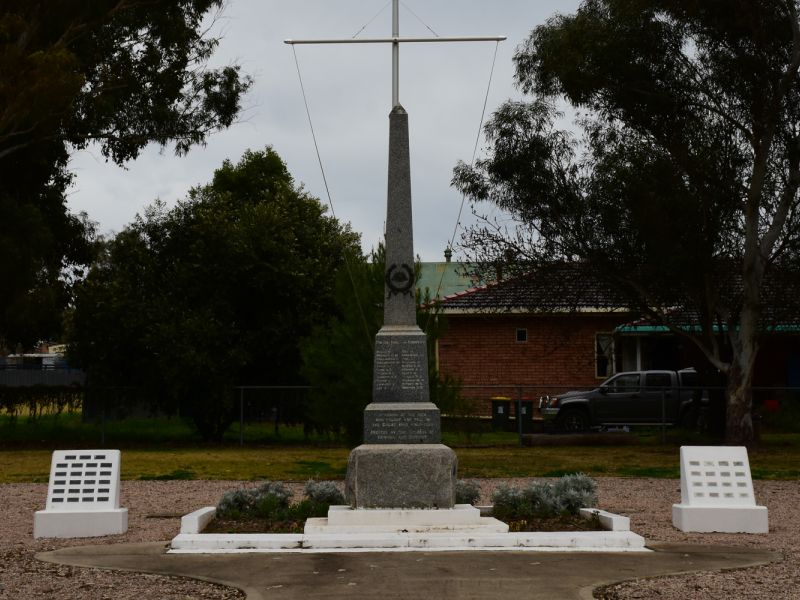
Lance Corporal Albert Joseph Spratt, 53rd Australian Infantry Battalion
 Australian War Memorial
Albert Spratt was born in Muswellbrook, New South Wales in 1894. Known as Albie, he was one of nine children born to James and Elizabeth Spratt.
The family lived at Merriwa in the upper Hunter at their property “Mascotte”. Albert and his siblings attended St Joseph’s Catholic Convent School. He went on to work as a clerk and bookkeeper in the Merriwa region.
Albie Spratt enlisted in the Australian Imperial Force on 7 August 1915. He was allotted to reinforcements of the 3rd Battalion. After three months of initial training in Australia, on 2 November 1915, Private Albert Spratt departed Sydney in the troopship Euripides, bound for Egypt.
Arriving in Egypt, Spratt joined a training battalion for the winter. In February 1916, as part of the reorganisation of the Australian Imperial Force, he was taken on strength of B Company of the newly formed 53rd Australian Infantry Battalion.
The 53rd Battalion departed Egypt in June 1916, arriving in France a week later. The battalion’s first introduction to warfare on the Western Front came on 19 July, when they formed part of the initial assault. The battalion suffered grievously, incurring 625 casualties – over three-quarters of its attacking strength. Despite these heavy losses, the battalion continued to man the front in the Fromelles sector for a further two months.
Spratt was briefly posted to the Divisional Bombing School in August 1916, but returned to the 53rd Battalion in time to re-enter the frontline trenches at Fleurbaix, just north of Fromelles. Over the next few months, Spratt found himself in trouble with military authorities after being caught absent without leave in September and November.
After a brief period of leave to England in January 1917, Spratt returned to the 53rd Battalion in early February. The first half of 1917 was defined by illness: he was admitted to hospital with trench foot in March, and with appendicitis in May.
He returned to his battalion just in time for its move north to the Ypres salient in Belgium. Promoted to lance corporal in July, Spratt reverted to the rank of private the next day at his own request.
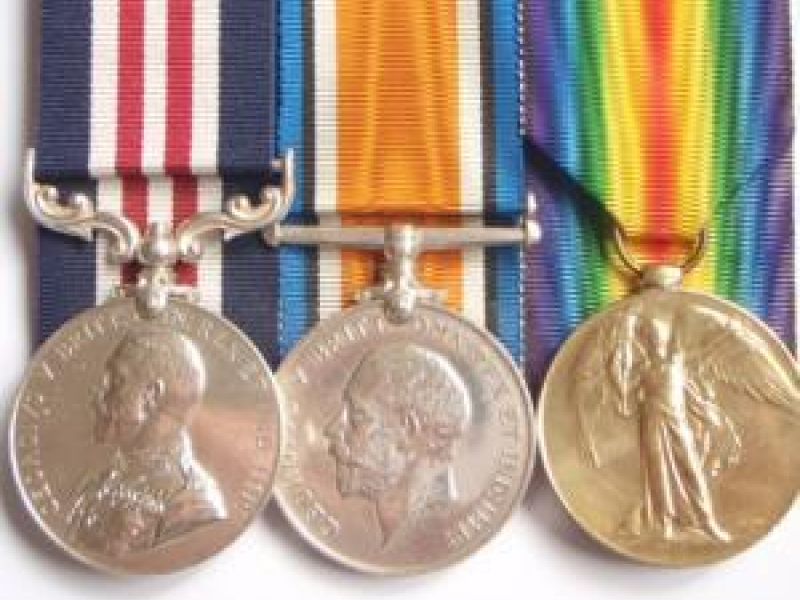
In Belgium, the 53rd Battalion soon participated in the battle of Polygon Wood as part of the larger Third Battle of Ypres – known as Passchendaele. During the battle, on 25 September, all the stretcher bearers in Spratt’s company were wounded or killed. He rushed to fill the gap, and “continually carried out wounded through heavy barrage fire although severely shaken himself.” Spratt was awarded the Military Medal for his “conspicuous gallantry and devotion to duty” during the battle. His commendation stated that “His untiring and gallant conduct undoubtedly saved many lives.”
The remainder of 1917 was relatively uneventful for Spratt, and in January 1918 he returned to England on personal leave. Shortly after returning to the 53rd Battalion in early February, Spratt was awarded the Belgian Croix de Guerre for “bravery in the field”.
In late March, the 53rd Battalion moved to defend the area around the French village of Corbie from the German Spring Offensive, and participated in the successful halt of the offensive.
Spratt was admitted to hospital again in June 1918, spending a month recovering from trench fever. He returned to his battalion in July 1918, and a month later was promoted to lance corporal.
In mid-August, the 53rd Battalion was resting behind the lines at Morcourt, just outside the city of Saint-Quentin. Just before midday, men of B Company were making their way down to the Somme river on a swimming parade when the enemy began shelling the area. Spratt was hit by shrapnel from the explosions and killed instantly.
He was 24 years old.
His remains were initially buried by his comrades at Morcourt Communal Cemetery. After the war, they were exhumed and reinterred at Heath Cemetery in Harbonnieres.
- Australian War Memorial Roll of Honour https://www.awm.gov.au/collection/R1659431