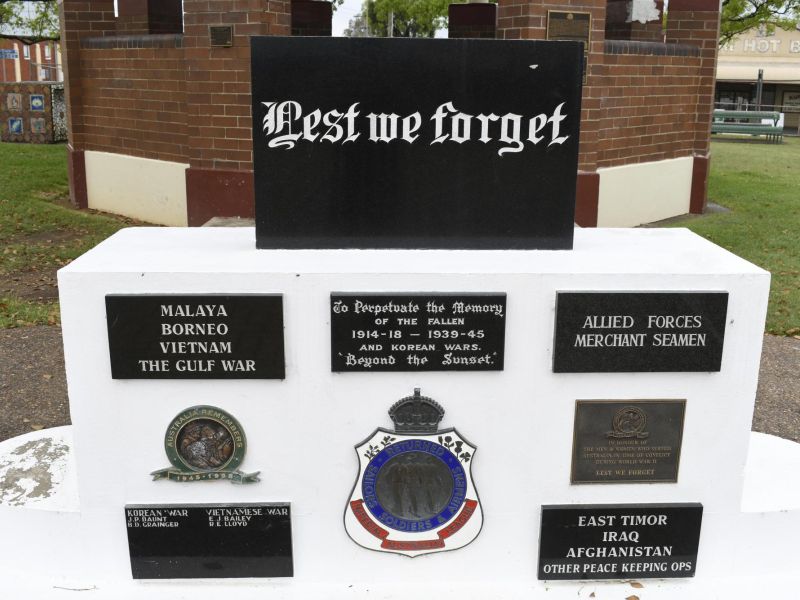
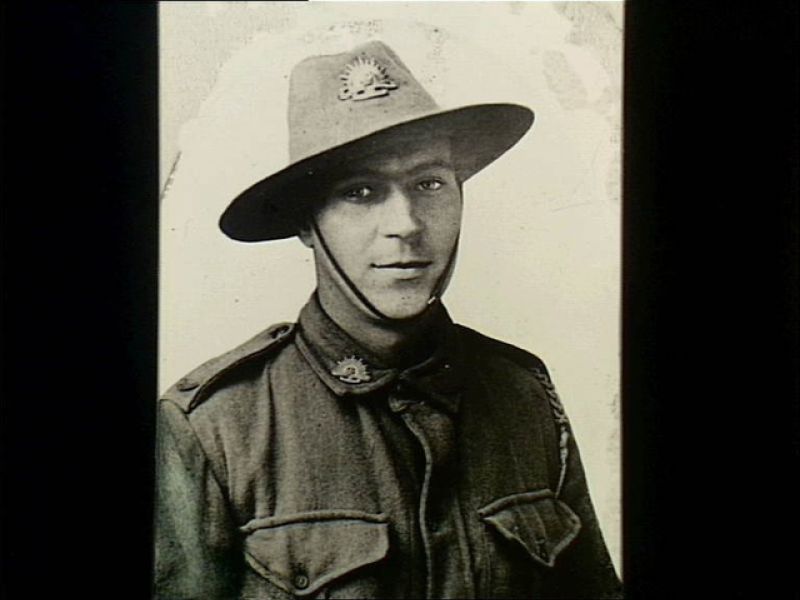
Private James Allan, 36th Australian Infantry Battalion, AIF
 Australian War Memorial
James Allan was born about 1890 to James and Catherine Allan, in the town of Sauchie, Scotland. He attended school in the nearby town of Fishcross. The family emigrated to New South Wales when James was 19 years old. Settling in Abermain, near Maitland, James Allan worked as a miner.
In Scotland, Allan had served in the Territorial Army, as a member of the Argyll and Sutherland Highlanders. In late 1915, he travelled south to Liverpool army camp and volunteered for service in the Australian Imperial Force. He was appointed to the newly-raised 36th Battalion, and trained in Australia for four months.
In May 1916, the battalion left Sydney on the transport ship Beltana, and arrived in England in early July. Allan and the unit continued training at the army camps on Salisbury Plain. In November 1916, they sailed for France and joined the fighting on the Western Front.
The battalion was stationed in the town of Armentieres in northern France, near the Belgian border. The French winter of 1916 and 1917 was the coldest in living memory, and the battalion’s war diary recorded heavy falls of snow. The battalion spent time behind the lines as well as in front-line trenches. Fighting was less intense during winter, but had not stopped completely. In January 1917 the war diary recorded that the battalion suffered more than 50 casualties to German shelling and trench raids.
In April 1917, Allan fell sick and was treated in hospital, returning to his unit before the end of the month.
In the middle of 1917, British commanders turned their attention away from the Somme River sector and towards the border of France and Belgium. They planned a major offensive aimed at capturing the higher ground outside the town of Ypres in Belgium. The first step in this campaign was to be the capture of the ridgeline outside the town of Messines.
In preparation for the assault on Messines, British, Canadian, and Australian soldiers had dug mines underneath the German positions and filled the mines with explosives. Before dawn on 7 June 1917, these explosives were detonated, and the allied soldiers charged the German lines.
During the attack, Allan was killed in action. He was 26 years old.
Allan’s remains were buried where he fell, but in the subsequent fighting, the location of his grave was lost. His name is one of more than 54,000 Commonwealth soldiers who are commemorated on the Ypres Memorial in Belgium.
- AWM Roll of Honour https://www.awm.gov.au/collection/R1666254