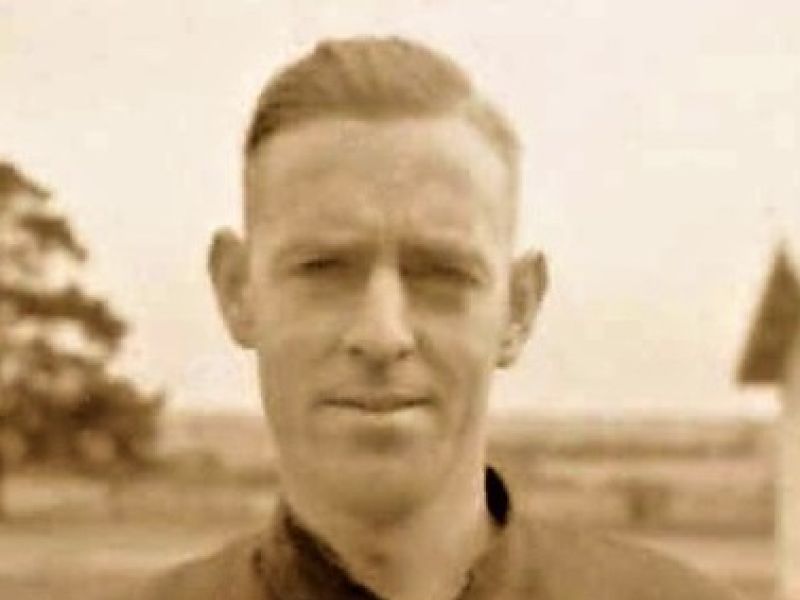
Flight Sergeant Geoffrey Raymond Emmett, No. 100 Squadron, Royal Australian Air Force
 Australian War Memorial
Geoffrey Emmett was born on 28 February 1911 in Stawell, Victoria. He was one of six children born to Arthur Munro Emmett, a hotel keeper, and his wife Evangeline. Geoff’s father was killed in action at the battle of Pozieres in July 1916, so Geoff and his siblings were raised by their mother. He attended the local public school and Ararat High School. On completion, he studied at the Victorian Teacher’s College before attending Melbourne University where he undertook a bachelor of arts and a bachelor of education. Geoff graduated in 1937 and was working as a school teacher at Coleraine when the Second World War broke out.
Geoff Emmett enlisted in the Royal Australian Air Force on 26 April 1941. In January 1942, he was awarded his air observer’s badge before attending schools for navigation as well as bombing and air gunnery. In August, he returned to Victoria where he married his sweetheart, Kate “Kit” Pritchard. After a short honeymoon, he was posted to No. 1 Operational Training Unit at Bairnsdale, where crews were trained for multi-engined aircraft operations.
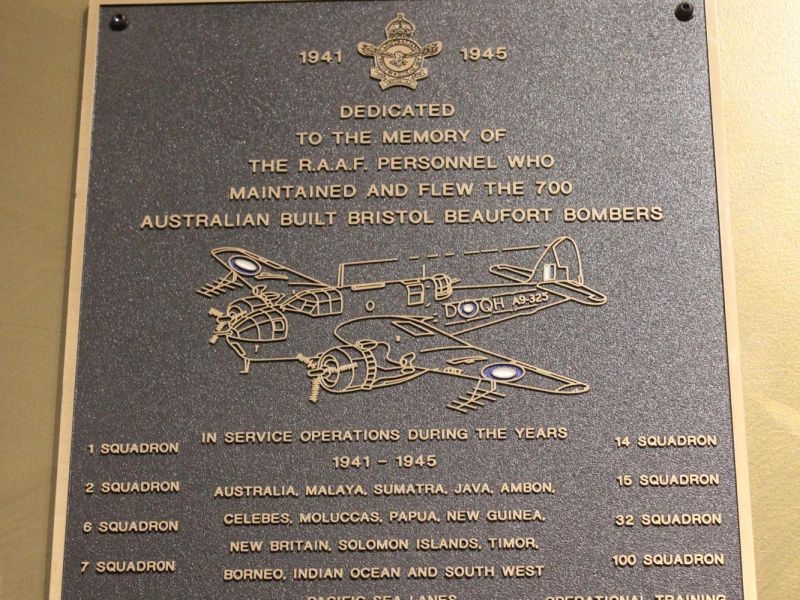
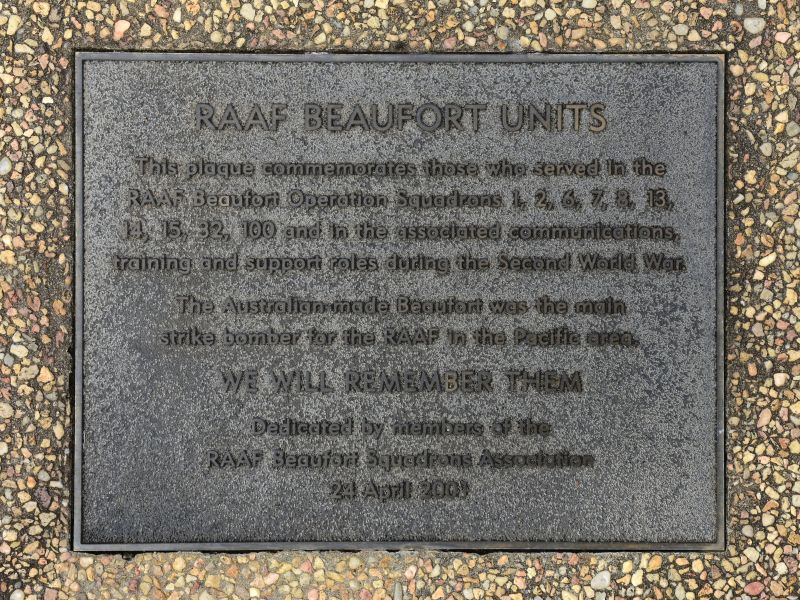
He was posted to the Base Torpedo Unit at Nowra in the New Year, where aircrew were trained in torpedo-dropping procedures and tactics. Emmett was then allocated to his first operational unit, No. 100 Squadron on 14 June 1943. Based at Mareeba in Queensland, the squadron was equipped with Bristol Beaufort torpedo bombers. The squadron was largely responsible for carrying out reconnaissance, and anti-shipping and bombing missions against the Japanese around Solomon Islands and the New Guinea mainland.
A month after joining his unit, Emmett was allocated to a four-man crew to carry out a routine reconnaissance mission around Bougainville in Beaufort A9-225. They did not return to base as expected and a search for their whereabouts was begun. The following day, a message was received that an American Liberator aircraft had sighted and shot down an aircraft in the area of Emmett’s mission. The American crew reported that the aircraft had crashed into the sea and at least three Allied crew appeared to leave the plane. Realising their mistake, the American crew dropped a dinghy and supplies to the men, before returning to base for assistance.
Weather conditions delayed the start of the search for Beaufort A9-225 but by then there was no longer any sign of survivors. Some weeks later, on 1 August 1943, another Beaufort crew sighted the dinghy believed to be the one that had been dropped to Emmett and his comrades. A further search for the men was begun, which again failed to locate them. Over the weeks that followed, the search for the crew of Beaufort A9-225 continued. The Americans had dropped several weeks’ worth of supplies to the men, and heavy rainfall had ensured any survivors would have had fresh water. This made the authorities believe it was possible that some of the men could have survived.
Despite this, the crew of Beaufort A9-225 were not sighted again after 6 August 1943. For several years, hope was held that at least some of Emmett’s crew may somehow have made it to land and survived, or perhaps become prisoners of war. During this period, Emmett’s wife gave birth to their first and only child, a daughter named Margaret, whom he would never meet.
By 1947, exhaustive searches still found no trace of Emmett and his comrades. With the war now over, authorities wrote to Emmett’s wife and noted:
Since the termination of hostilities, thorough searches have been made both by boat and on foot along the south-east coast of New Guinea and other regions… without result. It is therefore necessary to presume that your husband lost his life on or after the last day which he is definitely known to be alive, the 12th of July 1943.
With no known grave, Emmett is today commemorated on the Port Moresby Memorial in Papua New Guinea, alongside his comrades: Sergeant William Brain, Sergeant George Collins and Flying Officer John Davis.
Flight Sergeant Geoffrey Emmett was 32 years old.
- Roll of Honour, Australian War Memorial https://www.awm.gov.au/collection/R1704532