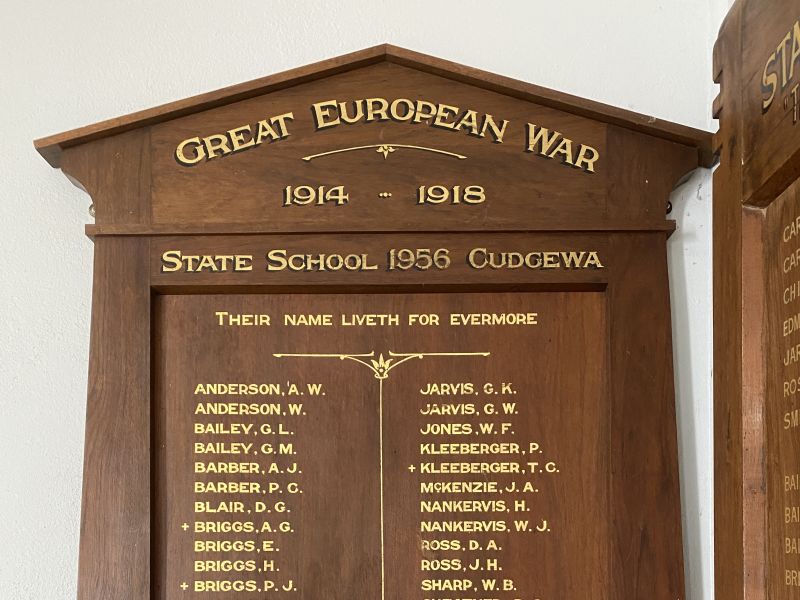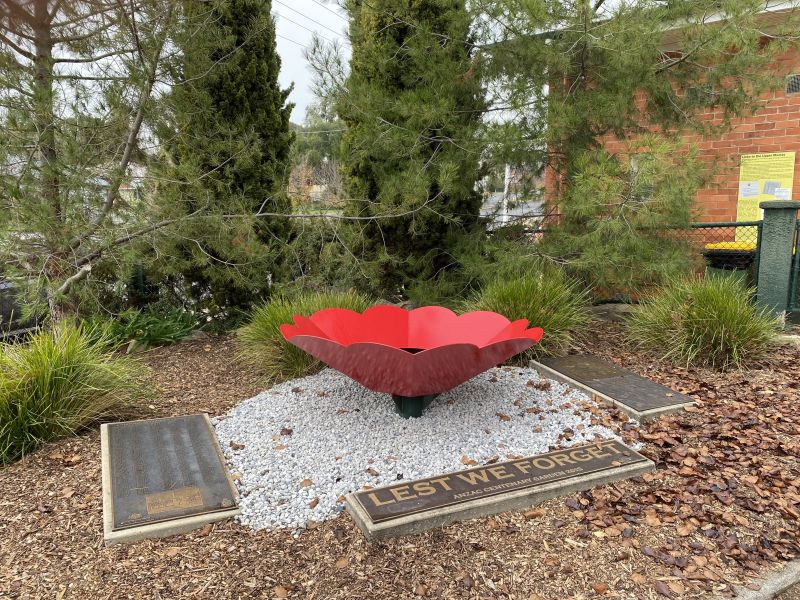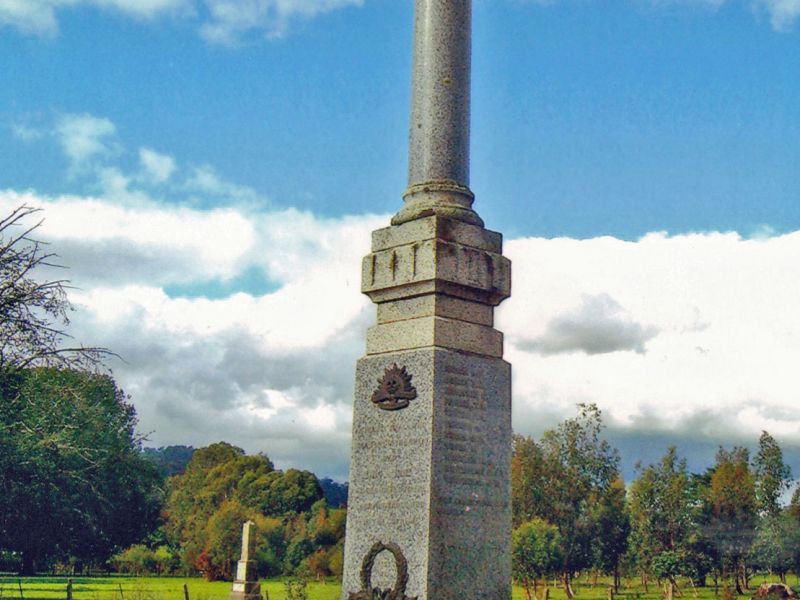
James Anderson McKenzie
 Stephen Learmonth
James Anderson McKenzie was born on April 8 1895, in Cudgewa, Victoria. He was the second of six children of George Young and Frances Ellen (nee Anderson) McKenzie.
Jim enlisted at Tallangatta on February 2 1916. At the time, he was 20 years old, single, and working as a grocer in Cudgewa. He was assigned the Service Number 1234 and placed in the 59th Battalion. After some initial training, he embarked on HMAT A34 Persic on June 3 1916. He arrived in Plymouth, England on July 25 of that year.
Further training was undertaken with the Overseas Training Brigade at Perham Downs. While stationed here, Jim would have undergone several weeks of intensive drill and physical conditioning as well as specialised weapons training. He proceeded overseas to France on October 7 1916, and was taken on strength with the 59th Battalion at Etaples, France.
Jim was fortunate to miss the battalion's first major battle on the Western Front at Fromelles. During the first wave of attacks, the battalion suffered heavy casualties. Jim spent the winter of 1916-17 rotating in and out of the front line with the battalion. In March he would experience first-hand the advance that followed the German retreat to the Hindenburg Line.
On June 9 1917, he was admitted to the 8th Australian Field Hospital suffering from synovitis, or inflammation of the soft tissue in his left knee. He was placed on the 3rd Ambulance Train and evacuated to the No.2 General Hospital at Le Havre, on the coast of France. He rejoined his battalion on June 24. In September 1917, Jim was granted a two-week furlough to England. He would be granted a further two-week furlough in September 1918.
Following the collapse of Russia, and the subsequent transfer of between 50 and 60 German infantry and cavalry divisions to the Western Front, the Germans launched a major offensive in late March of 1918. The 59th Battalion, as part of the 5th Australian Division, was moved to defend the sector around Corbie,10 kilometres east of Amiens. On April 25, the 59th Battalion, with Jim part of C Company, made the famous successful counter-attack at Villers-Bretonneux.
Jim would be part of the Allies' August offensive around Amiens. The battalion fought around the village of Péronne in early September and entered its last battle in late September with the attack along the St Quentin Canal. On March 24 1919, the 59th Battalion was disbanded.
In late July 1919, Jim embarked on the HT Bakara. He was transferred in Durban, South Africa, on September 4, to take on armed-guard duties aboard the SS Bahia Castillo. This ship was carrying more than 800 munition workers and dependants to Australia. The passengers' experience of substandard living conditions, poor sanitation, and food shortages led them to mutiny. Docking at Durban, the crew refused to continue the journey without an armed guard. Upon docking at Fremantle, approximately 600 passengers walked off the ship and refused to continue their journey. A Royal Commission was established in October 1919 and found that the passengers' extreme expectations of shipboard travel were extreme and uncalled for. Meanwhile, Jim arrived safely back in Australia.
Jim was discharged from the A.I.F. on December 8 1919. For his service during the war, he was awarded the British War Medal and the Victory Medal.
Returning from overseas, he secured employment as a shop assistant in Cudgewa in 1919. Three years later, in 1922, Jim married Annie Elizabeth Mapletoft. In December of that year, their first of three children, Majorie, was born. A son, James, would be born in 1926 and another daughter, Nancy, in 1931. The young family moved to Trentham, 90 kilometres north-west of Melbourne, around 1924. James found employment as a grocer and would manage the store with Annie. According to the 1980 Electoral Roll, Jim would continue in this position until 1980.
A document in the Puttick Family Tree on Ancestry recounts the couple's story from Annie's perspective. “Annie Elizabeth McKenzie was a foundation member of the Trentham C.W.A. (Country Women's Association). During World War 2, she was a member of the Volunteer Air Observers Corps, which was involved in aircraft observation and recording. She won many prizes at flower shows. Once played tennis, and later croquet. Was a school teacher for only 3 weeks, as a throat problem (quinsy) worsened, and she never went back to teaching. Helped run euchre parties and other fundraising activities during W.W. 11. She managed a general store in Trentham, with her husband Jim.”
Jim passed away on July 24 1983, at Trentham. Annie died two days later at the Trentham Bush Nursing Hospital. Jim and Annie were laid to rest together in Trentham Cemetery.