Oswald Andrew Rixon
 Stephen Learmonth
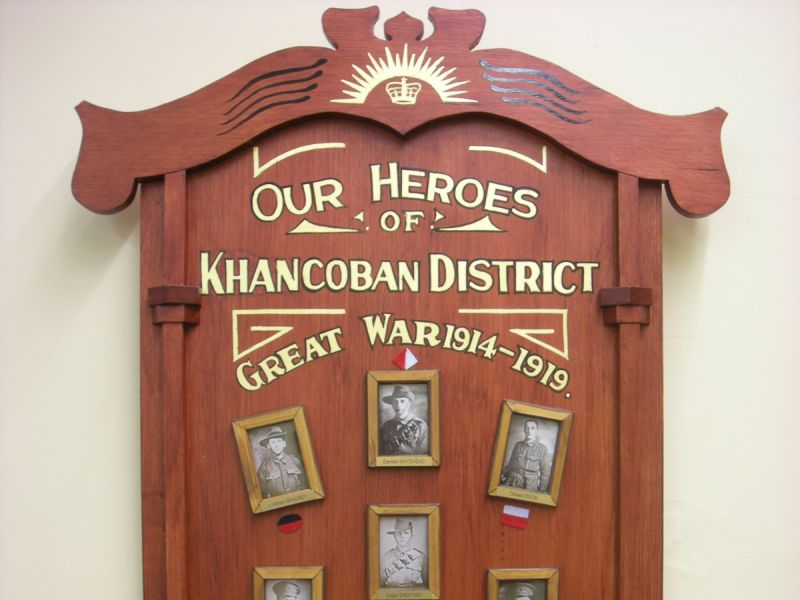
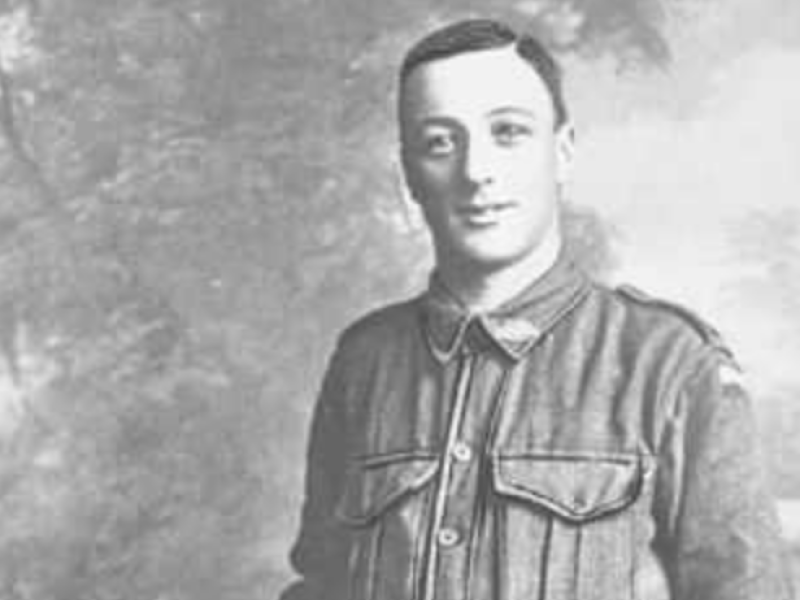
Oswald Andrew Rixon was born January 13 1895, at Khancoban, NSW. He was the oldest of five children to Andrew and Elizabeth Eleanor, nee Scammell, Rixon.
Andrew Rixon was a noted horseman in the Upper Murray, who gave up his job as a surveyor to join the staff as a horse breaker at Mitchell’s station at Bringenbrong. He instilled his skills in at least two of his sons, Oswald and Gordon. At age ten, Oswald was considered old enough and considered experienced enough to help Andrew drive a mob of horses to the Wodonga Sale and then head home that night.
Oswald was a successful jockey. Standing five feet two inches tall and weighing 7 stone 4lb, he was apprenticed to Melbourne trainer, Walter Higgenbotham. He rode several double winners at Caulfield. He also rode and worked ‘Trafalgar’, the Sydney Cup winner, which was owned by Tom Mitchell of Towong Hill. He was set for leading jockey, but the war ended his career when he enlisted on February 10 1916, at the age of 21.
He was allocated the Service Number 5445 and placed in the 17th Reinforcements for the 8th Battalion. After initial training at the Broadmeadows Camp, he embarked on HMAT A14 Euripedes at Melbourne on April 4 1916. Oswald disembarked at Alexandria in late May and remained there for almost two weeks before sailing to Plymouth, England. The 17th Reinforcements joined the 2nd Training Battalion at Perham Downs for a little over two months before shipping out to France. Oswald was taken on strength with the 8th Battalion in Belgium on September 10 1916.
Oswald was fortunately too late to participate in the battalions' first major engagement at Pozieres in July 1916. He did arrive in time to fight at Ypres, in Flanders, before the battalion returned to the Somme for winter. In May 1917, he was admitted to hospital with a case of gonorrhea. He returned to the battalion in early June. Back in Australia, tragedy struck the Rixon family in June 1917, when one of Oswald's younger brothers, Gordon, was killed from the effects of a gunshot wound, accidentally inflicted by himself. Gordon was also a capable jockey who appeared to have a promising future.
In late February 1918, he was attached for duty with No.3 Company of the Australian Service Corps. April of that year saw him return to hospital suffering from scabies. In early August 1918, the battalion, as part of the 1st Australian Division, was transferred south to the Somme, where it would take its place in the Australian Corps under the command of General Monash in the Great Allied Offensive. A photograph hanging in the Corryong RSL shows the members of No. 3 Platoon, 8th Battalion, standing before the battle. Oswald stands in the far left of the back row. Of the 29 men of the platoon, nine would be killed in action in the last two months of the war.
He returned home on HMAT A34 Persic, disembarking at Melbourne on August 29 1919. For his service overseas, he was awarded the British War Medal and the Victory Medal.
Back in the Upper Murray, he took up a Soldier Settlement block at Biggara. He continued to ride mounts at Towong & District meetings and rode many winners, including the Bowna Cup on Seabound, Albury Cup hurdle for Pierce’s stable, Benambra Cup, Towong Cup three times on Tom Bourke trained at Greg Greg Station.
Oswald never married. He eventually moved into a unit in Corryong, where he passed away on July 29 1980. He was buried in the Corryong Cemetery.