Percy Herbert Nugent
 Stephen Learmonth
According to his enlistment papers, Percy was born in 1898 in Cudgewa, Victoria. He was one of nine children of James William and Sophia (née Hamilton) Nugent. Five Nugent boys would enlist and fight overseas; two would not return.
The 14th of June 1917 issue of the Corryong Courier describes the community send-off, in the form of a ball, for some Corryong boys, including Jack Greenhill (who was embarking overseas), Wallace Hamilton, William Jeffcott and Percy. The latter two were just going into camp. There was a large attendance at the event, with dancing until 2 a.m., speeches and singing. The day before the ball, Percy passed his physical examination at Wangaratta.
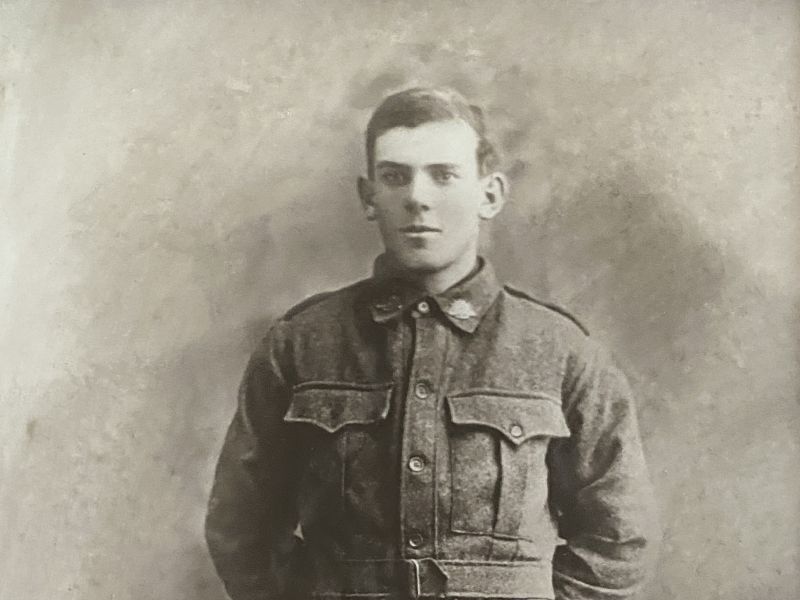
Percy was nearly 22 years old when he enlisted at Wangaratta on the 9th of July 1917. He was allotted the rank of Private, Regimental Number 7539 and put onto strength with the 25th Reinforcements for the 7th Battalion AIF. On Percy’s statement of service, “Sportsman's Unit” is stamped above his unit. In 1917, the State Parliamentary Recruiting Committee decided to use the theme of sport to encourage men to enlist. Lieutenant Albert Jacka VC was used as a recruiting figure, known for his fighting exploits and boxing before the war. The campaign to enlist sportsmen was fuelled by the belief that playing sports enabled young men to develop skills and qualities that could be used on the battlefield.
Following one month's initial training at the AIF camp at Broadmeadows, on the outskirts of Melbourne, the 25th Reinforcements embarked on HMAT A32 Themistocles, arriving at Glasgow, Scotland, on the 2nd of October.
After travelling by train through the Scottish and English countryside, Percy arrived at the 1st Training Battalion, 1st Training Brigade at Sutton Veny in the south of England. For the next five months, the new soldiers would be trained in every aspect of soldiering on the Western Front. On the 2nd of March 1918, Percy and his fellow reinforcements proceeded overseas to France, finally being taken on with the 7th Battalion, which was billeted at Murrumbidgee Camp at La Clytte, 5 kilometres southwest of Ypres in southern Belgium. Over the next month, the 7th would move in and out of the line, spending time in reserve and assisting with the movement of material and upkeep of trenches.
On the 12th of April, the battalion moved up to the village of Hazebrouck, 10 kilometres south-east of Ypres. By that evening, they were on the front line near Vieux Berquin. The 7th Battalion’s task on the night of the 14th of April was to relieve the 4th Guards Brigade that was currently in the line. It was during this period that the German forces launched their Spring Offensive, also known as Operation Michael. Following the Russian Revolution and the collapse of the Russian forces in 1917, the Germans were able to redeploy nearly 50 Divisions, almost 750,000 men, from the Eastern Front to the Western Front.
In this region, the Germans decided to extend their original push. While the previous two days had been quiet, the 7th Battalion’s War Diary entry declared that the 17th of April was anything but. At 0300 hours, a terrific barrage was launched by the Germans. It was on this day that Percy was killed in action by shellfire. Sergeant G.C. Arroll of the battalion initially buried him and re-interred him in the Aval Wood Military Cemetery, six kilometres southeast of Houzebrouck. The task was carried out by Field and Graves Exhumation Parties and in the presence of a chaplain.
In October of 1918, the Commanding Officer of Base Records in Melbourne received a letter from Percy’s mother, Sophia, asking if it was possible to get some of her son’s personal belongings. Four months earlier, at the AIF Kit Store in London, a small package containing the only personal items of Percy’s that were found was assembled and addressed to Sophia. It included a disc, wallet, letters, cards and a metal cigarette case. Base records in Melbourne conveyed to Sophia that they had received nothing, so it’s not known whether his personal effects ever reached her. In 1922, four years after Percy’s death, James and Sophia received a plain brown envelope from Base Records. It contained one identity disc and one cap badge that had been recovered from Percy’s remains when reinterred in Aval Wood Cemetery.
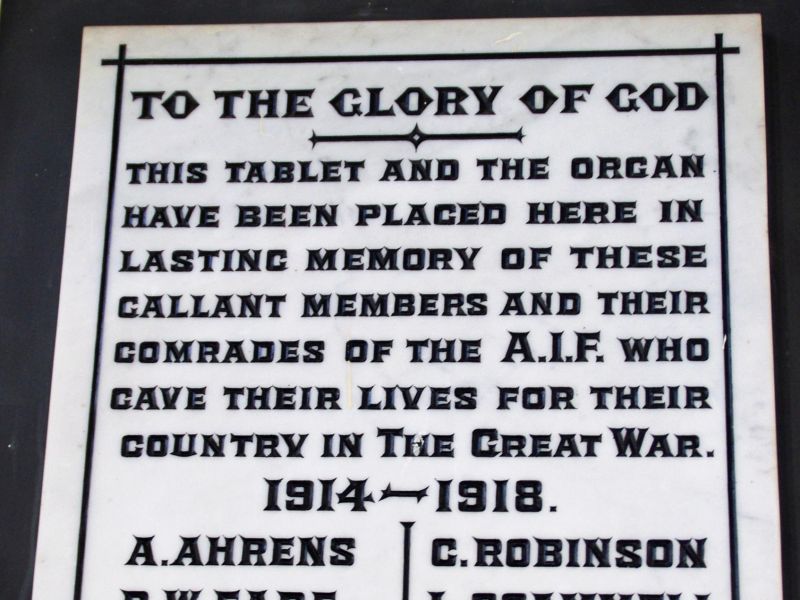
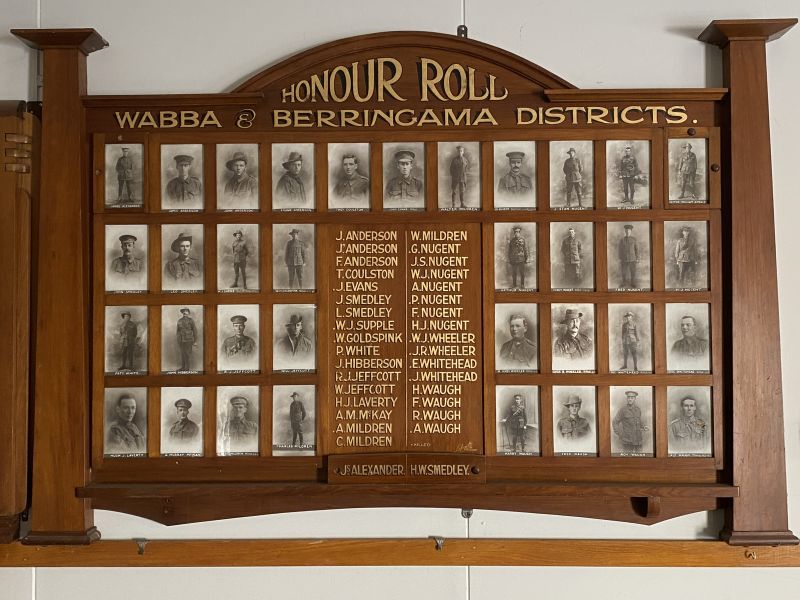
Percy is remembered on the Australian War Memorial Roll of Honour, the Corryong War Memorial and the Wabba & Berringama Districts Pictorial Honour Roll. For his service, he was awarded the British War Medal and the Victory Medal.