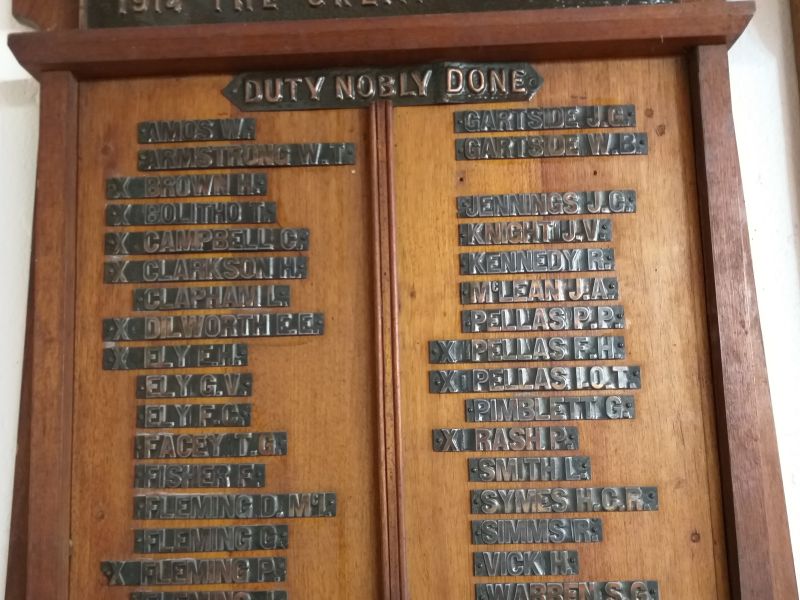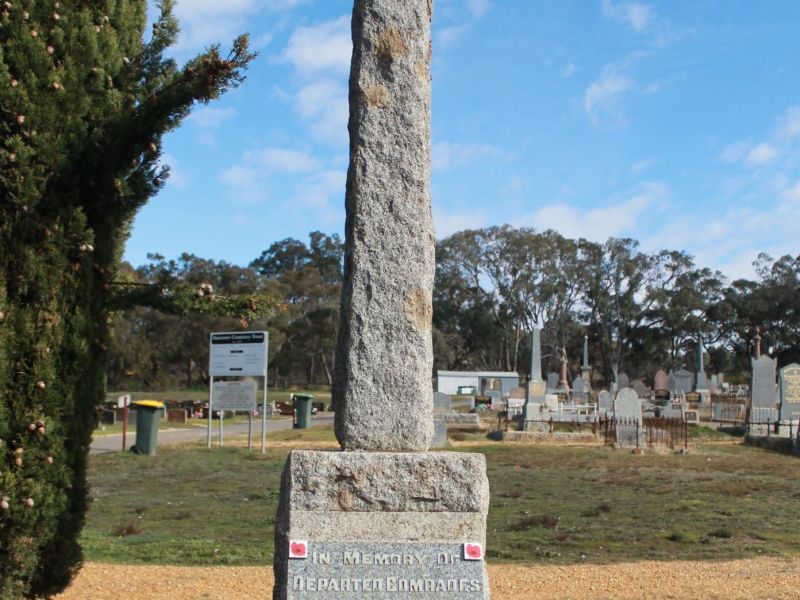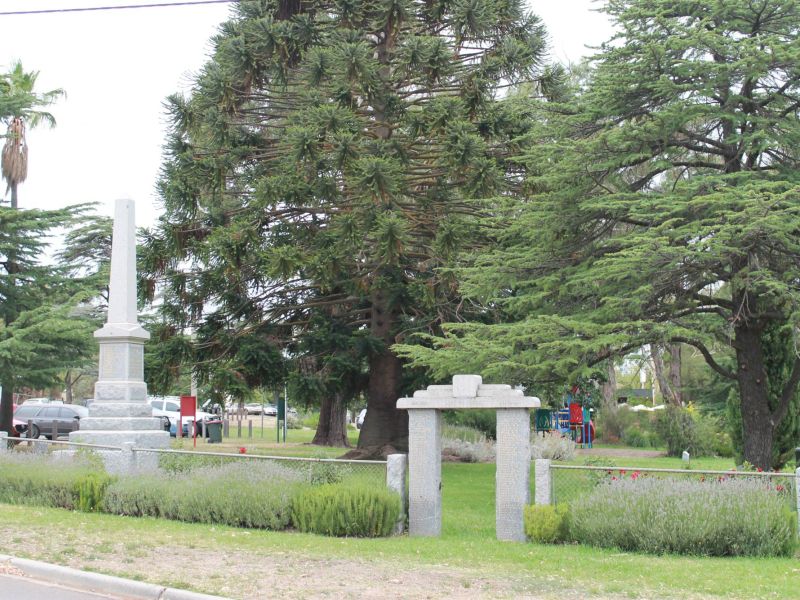
Lance Sergeant Ernest Harcourt Ely, 7th Australian Infantry Battalion
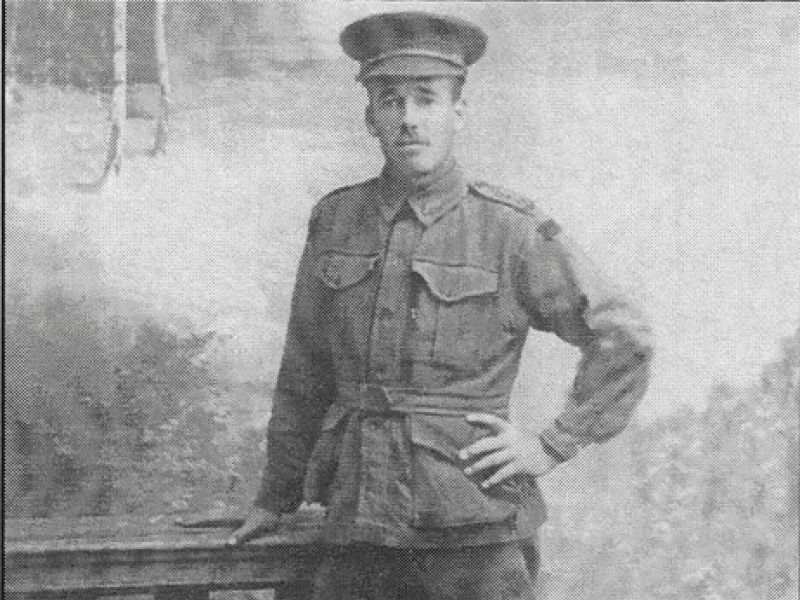
 Australian War Memorial
Ernest Ely was born in the central Victorian town of Castlemaine in 1889. Known as “Sammy”, he was the fifth of 12 children born to orchardist George Ely and his wife Clara.
Ernest attended the state school in Harcourt, Victoria before joining his father and older brother James working in the family’s apple orchard “Kia Ora”.
In 1909, Ernest joined the 8th Castlemaine Militia as a reservist. He was still on the reserve of the unit when war broke out in August 1914.
He enlisted in the Australian Imperial Force on 17 August 1914. He underwent initial training at Broadmeadows Camp on the outskirts of Melbourne, and was allotted to F Company of the 7th Infantry Battalion with the rank of private.
After two months of initial training, Private Ernest Ely departed Melbourne in the troopship Hororata on the 19th of October, stopping briefly in the Western Australian port of Albany before proceeding to Egypt.
In Egypt, Ely trained with the 7th Battalion, before landing on Gallipoli with his battalion as part of the second wave on 25 April 1915. Shortly after landing, Ely suffered a gunshot wound to the head and was evacuated from the peninsula.
He was admitted the 2nd Australian General Hospital at Cairo on 30 April, and underwent surgery to remove the bullet from his skull. Ely carried the extracted bullet with him as a memento throughout the rest of his war service. Writing home, he explained, “I was well up the slope of the hill when I got hit by a spent bullet … The bullet went through the band of my hat, and entered my head under the hair just above the right eye. When it touched the bone it travelled upwards … So you see I am not too soft in the head after all.”
A prolific writer, Ely continued to post letters home throughout his war service, and kept a detailed diary of his time in the trenches.
He remained in hospital until early May, when he was discharged, rejoining the 7th Battalion on the Gallipoli peninsula on 30 May, fighting to defend the beachhead positions.
On 6 July, Ely was again wounded in action. He was admitted to the hospital ship Gascon the next day, suffering from “shock” and a concussion. Leaving the Dardanelles, Ely was evacuated first to St. George’s Military Hospital in Malta, and then to England in late August for further treatment.
Having completed his recovery and returned to Egypt, Ely rejoined the 7th Battalion at Tel-el-Kebir in mid-January 1916. On 26 February Egypt, he was promoted to lance corporal.
The 7th Battalion sailed for France in late March 1916. After a month adjusting to life on the Western Front, the battalion entered the front-line trenches outside Fleurbaix in early May. While based in the Somme valley on 21 July 1916, he was promoted to corporal.
Two days later, the battalion was thrown into their first major action on the Western Front, fighting at Pozieres between 23 and 27 July. Ely emerged from the battle unscathed, and on 10 August was promoted to lance sergeant.
The battalion returned to the bitter fighting at Pozieres on 15 August, taking over the right sector from the 12th Brigade. Three days later, the battalion took over another section of the front line, and commenced a creeping attack behind an artillery barrage after nightfall.
By the morning of 19 August, Lance Sergeant Ernest Ely was missing in action.
Although there were hopes he had been captured by the Germans, no sign of him was found over the following months in German prisoner of war camps, or in allied hospitals behind the lines. In June 1917, a court of inquiry determined that Lance Sergeant Ernest Harcourt Ely had been killed in action at Pozieres on 18 August 1916.
He was 27 years old.
After the war, it was assumed that Ely’s grave had been lost, and plans were made for his name to be included on one of the planned memorials to the dead. In July 1923, however, Ely’s remains were located by a grave recovery unit and identified by his dog tags. His body was reinterred at Delville Wood Cemetery in Longueval, France, and his identity disc returned to his family back in Harcourt. An Imperial War Graves headstone was erected over his final resting place, bearing the personal inscription selected by his grieving family back home: “In Memory of the son of Mr & Mrs Ely; at Eventide it shall be light.”
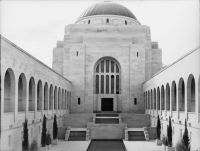
His name is also listed on the Roll of Honour at the Australian War Memorial, among almost 62,000 Australians who died while serving in the First World War.
- Australian War Memorial Roll of Honour https://www.awm.gov.au/collection/R1732564