Lieutenant Colonel John Charles Robertson, 2/29th Australian Infantry Battalion
 Australian War Memorial
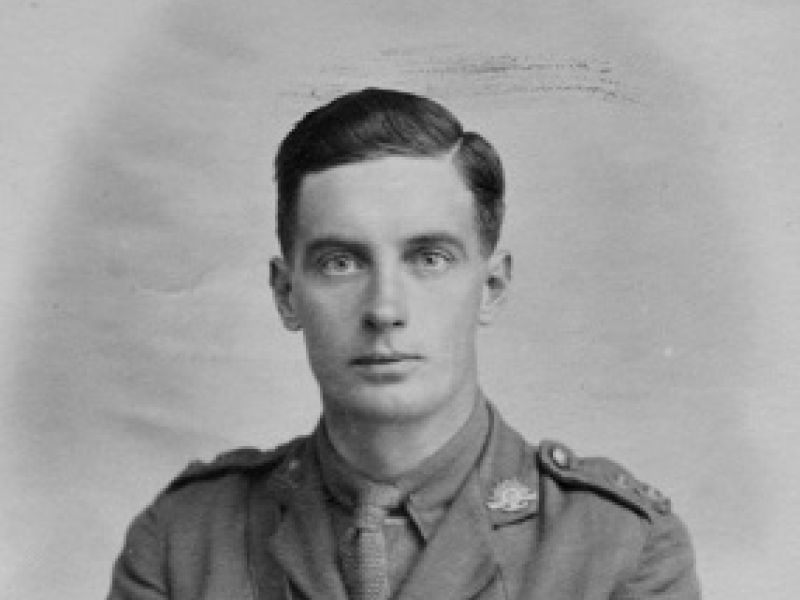
John Robertson was born on 28 October 1894 in Geelong, Victoria. Known as “Jack”, he was the eldest of five children born to George and Jessie Robertson.
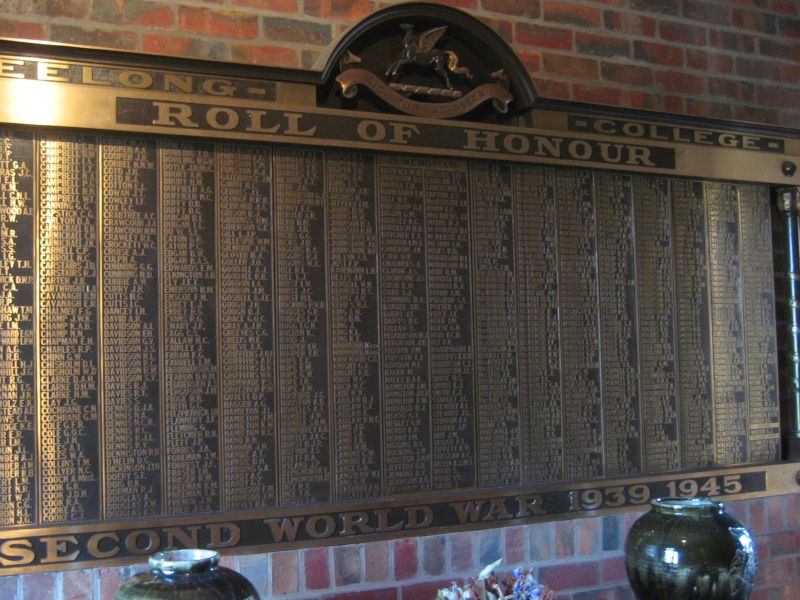
The family remained in Geelong throughout Jack’s childhood. He likely attended Newtown Primary School before moving to Geelong College. He was a strong student, attaining prizes in Geometry, Latin, and French.
Robertson found work at Hawkes Brothers Hardware and General Merchants in Geelong. He then worked as an Invoice and Ledger Clerk for his late grandfather’s company, while undertaking a carpentry and joinery course at Gordon College of Technology and studying bookkeeping and accountancy at night.
Robertson joined the senior cadets in 1911, and was promoted to sergeant in December that year. Although he undertook further examination for entry into the Citizen Forces in April 1912, he was exempted from training for three months due to an unspecified illness. Robertson was promoted to sergeant in the Citizen Forces in February 1913, and then colour-sergeant in August 1913. Robertson was awarded a commission in May 1914, and was appointed lieutenant in July 1915.
Robertson enlisted in the Australian Imperial Force on 23 July 1915. As he was under the age of 23, he was required to enlist as a private, rather than at his previous rank of lieutenant. He was promoted to acting sergeant before departing Australia with reinforcements of the 23rd Battalion in February 1916. Robertson served with the 23rd Australian Infantry Battalion, 6th Australian Light Trench Mortar Battery, and Australian Corps School in France and Belgium, and in November 1917 was awarded the Military Cross for “conspicuous gallantry and devotion to duty” while managing his section under heavy German fire. He returned to Australia on 20 December 1918, and was discharged from the Australian Imperial Force in May 1920.
After the First World War, Robertson returned to working for his grandfather’s company as an orders manager and buyer. He also maintained his role in the Militia forces.
Robertson married his long-time sweetheart Dot Aikman in September 1922. The couple moved to their newly-built house at Newtown, where three children were born to the couple: Jock in 1923, Cargill in 1925, and Margaret in 1928.
Robertson’s left his grandfather’s struggling company in the late 1920s or early 1930s, and was forced to move with the family to Belmont to save money. He took on a variety of jobs heaving wool bails, driving an ice truck, and finally selling wood for fuel. In his spare time, Robertson was an active supporter of the Geelong Legacy club, the Chilwell State School, Chilwell Free Library, the Geelong Branch of the 23rd Battalion Association, St David’s Presbyterian Church, and the local Alba Social Club’s charity work.
Robertson continued to serve with the 23rd Battalion in the City of Geelong throughout the 1930s, and was awarded the Victoria Decoration for his service. He was promoted to major in April 1935, and by the time war broke out again in 1939 he was second in command of the composite 23rd/21st Geelong Battalion.
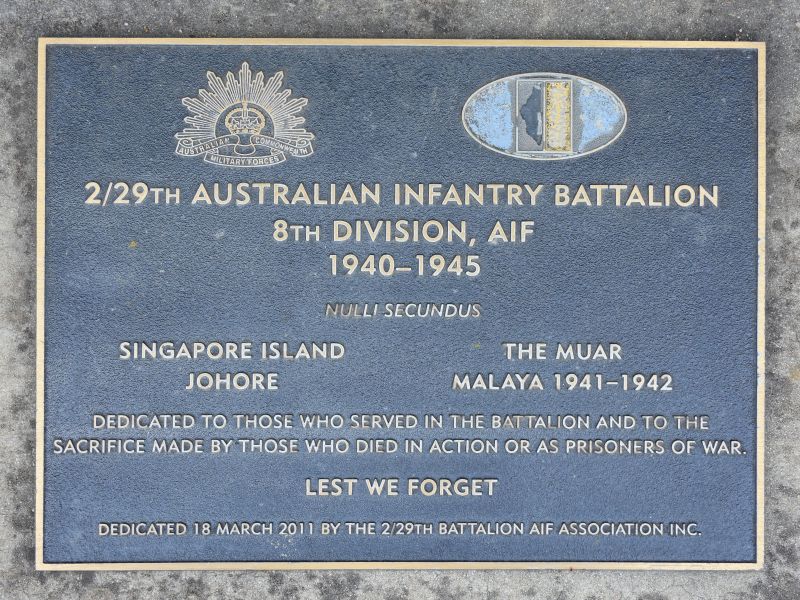
At the age of 46, Robertson formally enlisted in the 2nd Australian Imperial Force on 29 October 1940. He was appointed lieutenant colonel on 7 November 1940, and placed in command of the newly-formed 2/29th Battalion. The battalion completed its initial training at Bonegilla in north-western Victoria, before spending five months training at Bathurst. Robertson was hospitalised multiple times for various illnesses. He wrote home to Dot frequently, keeping her updated as best he could on his health and feelings.
The battalion joined the rest of the 27th Brigade, departing Australia at the end of July 1941, arriving in Singapore in mid-August. From Singapore, the battalion travelled to Segament in Malaya, where it continued training. Robertson was granted a week of leave from late October to early November, before returning to continue training his battalion. It would soon be required to put what it had learned into practice.
Japanese forces landed in Thailand and northern Malaya just after midnight on the 8th of December, and quickly swept through the Malay Peninsula. By 15 January, the Japanese forces had reached the Muar River in Johore, towards the southern end of the Malay Peninsula. The area was defended by an inexperienced Indian brigade, and so the 2/19th and 2/29th Battalions were sent to Maur to provide reinforcements.
Robertson was a prolific writer, frequently sending letters home to his family in Australia. On 15 January 1942, Robertson wrote home to “Dorrie and family”, reassuring them of his health and expressing his wish to be reunited with them soon. He wrote: “I do long to be home with you all, sounds for unsoldierlike but it is a fact … Love and kisses to all. Keep believing and don’t worry.”
The 2/29th Battalion reached nearby Bakri on 17 January, and assumed defensive positions. At 6.45 am the next morning, the Japanese forces launched an attack. The fighting was fierce, but the battalion and accompanying 2/4th Anti-Tank Regiment managed to destroy several Japanese tanks. Over the course of the day, the Japanese forces gradually surrounded the 2/29th, though the 2/19th Battalion managed to push through to reach Bakri.
Just before 11 am, Robertson was travelling from brigade headquarters on a motorcycle driven by Dispatch Rider Sergeant Syd Bauckham when they were fired upon by a platoon of Japanese troopers. Both men were hit. Sergeant Bauckham managed to continue riding despite being wounded in his left arm, but Robertson fell of the back of the motorbike a few hundred yards from brigade headquarters.
Robertson was rescued from his position and brought back to Headquarters, where it was revealed he had been hit by at least one bullet in his leg, and was suffering a head injury and shock after falling from the bike. Lieutenant-Colonel Jack Robertson died shortly after reaching brigade headquarters.
He was 47 years old.
Robertson’s remains were buried in Kranji War Cemetery in Singapore. After the war, a Commonwealth War Graves headstone was erected over his grave, bearing the personal inscription selected by his grieving family back home: “Dearly loved”.
- Roll of Honour, Australian War Memorial https://www.awm.gov.au/collection/R1701117
- My Robertson Family https://www.andrewwarland.com.au/maustralia/johncharlesrobertson.html
- The 2/29th Battalion A.I.F Association https://www.229battalion.org.au/profiles-1/robertson-john-charles-vx38973-hq-co…