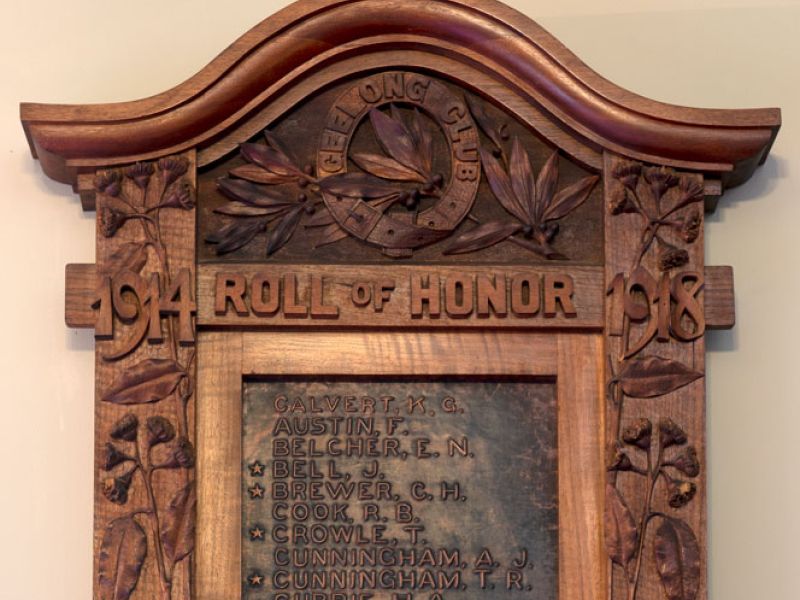
Major Trevor Russell Cunningham, 27th Australian Infantry Battalion
 Australian War Memorial
Trevor Cunningham was born in the Victorian town of Coleraine around 1874, one of five children born to Alexander and Henrietta Cunningham. Alexander worked at Cheetham Salt Company in Geelong from its establishment in 1888, rising to managing partner at the successful company.
Along with his brothers, Andrew and Alexander, Trevor attended Geelong Grammar School. After passing his matriculation examination, he began working at Cheetham Salt Company. After his father and mother relocated to Upper Macedon in central Victoria, Trevor took over as Director and Secretary of Cheetham Salt.
Trevor was an active member of the local militia in Geelong. He spent four and a half years in the voluntary cadets, before joining the Australian Garrison Artillery, based in nearby Queenscliff. Trevor qualified for appointment as a lieutenant in July 1897, and served with the artillery for five and a half years.
In 1912, Trevor married Bertha Ellen Fyffe, and the couple moved into a house in Little Mallop Street.
Trevor Cunningham joined the Australian Imperial Force on the 12th of May 1915. He was the second Cunningham brother to enlist in the Australian Imperial Force; his younger brother, Alexander, had enlisted in September 1914. Alexander served in Gallipoli and the Western Front before his early return to Australia in March 1918 on compassionate grounds, and was awarded a Military Cross in June 1918 for his service in France and Belgium.
Signing his attestation papers in Geelong, Trevor Cunningham was allotted to the 7th Infantry Brigade Headquarters as an orderly officer and aide de camp with the rank of lieutenant. Six weeks later, Lieutenant Trevor Cunningham departed Brisbane in the troopship Aeneas on the 29th of June, bound for Egypt.
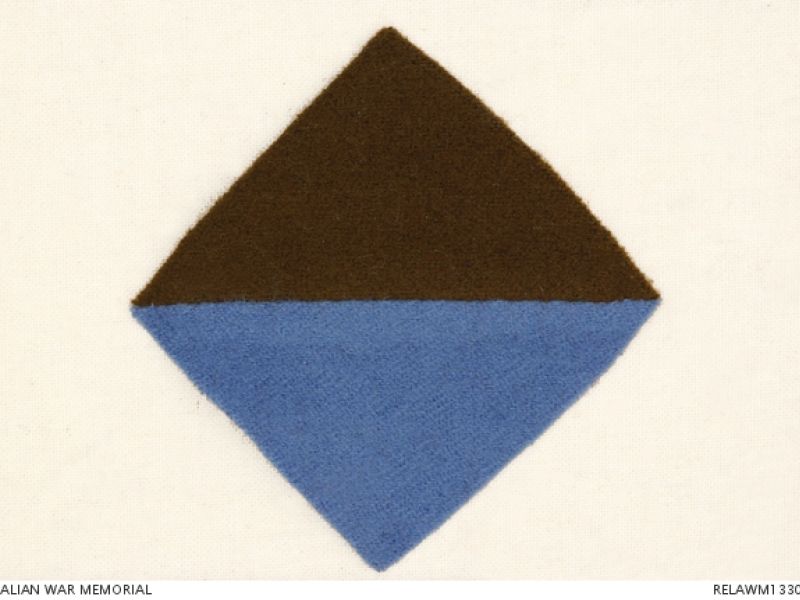
Arriving in Egypt in early August, Cunningham proceeded to join the Australian troops fighting at Gallipoli in early September 1915. He was transferred to the 27th Battalion a month later, and promoted to captain in early October.
The 27th Battalion had a relatively quiet time on the peninsula, sustaining only 54 casualties from the fighting in the final three months of the campaign. Cunningham was appointed temporary major on the 8th of December 1915, four days before the battalion left Gallipoli. On the Greek island of Lemnos, Cunningham was appointed temporary Second in Command, as the men of the 27th Battalion relaxed and celebrated Christmas.
The 27th Battalion returned to Egypt in early January 1916, and spent the next two and a half months in camps around the Suez Canal. Cunningham’s temporary rank was confirmed in February, and he was promoted to major.
The 27th Battalion left Egypt in March 1916, and spent its first weeks on the Western Front in a quieter section of the trenches around Armentieres, known to men as “the Nursery Sector”.
Cunningham was granted a brief period of leave at the end of April, and spent a week in England before returning to the battalion.
After beginning July in the trenches at Messines [pron. Mess – een] in Belgium, the 27th Battalion moved south into to Somme Valley to take part in the fighting at Pozieres [pron. Pozzy - air]. The battalion entered the support lines of the trenches around Pozieres [pron. Pozzy - air]on the 29th of July, and was almost immediately exposed to heavy German shelling.
On the night of the 4th of August, the men of the 27th battalion prepared to leave their jump off positions to attack and capture two lines of enemy trenches around a windmill. By the time they returned to their trenches the next day, the battalion had sustained 403 casualties, including 69 men missing in action.
Among the missing was Major Trevor Cunningham.
It was not until late September that Cunningham’s fate was determined. Instantly recognisable due to his light coloured breeches, several eye-witnesses reported seeing Cunningham wounded in the head by shrapnel “a few seconds after leaving the ‘hop off’ trench”. While there were conflicting reports of whether he had been killed instantly or lived for a few minutes, all accounts agreed that Major Trevor Russell Cunningham had been killed in action on the night of the 4th of August 1916.
He was 42 years old.
After his death, Cunningham was Mentioned in Despatches on the 13th of November 1916, for his “distinguished and gallant service and devotion to duty in the field”.
Cunningham’s remains were buried by his comrades along the Albert-Bapaume Road. Although his grave was marked with a memorial cross, initial efforts after the war to locate his grave were unsuccessful. His name was initially planned for inclusion on the Australian National Memorial in Villers-Bretonneux Memorial in France, which lists the names of over 10,000 Australians who died fighting in France and who have no known grave.
In 1936, Cunningham’s grave was located during exhumations of isolated graves around Pozieres. His remains were identified by his identity disc, rank badges, and personalised gold cufflinks that had all been buried with his body two decades earlier. Cunningham’s remains were exhumed and reinterred in the London Cemetery Extension in Longueval, France.
- Australian War Memorial Roll of Honour https://www.awm.gov.au/collection/R1726477