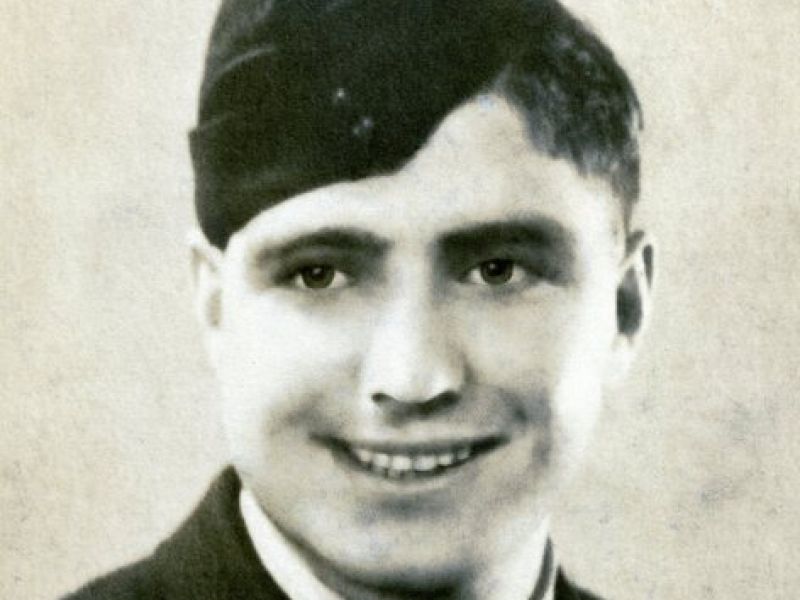
Flight Sergeant Charles Frederick Walters, No. 463 Squadron, Royal Australian Air Force
 Australian War Memorial
Charles Walters, known as “Chassie”, was born on 18 April 1925 in Ipswich, Queensland, to Charles and Josephine Walters. He had four older sisters – Mona, Veronica, Oriel, and Chloris – and an older brother, Dorcen. Their father was a bookmaker’s clerk who enlisted in the Australian Imperial Force in 1917, but he was discharged a year later when his wife became ill.
Charles Walters attended the Christian Brothers’ College in Ipswich and St Joseph’s College in Brisbane. After leaving school he studied typewriting part-time at Ipswich Technical College, and worked as a junior clerk with the Queensland Electoral Office.
Having served for a year as a cadet and then corporal in the Air Training Corps, Walters enlisted in the Royal Australian Air Force on 21 May 1943, aged 18. He was trained as an air gunner, and in February 1944 he received his gunner’s badge and was made sergeant.
Walters embarked for overseas service from Brisbane on 1 March 1944, arriving in the UK in April. As part of the Empire Air Training Scheme he was one of almost 27,000 RAAF pilots, navigators, wireless operators, gunners, and engineers, who joined Australian and British squadrons in Britain throughout the course of the war.
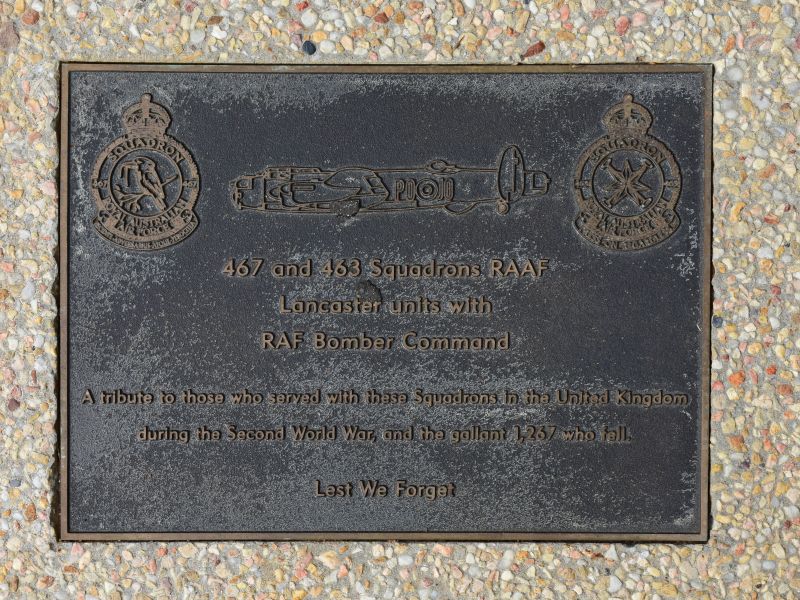
Further specialist training followed in England, and in August Walters was promoted to flight sergeant. On 4 December 1944 he was posted to No. 463 Squadron, RAAF. As part of Bomber Command, the squadron flew the four-engined Avro Lancaster heavy bomber.
Just after midnight on 5 January 1945 Bomber Command launched a raid to destroy a well-entrenched German garrison at Royan in France. There were fears that this seaside fortress could be operating U-boats, and it was proving difficult to put it out of action. Flight Sergeant Walters was the rear gunner on board Lancaster “JO-R”, which took off from the Royal Air Force base at Waddington some 20 minutes before 1 am. Of the 16 aircraft committed to the mission by No. 463 Squadron, Walters’ Lancaster was the only one that failed to return.
It was later determined that Lancaster JO-R had collided with another from No. 106 Squadron, RAF, before breaking in two and crashing within the target area. There were no survivors.
Those killed along with Flight Sergeant Charles Walters were fellow Australians Flying Officer Jack Milne, Warrant Officer William Simpson, and Flight Sergeants Charles Fincham, John Prince, and Sidney Brown, along with British sergeant Ernest Freeman.
After the war the remains of Commonwealth servicemen buried in Europe were examined and identified where possible. However, the aircraft’s wreckage had been partially destroyed in the bombing, and only the bodies of Milne, Fincham, Prince, and Freeman could be identified. Flight Sergeant Walters has no known grave, and he is commemorated on the Memorial to the Missing by the Thames at Runnymede in Surrey.
Charles Walters was 19 years old.
He was dearly missed by his family, who placed in memoriam notices in the newspaper for years after his death. One contained the epitaph: “So little life, so much of worth it had.”
His sister Chloris also enlisted in the Second World War, serving as a corporal with the Australian Women’s Army Service. Elder brother Dorcen served as a flight lieutenant with the RAAF, training pilots in Australia.
- Roll of Honour, Australian War Memorial https://www.awm.gov.au/collection/R1717387