Flight Lieutenant Norman Percival Cooper, No. 463 Squadron, Royal Australian Air Force
 Australian War Memorial
Norman Cooper was born on 23 September 1912 in the Perth suburb of Midland Junction, the son of Samuel and Stella Cooper. When he was seven years old his father got into difficulty while swimming at Scarborough Beach, and drowned. Three months later Stella Cooper gave birth to another son, making a family of two brothers and two sisters.
Norman played the trumpet and trombone, and enjoyed riding motorcycles, swimming, and photography. After leaving school he worked as a typist, storeman, and dispatch clerk, remaining with the same firm for 11 years. His mother taught music in Perth to support the family, and he served as a bandsman with the 16th Battalion.
Norman Cooper enlisted in the Royal Australian Air Force on 12 February 1941. He trained as a pilot, receiving his wings in June 1942 and commissioned as a pilot officer with the RAAF in September.
On 23 August 1941 Cooper married Bernice Stewart. The couple had a little more a year together before Cooper embarked for overseas service on 12 November 1942, arriving in the UK in December. As part of the Empire Air Training Scheme, he was one of almost 27,500 RAAF pilots, navigators, wireless operators, air gunners, and flight engineers who, throughout the course of the war, joined Royal Air Force squadrons or Australian squadrons based in Britain.
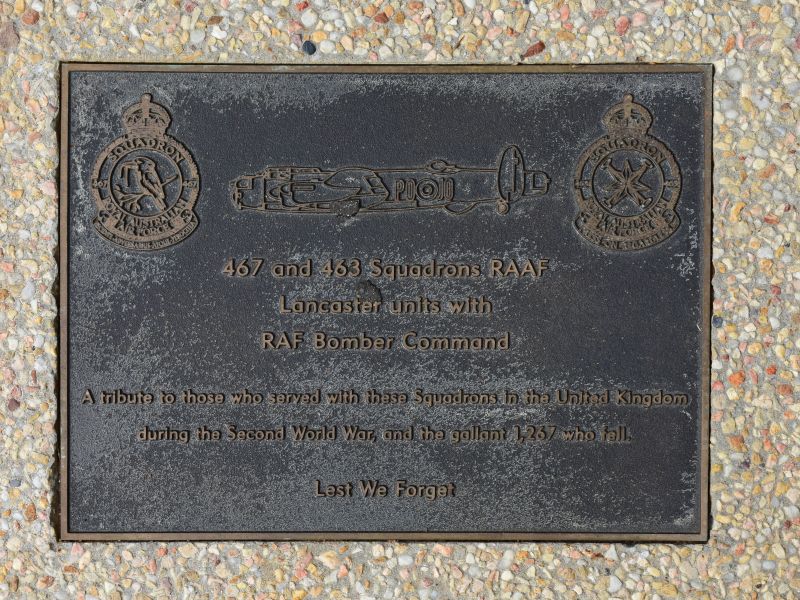
After further specialist training, in March 1943 Cooper was promoted to flying officer. In September he was posted to No. 106 Squadron, RAAF, for which he flew eight sorties on the four-engined Avro Lancaster heavy bomber. Two months later he was transferred to No. 463 Squadron as a flight lieutenant.
On the night of 28 January, Bomber Command launched a major bombing raid on Berlin. Flight Lieutenant Cooper was the pilot of Lancaster “JO-S”, which took off from the Royal Air Force base at Waddington shortly after midnight. In an attempt at a diversion, the target was initially bombed by a few Mosquito aircraft before the major force arrived. However, this alerted the enemy, and German fighters met the incoming aircraft over Denmark.
Cooper’s aircraft was still on its way to Berlin when it was likely damaged in the melee. He had turned, trying to head back to England, when his aircraft collided with an oncoming Lancaster from No. 83 Squadron, RAF. Both crashed near the village of Miels, on the island of Als off the east coast of Denmark, more than 500 kilometres away from their target. There were no survivors.
Those killed in the crash with Flight Lieutenant Norman Cooper were Australians Pilot Officer George Kerr and Flight Sergeant Lewis Christmas, along with British Sergeants Francis Bull, Ronald Grist, and Frederick Robson, and Canadian Flight Sergeant Harold Suthers. They were all buried at Aabenraa Cemetery on the Danish mainland.
After the war, the remains of Commonwealth servicemen buried in Europe were examined and identified where possible. The remains of Cooper and his crew were exhumed, identified, and reinterred at Aabenraa Cemetery.
Flight Lieutenant Norman Cooper was 31 years old.
Cooper was dearly missed by his family and friends at home, who placed in memoriam notices in the newspaper for years after his death. He had also left behind a daughter, Kay, born in December 1942, whom he never had never met.
- Australian War Memorial Roll of Honour https://www.awm.gov.au/collection/R1702954