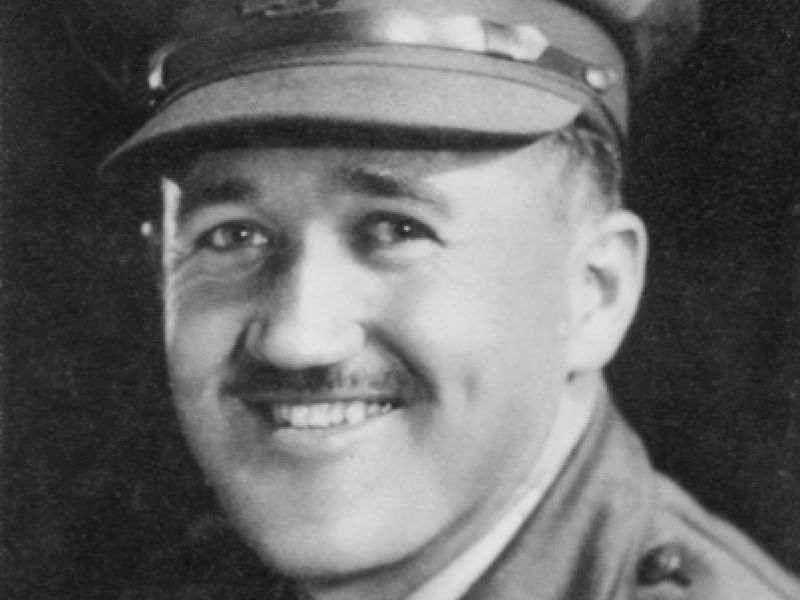
Major Gordon Richard Jones, 2/14th Australian General Hospital, attached 2/12th Field Ambulance, AHS Centaur
 Australian War Memorial
Gordon Jones was born in Newcastle on 13 November 1912, the son of Stephen and Muriel Jones. He grew up in New South Wales alongside his older brother Keith, and younger sisters Cecily and Elizabeth.
Gordon and his family moved around New South Wales for some time, as his father was a civil engineer with the NSW Department of Works. As Gordon and his brother Keith were close in age, they attended school together, finishing secondary school studies at Newington College in Sydney, where Gordon had won a Wigram Allen Scholarship.
Both Gordon and Keith Jones studied medicine at the University of Sydney, where they were members of the Sydney University Athletics Club. Gordon had some early military training, being a member of the Sydney University Rifles from 1931 to 1936, and he later joined the Australian Army Medical Corps.
Gordon went on to practise as a doctor at Grafton, New South Wales. In 1939, he married Christine Johnstone in Sydney.
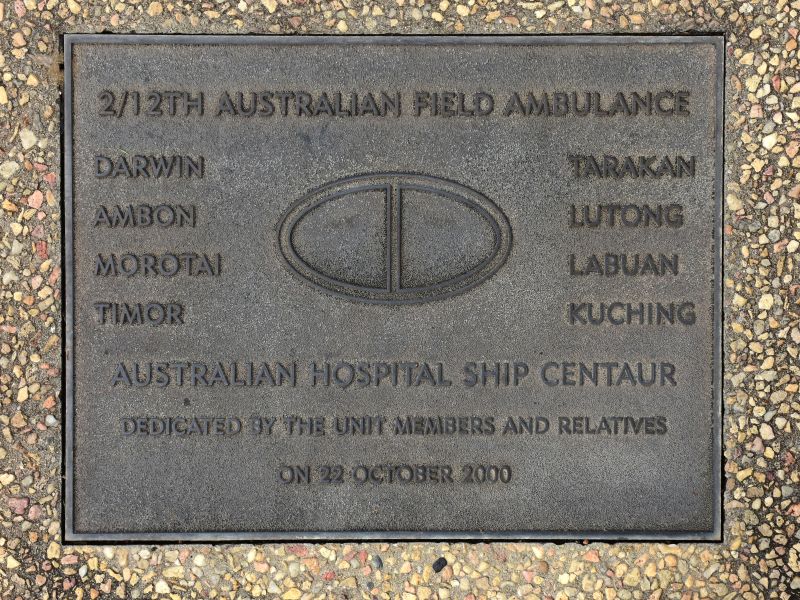
Gordon Jones enlisted in the Second Australian Imperial Force in Sydney on 17 September 1940. Allotted to the 2/12th Field Ambulance with rank of captain, he undertook basic training at Cowra. In March 1941 he relocated to camp at Winnellie, just south of the Royal Australian Air Force’s airfield at Darwin in the Northern Territory. Here, members of the 2/12th provided medical support, participated in the construction of five small medical hospitals, and assisted sappers and pioneer assault units, earning the unit the nickname 2/12th Pioneers.
With the beginning of the Pacific War, members of the 2/12th were attached to Gull Force and Sparrow Force, which were sent to the islands of Ambon and Timor respectively. A grim future lay ahead for them. Those members of the 2/12th serving with Gull Force were captured or killed by the Japanese on 1 February 1942, with many dying as prisoners of war on Ambon or Hainan. Many of those who had joined Sparrow Force were also captured.
While Major Jones soon experienced a brush with death, he would not become a prisoner of war. On 14 February he embarked on the United States troopship Meigs with a detachment of the 2/12th Field Ambulance bound for Koepang on the western end of Timor. The convoy was attacked by Japanese aircraft, and was advised to return to Darwin. Arriving back in Darwin Harbour on 18 February 1942, Jones disembarked. The following day, the US troopship Meigs was bombed and sunk during the Japanese aerial attack on Darwin.
Jones – who had been promoted to the rank of major in early June 1942 – travelled to Wollongong, where his unit took on personnel to bring it up to full strength. Now ready to deploy overseas, in early May 1943 three companies of the 2/12th Field Ambulance took the train to Sydney.
Jones – recently posted to the 2/14th Australian General Hospital in Townsville – joined a family gathering with his parents, brother and sisters in Sydney before boarding Australian Hospital Ship Centaur at Darling Harbour on 11 May. Centaur departed Sydney, travelling north to Cairns,
Shortly after 4 am on 14 May, while most people were asleep, a torpedo struck Centaur’s port side, hitting the oil fuel tank and igniting a massive explosion. The bridge superstructure collapsed and the funnel crashed onto the deck. Everything was covered with burning oil and a fire began to roar across the ship. Water rushed in through the gaping hole in Centaur’s side. Many of those onboard who had not been killed in the explosion or fire, were trapped as the ship started to go down, bow first, and then broke in two. In just three minutes Centaur was gone.
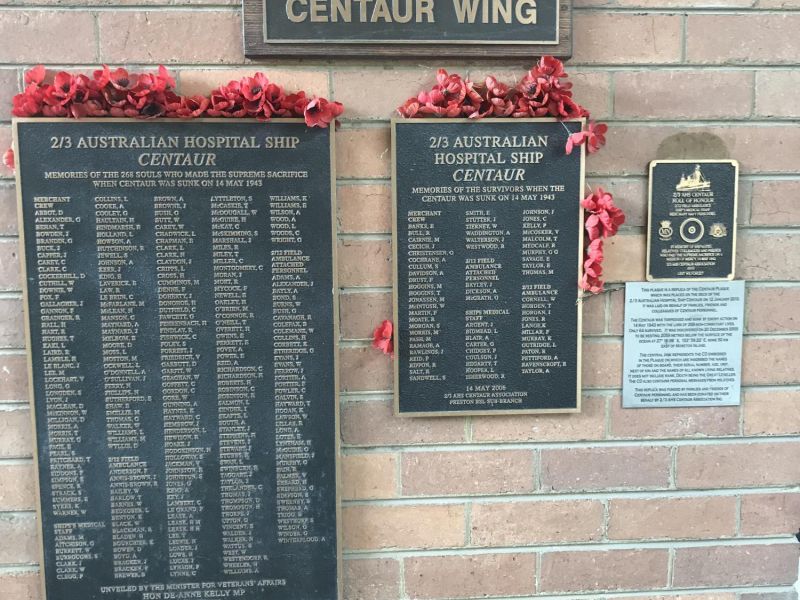
Of the 332 people aboard, there were only 64 survivors, including 15 members of the 2/12th Field Ambulance. The survivors were at sea for a day and half before they were rescued. The ship's crew and medical staff suffered heavily, as did the 2/12th Field Ambulance: 178 men died, from a total of 193. It was the nurses though, who suffered the worst. Of the 12 nurses onboard only one, Sister Nell Savage, survived.
Among the dead was Major Gordon Richard Jones, believed to have drowned. He was 30 years old.
During six years of service, over 200 members of the 2/12th Field Ambulance were killed, the highest figure for a non-combatant unit in Australian history. While the unit would go on to deploy personnel in support of Australian combat operations against the Japanese on Ambon, Timor, and in Borneo, the majority of its casualties were suffered during the sinking of the Centaur.
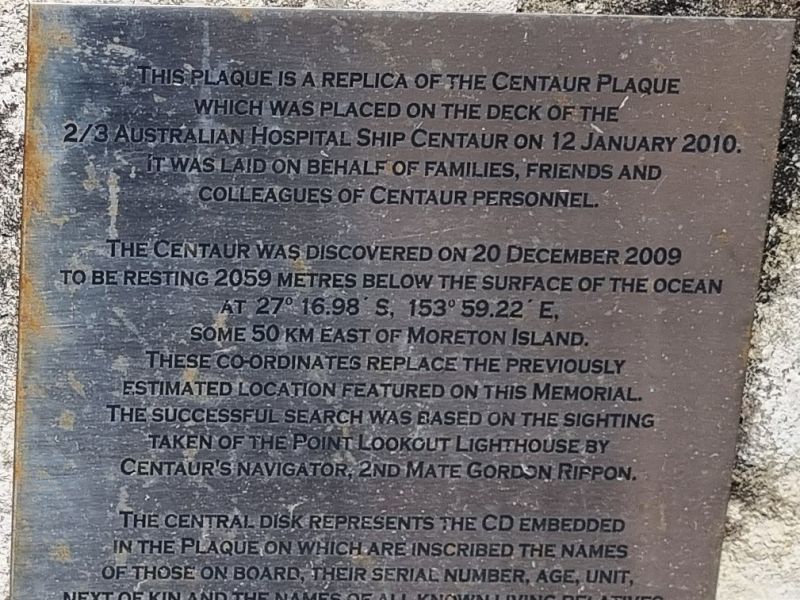
The location of Centaur’s wreck was unknown until it was discovered on 20 December 2009. Centaur was located about 30 nautical miles off the southern tip of Moreton Island, off Queensland’s south-east coast.
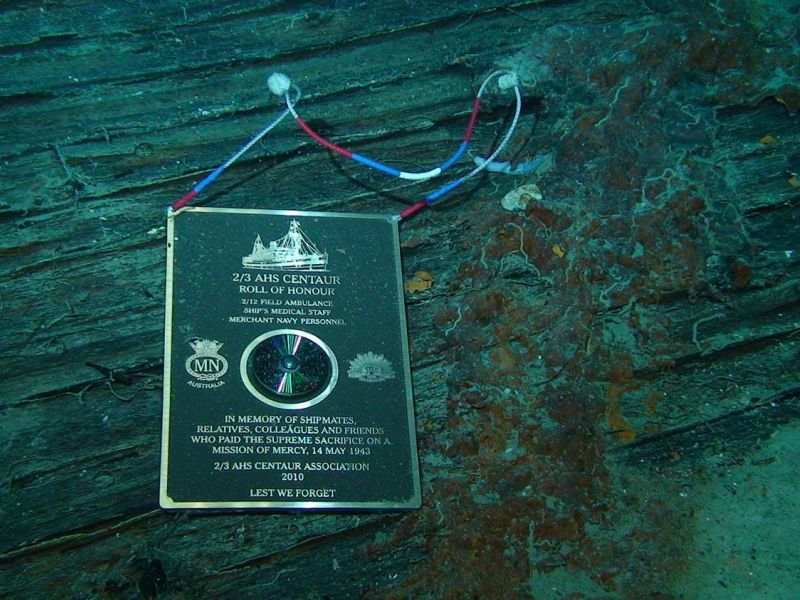
The wreck is now protected by the Historic Shipwrecks Act 1976; the site has become a memorial to the lives that were lost, including that of Major Gordon Jones.
- AWM Roll of Honour https://www.awm.gov.au/collection/P10290094