Alfred John Rixon
 Stephen Learmonth
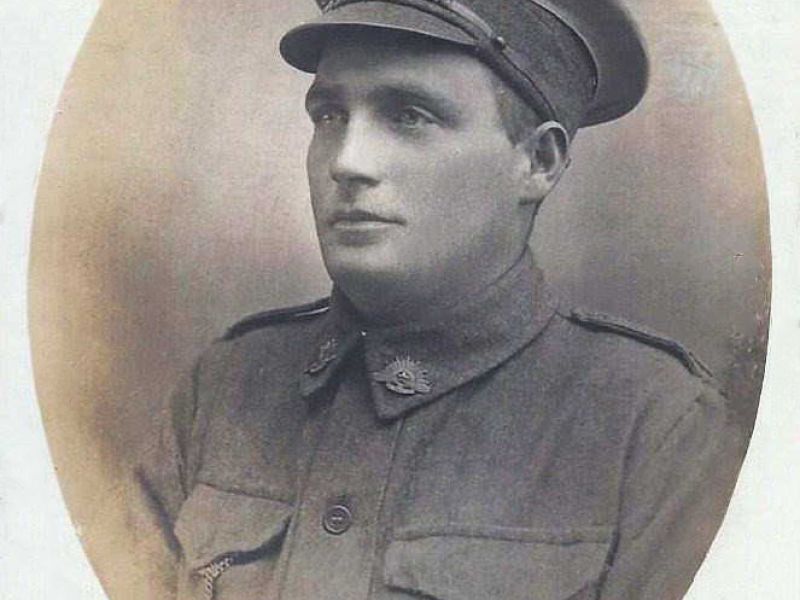
Alfred was born on the 16th of March 1891 at Walwa, Victoria. He was one of eight children to William and Sophia (née McPherson) Rixon. Two of his sisters, Emma and Gladys, would die at an early age. In 1899, the family was living in Albury, and William had applied for a “Billiard and Bagatelle” Licence for the Rose Hotel in Albury (which was on the site now occupied by Target). Four years later, Alfred resided in Tarcutta, NSW, working as a labourer. His family lived at 390 Swift St, Albury, with his father working as a teamster.
It was mid-January 1916 when Alfred enlisted in the 1st AIF at Melbourne. He was given Regimental Number 4192 and placed into the 10th Reinforcements for the 22nd Battalion. Percy Smith, another Upper Murray man from Tallandoon, would be placed in the same unit. Alfred underwent initial training at the Broadmeadows Camp, just outside of Melbourne. On the 7th of March 1916, Alfred and his unit embarked on HMAT A18 Wiltshire at the Port of Melbourne, bound for the sun and sand in Egypt.
While in Egypt, Alfred completed further training with the 6th Training Battalion. The British High Command decided that fresh troops were needed on the Western Front, especially as they planned a major offensive in the Somme region. Alfred, Percy and the remainder of the 10th Reinforcements boarded the HT Scotian at Alexandria on the 9th of May 1916 and crossed the Mediterranean to join the British Expeditionary Forces in France. The journey took nine days by boat and three days by train to reach the 1st Australian Division at Etaples. Before heading to the front lines, all troops arriving in France had to undergo further training at the infamous Bull Ring at Étaples. It was here that lessons developed a sense of urgency.
It was Monday, the last of July 1916, when Alfred was taken on strength with B Company of the 22nd Battalion. By the following Saturday, Alfred would be reported as being killed in action. He had arrived when the 22nd Battalion was to become involved in the Battle of Pozieres.
The 22nd Battalion's objective for the day was to take the two trenches known as O.G.1 and O.G.2 (O.G. standing for Old German). At 0915 hours on the 5th of August, the commencement time, B Company, along with D Company, was tasked with taking O.G.1. The approach was congested with men and material, and some groups lost their way. A ferocious German bombardment resulted in the companies taking 20% casualties even before the attack commenced. D Company lost its CO, Major M.N. Mackay, before reaching its objective. Once there, B and D Company experienced little hand-to-hand fighting as the Allied barrage had, for once, killed or wounded most of the enemy. Throughout the day of the 5th of August, shelling continued without ceasing, and the dead and wounded lay in heaps together. Nothing could be done for the wounded at the time, but later, both German and Australian stretcher-bearers worked side-by-side and collected those who were still alive.
The 22nd and other Australian Battalions around them held the line. That night, the 22nd was relieved by the 24th Battalion and moved back to Sausage Gully and the following day to Tara Hill.
From the 27th of July to the 8th of August, the 22nd Battalion lost thirty-three officers and 763 men, killed, wounded, missing or taken prisoner, out of a total of approximately 1000 officers and other ranks. It suffered the heaviest casualties of the four companies in the 6th Brigade of the 2nd Australian Division.
There are two conflicting witness statements regarding what happened to Alfred.
Pte. E. Cravino 4084, B Company, stated that “he was killed at Pozieres, in the charge. My mate, Pte. N. Northey, B Coy. 22nd Bn. lay across his dead body in a wounded condition in no-mans land. Northey got away to hospital. He gave me the details before he left for hospital.”
Pte. J. W. Greenwood 4113 B Coy 22nd Bn. provided a statement claiming that “he was killed at Pozieres about 9.30 p.m. on the above date (5th August 1916) by a piece of shrapnel. Witness was quite close to him when it happened and received a wound from the same shel (sic). He was quite certain the soldier was dead. It happened close to the German trenches in No Mans Land.”
Although initially listed as missing in action, Alfred’s body was found and buried in the Serre Road Cemetery No. 2 at Beaumont Hamel, Picardie, France.
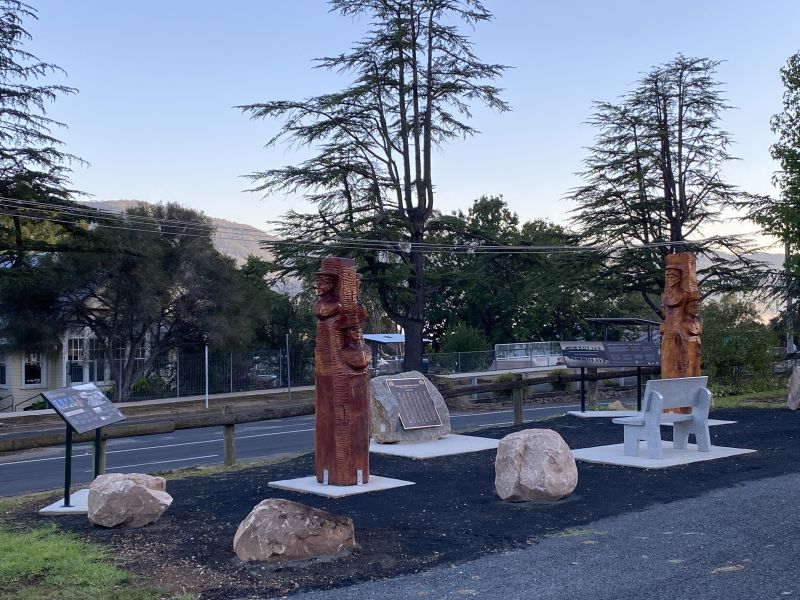
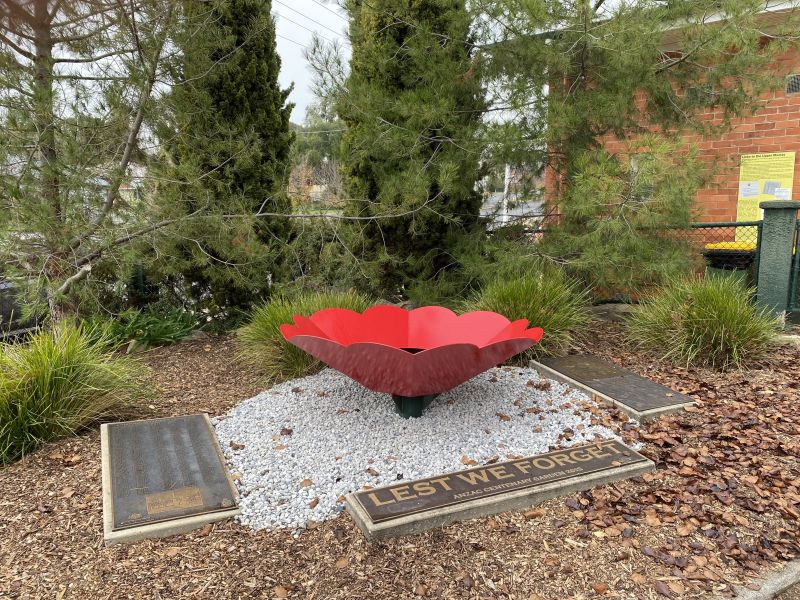
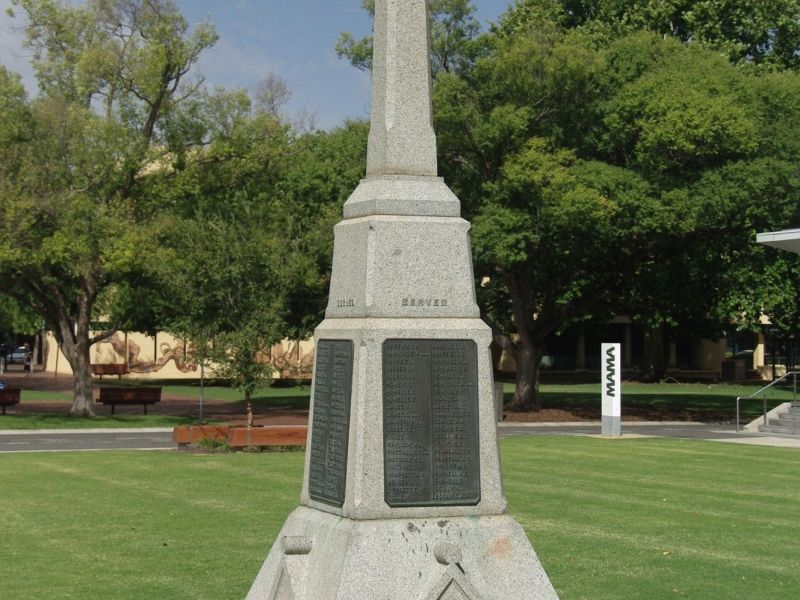
Alfred is remembered on the Australian War Memorial Roll of Honour, the St Matthews Albury WW1 Memorial, and the Corryong and District Avenue of Honour Memorial. For his service during the First World War, he was awarded the British War Medal and the Victory Medal.