Ernest Whitehead
 Stephen Learmonth
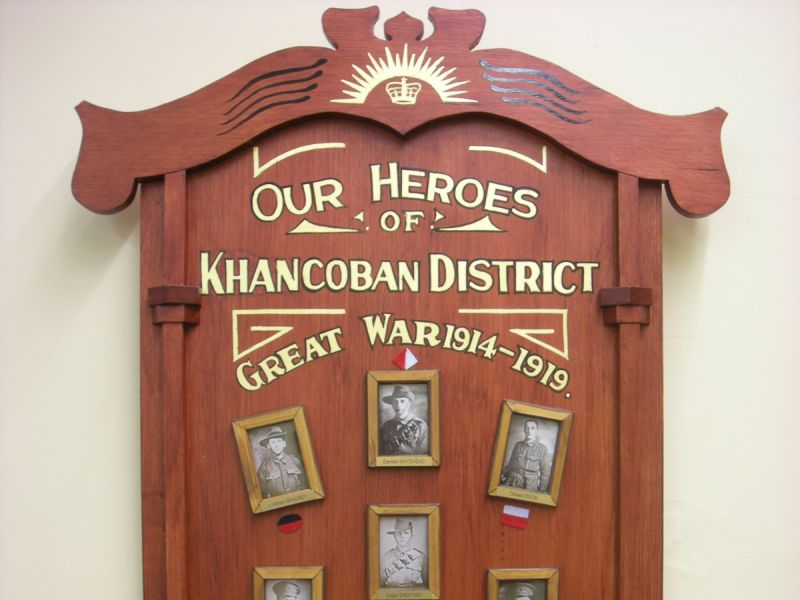
Ernest Whitehead was born on 3rd November 1899 in Wabba, Victoria, to William Henry Whitehead and Mary, nee Carkeek.
On the 22nd January 1915, he enlisted at Melbourne, Victoria. At the time, he was a single, 25-year-old labourer from Pine Bank, Khancoban, NSW. He was allocated Regimental Number 491 and placed in the 13th Light Horse, A Squadron. Ernest gave his next of kin as his mother, Mary Whitehead.
Ernest went into camp at Broadmeadows, on the outskirts of Melbourne, Victoria. The story goes that the troop had a re-mount that no one could ride. Bob Greenhill and Bert Lennox, who joined up at the same time, told the Major they knew someone who could ride it. Ernest, or Whitie as he was called, said that he would give it a go if the Major would give him a crop and spurs. The Major agreed because he was the only one to volunteer, and he expected to see him on the ground before he hit the saddle. Later, he gave the Major back his spurs, said they were a bit bloodied, the riding crop was no good to him anymore, but the horse wouldn’t buck anymore either.
Ernest embarked on HMAT A34 Persic on 28th May, 1915, sailing from Melbourne, Victoria. The trip would take him across the Great Australian Bight to Fremantle, on to Colombo, in Ceylon, before finally disembarking at Suez, at the southern end of the Suez Canal, in Egypt.
While in Egypt, various training exercises were undertaken, both mounted and dismounted. Due to the high number of casualties resulting from the Gallipoli campaign, it was decided to send the Light Horse to the Dardanelles. The horses would remain in Egypt. On 3rd September, Ernest, along with the rest of the 13th Light Horse, entrained at midnight at Heliopolis, arriving in Alexandria at 6 am.
The Regiment embarked with 23 Officers and 413 other ranks aboard the RMS Megantic. Five days later, they arrived at Mudros. On 11th September, Ernest and the rest of the 13th Light Horse arrived at ANZAC Cove. The unit bivouacked between Rest Gully and Shrapnel Gully. Two days later, the Regiment suffered its first casualty when Trooper Rodwell was wounded in the shoulder by shrapnel.
On 14th September, Ernest, along with the rest of A Squadron, was detailed to reinforce the trenches at Lone Pine. It was here that Ernest underwent his baptism of fire as a number of his mates were wounded by bullets and shrapnel. Over the next few weeks, A, B and C Squadrons were rotated through the trenches and rest areas around Lone Pine. While at the rest areas, the squadrons were called upon by Divisional Headquarters to form fatigue parties. These parties were responsible for many tasks, including trench clearing and construction, supplying food and water to the trenches, and transferring ammunition, materials, and equipment from the beach dumps to the front line.
In December, the ANZAC Forces withdrew from the Gallipoli Peninsula and returned to Alexandria, where the weather was warmer. After rest and regrouping, the 13th Light Horse embarked on a troopship at Alexandria on 17th March 1916, and arrived at Marseilles in the south of France six days later, where they became a part of the British Expeditionary Force in France.
Terrain and the nature of the war on the Western Front led to a change in the roles of mounted troops. The 13th Light Horse carried out numerous tasks, including traffic control, rear-area security, prisoner escort, and, when the tactical situation permitted, reconnaissance. It was most active during the more mobile phases on the Western Front, in particular following up the German retreat to the Hindenburg Line in early 1917, the stemming of the German Spring Offensive of 1918 and the Allied offensive of August and September of 1918.
From late August to early November, Ernest was admitted to the 6th General Hospital in Rouen for treatment of boils (blisters). He spent some time at the 11th Convalescent Depot before taking a month's leave over Christmas and New Year in England.
On 7th July 1919, he returned to Australia aboard HT Chemnitz, with the rank of S/Smith. He was discharged on 4th November 1919, receiving the 1914/15 Star, the British War Medal, and the Victory Medal in recognition of his wartime service.
In August of 1919, Ernest returned home to Khancoban only to discover that all his horse-breaking equipment and gear that he had left for safekeeping were no longer there. Even the money that he sent home had been spent. His family told him they hadn’t expected him to return from the war.
It wasn’t long before he met his future wife, Myrtle Vera Pearl Wells, who was a teacher at the Khancoban School. Six months later, he proposed, and they were married at St. Paul's Presbyterian Church in Wangaratta on Friday, 23rd June, 1920. The Friday, 2nd July 1920, edition of the Wodonga and Towong Sentinel gave this description;
“On Wednesday of last week the marriage was quietly celebrated at St. Paul's Presbyterian Church, Wangaratta of Mr. Ernest Whitehead, of Upper Murray, to Miss Myrtle Wells, of Corowa. The ceremony was performed by the Rev. W. V . Ingram. The bride, given away by Mr. E. O'Brien, wore a bridle dress of white linen over crepe-de-chene, and a wreath and veil, and carried a bouquet of white flowers with fern. The bridesmaid was Miss Myra Wells, who wore cream crepe-de-chine with hat to match, and carried a bouquet. The best man was Mr. P. Whitehead. The officiating clergyman proposed the health of the newly married couple at the breakfast. Mr. and Mrs. Whitehead left by the night's express for Sydney on their honeymoon. Their future home will be the Upper Murray district.”
Marg Anderson, in her book In Search of Whitehead Ancestry 1838 to 1986, describes Ernest and Myra’s life after their marriage;
“Ernest applied for the gratuity payment paid to married servicemen by the Government of the day. He took up mountain lease country, bought store cattle and spent much of the first months of marriage riding herd on cattle in the mountains, coming home at weekends. His wife stayed with his parents, paying them board and continued teaching school for a while until he applied for and was allotted a Soldier Settlement Block of 100 acres at Upper Towong. He worked hard to fence it and build a shed, divided into three sections with slab walls and earthen floor and lined with wheat bags sewn together. That was the first home which sufficed until he was able to buy timber and material to build a cottage.”
Throughout the district, Ernest was known as an excellent horseman, with his horsebreaker skills in much demand. His involvement with the Upper Murray community included a Life Membership of the Corryong Show Committee, and his talents as a sportsman were well displayed when he played football for Federals and cricket in the local competition.
After some time on the Soldier Settlers block, he sold his property and moved to Corryong township so his family could get a better education. After two years, he bought “Braeside”, where he lived until his death on 31st October 1977, at Corryong, Victoria. Myrtle would live for another 6 years before passing away on 4th January 1983. Both were buried in Corryong. During their marriage, Ernest and Myrtle had 4 daughters and 3 sons.