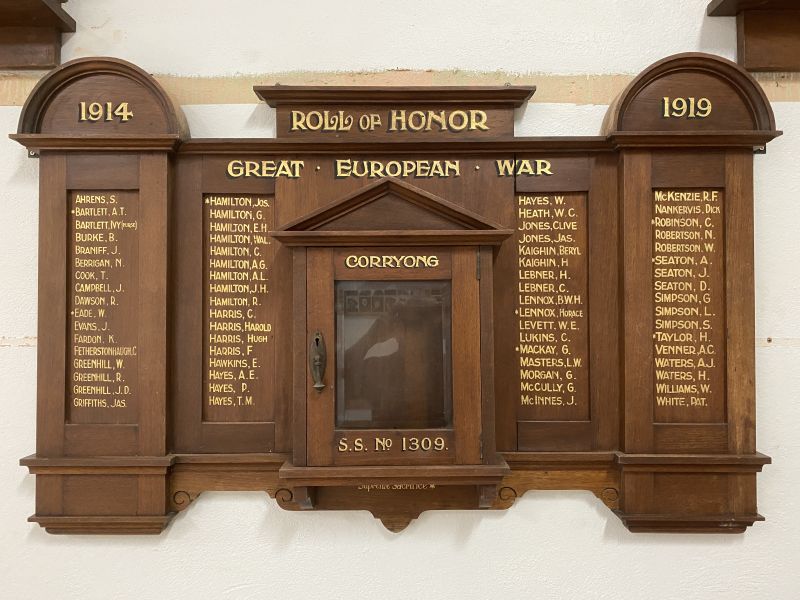
Ivy Florence McIntosh Bartlett
 Stephen Learmonth
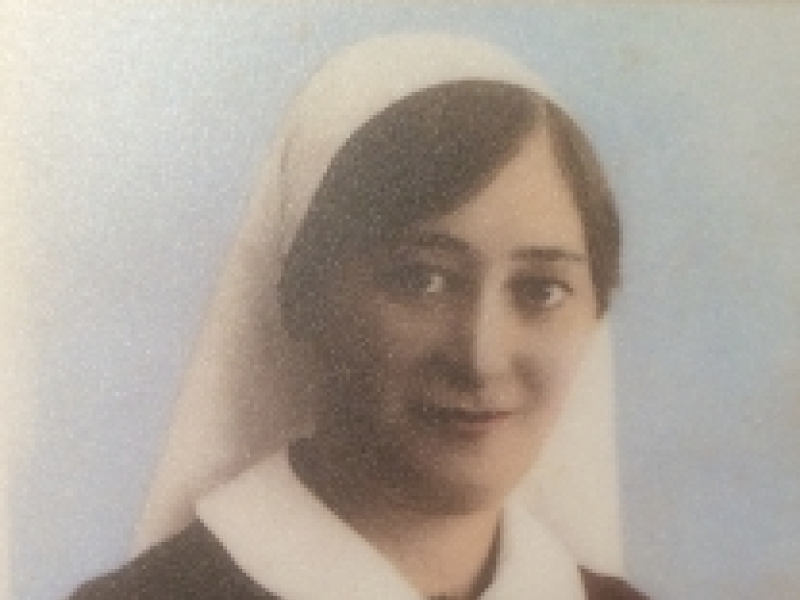
Ivy Florence Bartlett was born in 1888, a daughter of Sydney Bartlett and Mary (née Thorburn) of Corryong. Between 1910 and 1913, Ivy trained in nursing at the Melbourne Homeopathic Hospital, earning a certificate in general obstetrics.
On 25th June 1915, Ivy was mobilised, enlisting in the AANS (Australian Army Nursing Service) on 4th August 1915. The very next day, she embarked at Port Melbourne for overseas service, disembarking at the Port of Mudros on the island of Lemnos.
Three of Ivy’s letters home to her family were reproduced in newspapers of the day.
Corryong Courier, Thursday 9th December 1915, p3
“You would never think that on this island we were so near the firing line. I would like to get nearer, and wish they could get enough safe land on the Peninsula to have a hospital there, as it would be much handier than this place. Having to ship and unship everyone is such a work. A lot of the larger boats are turned into hospital ships. There were seven in harbor last night, and tonight the ________ is in. She is one of the largest boats in the world. They have a line of green lights along the side and a big red cross (lit up), and look very pretty. It has been very cold the last few days and fearfully windy. The tents are in danger of breaking loose, and the boys are always hammering at the tent pegs. It is strange to think you must be well into spring when we are just starting winter. The mud is dreadful and sticks like glue. Colonel was here today and suggested several improvements. Also, he says skirts are quite unsuitable in such a place in such rough weather! There is plenty of work. Typhoid is running high. Several new wards have been added, and we have over 1,000 beds - all under canvas. There are very few surgical cases - they go to Alexandria. The food is our pet grievance. I am not fussy about what I have usually, but I hope there will soon be a change. Nurse Hughes and I share a bell tent. It is right on the sea, and we can see the boats buzzing about from our beds. We can hear the Gallipoli bombarding here. It sounds just like blasting. I went over to the Rest Camp one Sunday and found Mr Say and Walter Cunningham. Walter has been in hospital at Malta.”
The 22nd December 1915 edition of the Wangaratta Chronicle contained a summary of a letter written by Ivy to her sister, Mrs R.J. Vincent of Corowa.
“During a terrible storm several of the hospital tents were blown down, but fortunately there were no patients in them. She had just attended church service in the open, Dean Talbot, of Sydney, officiating. The service was held in a space on the edge of the hill with the sea and battleships behind, and then there were nurses, soldiers in uniform, convalescents, and a naval band to play the hymns. They have several nurses on the sick list and a crowd of orderlies. She has had some fearful spills at night over the guy ropes through turning the corners too quickly and has several bruises in consequence. She does not know what they would do if it were not for the Red Cross. It is wonderful the amount of stuff they send along. It is awful to think of the waste of life that is going on everyday. One man from the front told her that to hear a girl laugh was worth all the medicine. Poor fellows she wondered that they ever laughed again after what they have gone through.”
Corryong Courier, 2nd March, 1916, p3
“We came off Lemnos on Friday (14th December) on to a hospital boat. She carries over 600 cot cases. We don’t know where we are going, but we are hoping to strike Alexandria for a few days before we set up anywhere else. We closed up pretty suddenly at the last. The last of the cases went on Saturday, and Sunday we spent cleaning up our wards. After that it was a question of waiting orders. We went up the highest hill on the island on Monday, four of us. We took lunch, and got to the top at one p.m. It is about six miles, but not such a big climb as Mittamatite3. It is a splendid view. You can see all around the island, and on one side the mountains of Greece show up with snow on them (Athos, I believe is the highest), and you can see the island of Embros, and just the outline of Gallipoli on the horizon. It was a lovely day, but clouds were drifting about, and you had to watch out to see far. We had good glasses. We were very glad we went, as it was the last day we were allowed out of the lines for long, and it was the only place of note on the island I had not visited. We were brought down to the pier on Thursday. I was ironing caps and collars at 1:30 p.m., and matron came and told me to be ready at 2:30 to leave the island. Of course I was mostly packed up, but it was a bit of a scramble. Anyhow, we were at the pier soon after three and waited till 6:30, when we were told there was no lighter available to take us off. We had to pick out what luggage we wanted and return to the hospital for the night. They were not ready for us, as we only left four sisters and some men packing up, so we cocoa and bread and jam and cheese in the officers’ mess. Our tents had been pulled down, and we just slept where we could find shelter -and, talk about cold, we didn't get warm till the next afternoon. We had a cup of tea at 7.30 next morning and marched off to the pier. They soon got the boat loaded up and we came on board about ten and had a real decent breakfast about eleven. It was the best breakfast I've had since I left the ship I came over in. The hospital ship is such a beautiful change from the muddy old island. Fancy the difference between a table without a cloth, commonest of knives and forks, tablespoons (the only spoon), and large enamelled plates and mugs - and a nicely appointed table with a five-course meal and a steward to every six people. It’s lovely to be out of the mud, on a nice clean boat.”
While on nursing duties in Cairo, Ivy transferred to No. 1 Australian Hospital Ship A63 Karoola on 4th April, 1916. In October of that year, Karoola arrived in England. Between 1916 and 1919, Ivy made nine trips between England and Australia and the Hospital Ships Karoola and Kanowna.
In late November of 1918, Ivy was admitted to the Gardens Hospital in Southwell, UK. Here she spent nearly two weeks recovering from a bout of influenza. She was granted four days of sick leave between December 4th and December 8th. Two days before Christmas, Ivy was detached for temporary duty at the 3rd Australian Auxiliary Hospital in Dartford, UK. On the first day of the new year, she was detached for RTA (return to Australia) transport duty.
Two weeks before Ivy was formally discharged from the AAMC, an advertisement appeared in 1st May 1919 edition of the Corryong Courier, announcing a welcome home celebration for Nurse Ivy Bartlett was to be held at the Corryong Hall, the very next evening.
On 18th September 1926, Ivy married Percival Ferry Thwaites, a member of one of the pioneering families in the Pakenham district of Victoria. Percy and Ivy had no children of their own, but looked after Percy’s father, Robert Thwaites, who painted with some members of the Heidelberg school. She passed away on 20th December 1964 at Heidelberg, Victoria.