James Jones
 Stephen Learmonth
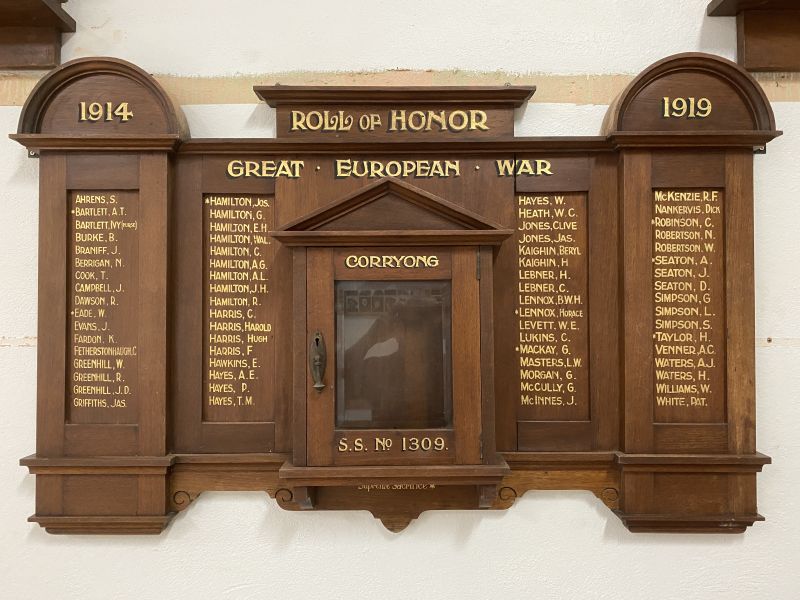
James Jones was born in 1871 in Kiewa, Victoria, to Charles Jones and Elizabeth, nee O'Brien. James’ mother died in 1911 due to heart failure brought on by an asthma attack. His father would pass away in 1915.
James initially tried to enlist in February 1915. His next of kin was his brother, Robert, who lived in Corryong, Victoria. He had passed his medical, signed the Oath and been allocated to the 7th Reinforcements of the 24th Battalion. Unfortunately, due to an injured knee, he was discharged at Broadmeadows on the 7th January 1916.
With the knee clearly mended, he enlisted at Melbourne, Victoria, on the 29th January 1916. At the time, he was a married, 44-year-old blacksmith living at23 Amsterdam St, East Richmond, Victoria. He was allocated Regimental Number 24470 and placed in the No.2 Section of the 3rd Divisional Ammunition Column. James gave his next of kin as his wife, Mary Jones.
Between February and May of 1916, James was with the Veterinary Corps at Maribyrnong, Victoria. On 9th May, he was transferred to the 3rd Pioneer Battalion at Campbellfield as a Shoeing Smith.
After initial training, he embarked on HMAT A37 Barambah at Melbourne, Victoria, on 27th June 1916, arriving at Plymouth, England, on 25th August. Three weeks later, he was admitted to hospital; however, the cause was not recorded. He rejoined the 3rd Divisional Ammunition Column on the first day of October, 1916.
James proceeded overseas to France on the 21st November 1916. In early September of the following year, he was admitted to the 4th Australian Field Ambulance with defective vision. He would remain in hospital for less than one week. In late January 1918, he was granted a two-week furlough in England. One month after returning to his unit, he was hospitalised yet again, this time with rheumatism. Upon being discharged on 14th March, he was transferred to the Australian Base Depot at Rouelles, France, where, on 22nd he was declared medically unfit for overseas service.
On 12th May 1918, he returned to Australia aboard D8, with the rank of Sergeant Smith. He was discharged on 27th July 1918 and was awarded the British War Medal and the Victory Medal for his service during the war.