Robert Greenhill
 Stephen Learmonth
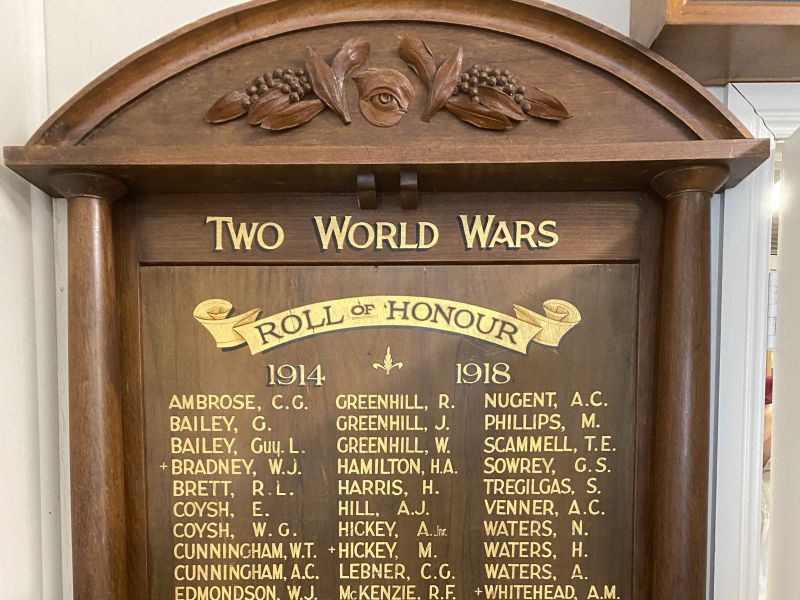
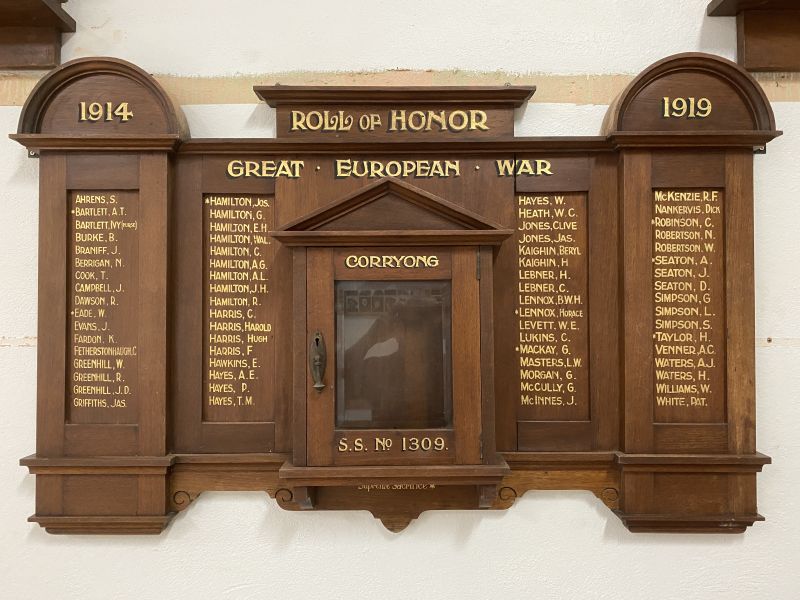
Robert Greenhill was born on 10th July 1895 in Corryong, Victoria, to Thomas Greenhill and Mary Barbara, nee Dickson.
Robert enlisted on 6th December 1914 at Melbourne, Victoria. At that time, he was a single, 21-year-old carpenter, living in Corryong. Robert’s physical description is 5 feet 9 inches tall (175 cm), weighing 158 lbs (72 kg), with a dark complexion, brown eyes, and dark brown hair. He had four vaccination marks on his left arm, a scar above his left knee and the little finger of his left hand was deformed. Robert gave his religious denomination as Presbyterian. Like his brother, Robert was initially placed on strength with the 13th Light Horse.
obert embarked for active service abroad on HMAT A34 Persic on 28th May, 1915, departing from Melbourne, Victoria. His journey would take him across the Indian Ocean, up through the Red Sea and finally through the Gulf of Suez.
The 13th Light Horse would spend some time in Egypt training under desert conditions. Due to the high casualty rate in the Infantry units fighting at Gallipoli, it was decided to send the Light Horse Regiments currently in Egypt to Gallipoli to fight as infantry. On September 4th 1915, 23 officers and 413 other ranks of the 13th embarked on the troopship RMS Megantic. They arrived on Mudros four days later, and at 1.30 am on 11 September, Robert disembarked at Watson’s Pier at ANZAC Cove.
While at Gallipoli, the 13th Light Horse was at Shrapnel Gully, Lone Pine and Russell’s Top. At Lone Pine, their duties were to hold the trenches. Although they were not involved in large-scale actions, similar to those in August, they suffered a number of casualties through constant Turkish shelling. In late November and early December, winter came with a vengeance to the Peninsula, bringing snow. On the 13th December 1915, Robert was admitted to the 1st Casualty Clearing Station suffering from trench feet. This was a familiar condition for soldiers on all fronts, caused by prolonged immersion in cold water or mud and by being unable to keep their feet dry.
On 6th January 1916, he was transferred to the 16th Stationary Hospital on Mudros, suffering from mumps. Four days later, he was transferred to the hospital ship Asturias and sailed to Alexandria, where he was admitted to the 21st General Hospital. After one week here, he was transferred to the Convalescent Camp at Ras-el-Tin. On 2nd February, he was discharged back to duty.
Robert embarked on a troopship at Alexandria on 27th March 1916, and proceeded to join the BEF in France. The journey across the Mediterranean took one week, and his unit disembarked at Marseille in southern France. Upon arriving, he was taken on strength with the 2nd Division Base Depot at Etaples. In early July, Robert was transferred to A Squadron of the 1st Anzac Army Corps Light Horse Regiment and was appointed a driver in August of 1917.
During the hot, sunny days of May 1918, the 13th Light Horse was used for prisoner escort as well as undertaking specialist courses in areas such as signalling and musketry. In June, the 13th was relatively quiet, with some troops attached to infantry battalions and used for reconnaissance and dispatch riders. It was in September that things began to heat up for the 13th Light Horse as they were constantly used at the front for probing and reconnaissance tasks during the Allied offensive.
Robert had two weeks' leave in England from 5th October, rejoining his unit in France on 21st October 1918. This was at the same time as his brother William, also in the 13th Light Horse, had leave in England. It is not known whether the brothers met and enjoyed their leave together.
On 17th February 1919, he left his unit and travelled to England, where he was processed for demobilisation. Robert returned to Australia on 28th June 1919, on the transport SS Zealandic and was discharged from the AIF as medically unfit for service on 23rd September 1919. For his service during the war, he was awarded the 1914/15 Star, the British War Medal and the Victory Medal.
He married Iolene Elsie Whitehead on 8th July 1925, at Iolene’s home at Wabba. They had six children during their marriage: Donald, Mary, Betsy, Marjorie, Barbara and Robert. Robert passed away on 27th August 1979 in Albury, New South Wales, at the age of 84, and was buried in Glenmorous Memorial Gardens, Albury, NSW, while Iolene had passed away four years previously in 1975.