William Greenhill
 Stephen Learmonth
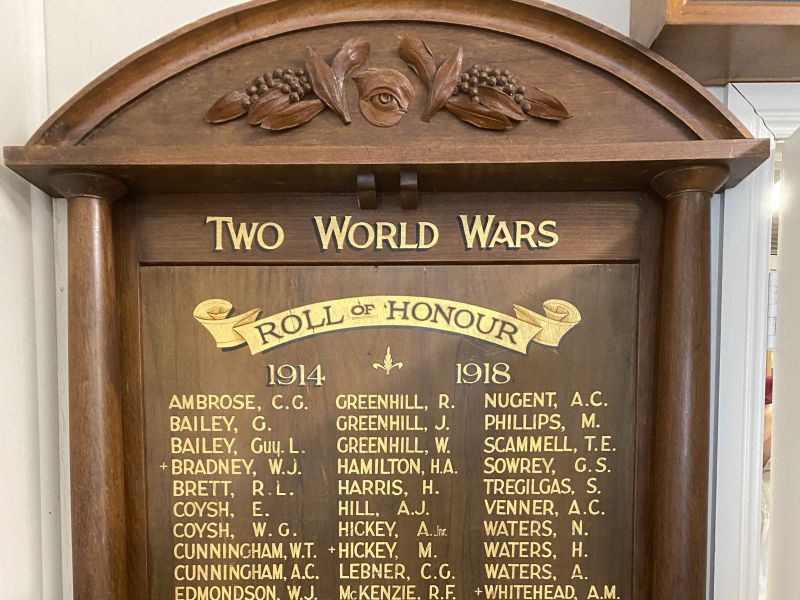
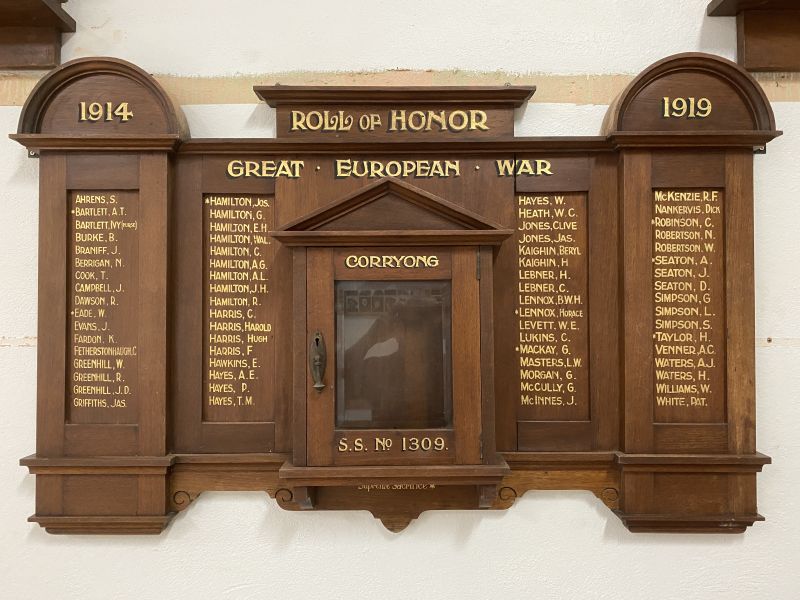
William Greenhill was born in 1886 in Tallangatta, Victoria, to Thomas Greenhill and Mary Barbara, nee Dickson.
On 7th July 1916, he enlisted at Melbourne, Victoria. At the time, he was a single, 28-year-old horsebreaker from Corryong, Victoria. He was allocated Regimental Number 1956 and was initially placed in the 22nd Light Horse Reinforcements. William gave his next of kin as his father, Thomas Greenhill. After initial training, he was put on strength with the 12th Reinforcements for the 13th Light Horse Regiment.
William embarked from Port Melbourne on 20th October 1916, on the transport HMAT A30 Borda. It would be nearly two and a half months before he disembarked at Plymouth on 9th January, 1917. He would spend a further month and a half at the 13th Light Horse barracks at Tidworth, training and undergoing courses in readiness to be sent overseas to France with the BEF.
He embarked on the troopship SS Invicta at Folkestone on 28th February. It wasn’t long before William and his unit were in action against the Germans, and it was on 26th March that he suffered his first wounding in action. The War Diary of the 1st Anzac Mounted Troops state that A and B Squadrons of the 13th Light Horse cooperated with infantry on an attack on Lagnicourt. It was during this encounter that William was wounded. Clearly, the wound wasn’t too bad, as his records indicate that he remained on duty.
Two months later, on 15th May, William was notified that he had been awarded the Military Medal. His citation read;
‘Near BEAUMETZ on the 24 March, 1917, during the attack by the 59th Battalion on the quarry near this village - Trooper GREENHILL was one of a Light Horse patrol watching the flanks. Just as the order to withdraw was given the horse ridden by a Corporal ROBERTSON was killed. Trooper GREENHILL noticing this promptly galloped back a short distance under heavy fire and gave ROBERTSON a stirrup, thus assisting him to run on foot until becoming exhausted Sergeant CALLANDEN galloped back and gave him his horse. The prompt action of Private GREENHILL undoubtedly saved the life of Corporal ROBERTSON.'
On 1st November, 1917, William was wounded in action for the second time. This time, it warranted his transfer, as he had been gassed. He was initially admitted to the 3rd Australian Field Ambulance, then transferred to the 10th Casualty Clearing Station, and finally to the 6th General Hospital at Rouen.
Ten days after being gassed, William embarked on a hospital ship and was transferred to the 1st London General Hospital at Camberwell in England. William was finally transferred to the 1st Auxiliary Hospital at Harefield. After a short period of rest and recuperation, he was given two weeks' furlough. After this, he spent some time at the Convalescent Depot at Sutton Veny in Wiltshire before going to the Overseas Training Brigade at Longbridge Deverill. This long process of being sent to various hospitals and depots was standard for soldiers who had been wounded in action.
It wasn’t until 3rd May 1918 that William rejoined the 13th Light Horse Regiment in the field in France. During the hot, sunny days of May, the 13th Light Horse was used for prisoner escort as well as undertaking specialist courses in areas such as signalling and musketry. In June, the 13th was relatively quiet, with some troops attached to infantry battalions and used for reconnaissance and dispatch riders. It was in September that things began to heat up for the 13th Light Horse as they were constantly used at the front for probing and reconnaissance tasks during the Allied offensive. In October of 1918, William was given ten days' leave in Paris. On 1st November, ten days before the Armistice, William was promoted to Lance Corporal.
William was back in England on 23rd February 1919, preparing for an early repatriation to Australia. He disembarked at Southampton, in the south of England, on the SS Port Denison on 25th March and arrived back in Australia on 10th May 1919. He was finally discharged from the AIF on 17 June 1919.
In addition to the Military Medal, William was awarded the British War Medal and the Victory Medal.
William died on 5th May, 1968, at Corryong and was buried at Corryong, Victoria.